
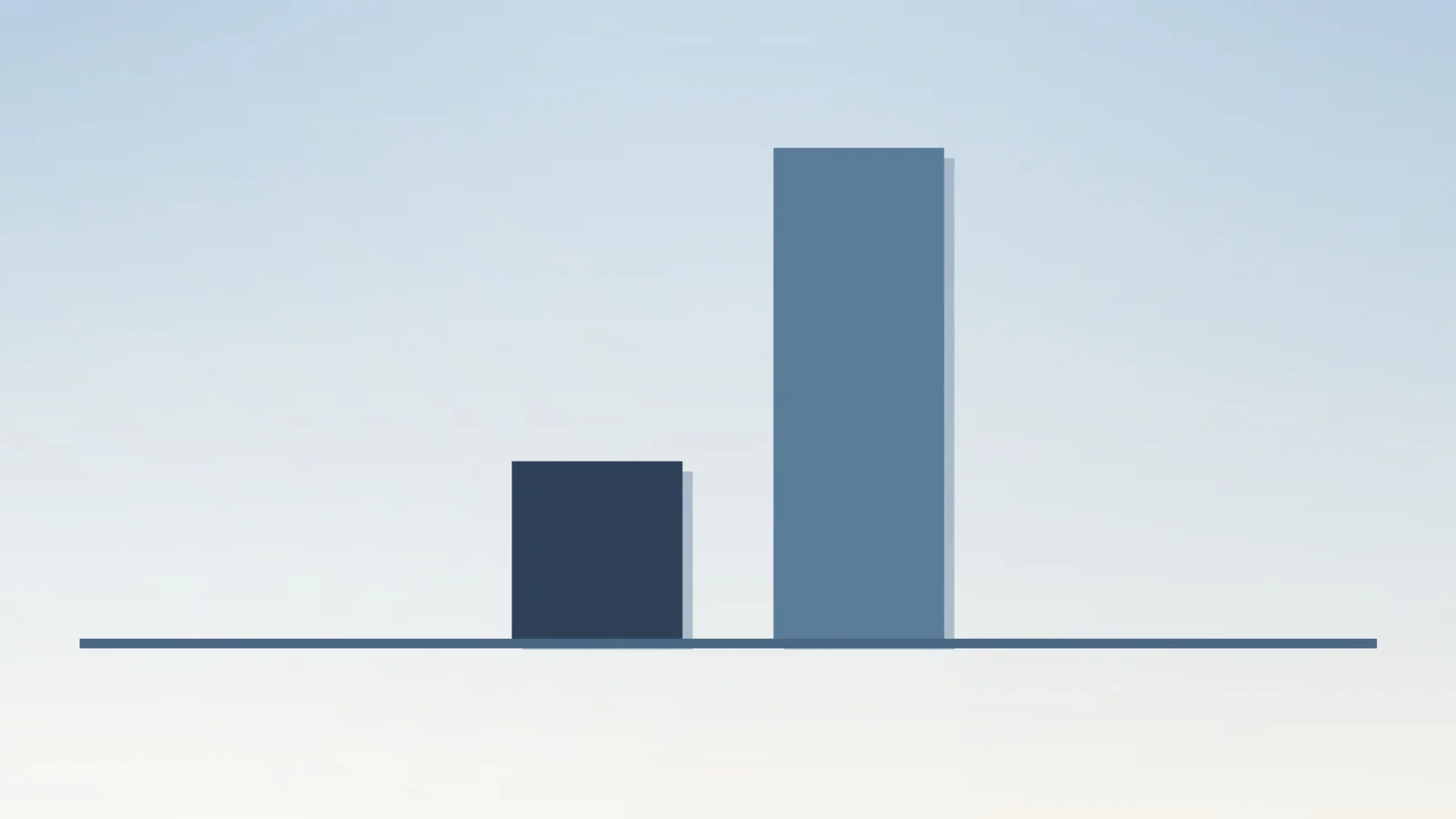
The Mobile Clinic Moved Deaths by 71 Percent. It Moved Almost Nothing Else.
The National Institutes of Health put the number in the headline: mobile medical units reduced all-cause deaths by 71 percent among people who inject drugs. That figure comes from a randomized trial, it is statistically significant, and it is the most encouraging result this field has produced in years.
It also comes from seventeen deaths spread across two arms of a study that missed both of its primary endpoints.
The trial is HPTN 094, published Nov. 4 in JAMA Psychiatry and funded by the National Institute on Drug Abuse. Researchers in five cities — Houston, Los Angeles, New York, Philadelphia and Washington — screened 842 people who inject drugs and randomized 409 of them, all without HIV, all with opioid use disorder, none currently on medication for it, and all willing to consider starting. Half were assigned to 26 weeks of peer navigation plus integrated services delivered on a mobile unit: PrEP, buprenorphine or methadone, wound care, a clinician on site. The other half got 26 weeks of the same manualized peer navigation, pointed at whatever community clinics, harm reduction programs and support services their city already had.
At 26 weeks, verified PrEP use was 5.4 percent in the mobile-unit arm and 2.9 percent in the navigation-only arm. Verified MOUD use was 14.8 percent and 10.7 percent. Neither difference was statistically meaningful. At 52 weeks, both arms had converged on PrEP at roughly 2 percent and on MOUD at 13 to 14 percent. One person in the mobile-unit arm acquired HIV; two did in the control arm, an incidence rate of 0.9 per 100 person-years.
Then there is the mortality column. Four deaths in the intervention arm, thirteen in the control. A hazard ratio of 0.29, with a 95 percent confidence interval running from 0.1 to 0.9, and a P value of .03.
What the Trial Was Actually Testing
The design detail that gets lost in the coverage is the comparator. This was not a mobile unit against usual care. Both arms received manualized peer navigation for 26 weeks — a structured, staffed intervention with a named model behind it. The randomized question was narrower and, in some ways, harder: does putting the services on a van and driving them to the patient beat giving the patient a navigator who knows where the services are?
That matters for how the null result should be read. HPTN 094 did not find that peer navigation fails. It found that peer navigation alone performed roughly as well as peer navigation plus a clinic that comes to you. Navigation, in other words, may be doing more of the work than anyone expected — or the van's advantage is real but operates through a channel that pill counts and prescription records cannot see.
The enrollment funnel is the other thing to hold onto. Slightly less than half of the people screened were randomized. The exclusions were clinical and practical — people already on MOUD, people without confirmed opioid use disorder, people who did not want medication. The published trial therefore describes a specific population: injectors who said yes to the idea of treatment. That is a more motivated group than the population a mobile unit actually serves on a Tuesday night, and it is a group in which a van should have the easiest possible time closing the gap.
The Two Numbers That Didn't Budge
| Outcome (52 weeks) | Mobile unit (n=203) | Peer navigation (n=206) |
|---|---|---|
| Verified PrEP use | 4 (2.0%) | 4 (1.9%) |
| Verified MOUD use | 27 (13.3%) | 29 (14.1%) |
| Confirmed deaths | 4 | 13 |
| New HIV infections | 1 | 2 |
The co-primary outcomes were PrEP and MOUD use at 26 weeks, and the trial's own conclusion is unambiguous: mobile delivery "did not improve primary outcomes beyond peer navigation alone."
Five percent PrEP uptake in a population with a documented HIV incidence of 0.9 per 100 person-years is not a rounding error. It is the finding. Every participant in this trial was, by definition, at risk of acquiring HIV through injection, and 95 percent of them were not on a prevention medication six months later, even when that medication was offered from a van with a peer navigator aboard who had been trained to talk them into it.
The researchers say as much in the NIH release, and their proposed fix is pharmacological rather than logistical: the low uptake of daily oral PrEP "points to the importance of evaluating long-acting PrEP formulations within this population." A shot every two months does not require a nightly habit, a hiding place, or a decision made while high. It is a reasonable inference. It is also an admission that the delivery problem HPTN 094 set out to solve was less important than the adherence problem underneath it.
Seventeen Deaths
Four deaths against thirteen is a large relative difference and a small absolute one. In percentage terms, 2.0 percent of the mobile-unit arm died within a year, against 6.3 percent of the navigation-only arm — a 4.3 percentage-point gap, or roughly one death averted for every 23 people enrolled.
That framing is not a debunking. A number needed to treat of 23 is strong for any intervention in addiction medicine, and stronger than most. But it explains why a trial this size produced a confidence interval running from 0.1 to 0.9. The data are compatible with a 90 percent reduction in mortality and with a 10 percent reduction, and both of those stories would read very differently on a press release.
What a Hazard Ratio of 0.29 Can Hide
Mortality was a secondary outcome. The abstract reports no adjustment for multiple comparisons, and secondary outcomes in trials that miss their primaries have a well-known tendency to wander. The finding is not nothing — a P value of .03 on seventeen events is not a data artifact — but it is the kind of result that a replication trial either confirms outright or quietly buries.
There is one methodological detail that cuts in the finding's favor, and it is worth stating because it rarely appears in coverage. Death ascertainment in a 52-week trial is not automatic. Participants who are in more frequent contact with a study team are more likely to have a death recorded; participants who drift away can die unrecorded. The mobile-unit arm had more contact, more visits, more reasons to check in. If ascertainment differed at all, it likely differed in the direction that would understate the mortality benefit, which makes the observed gap harder to dismiss as a bookkeeping effect.
Why the Van Might Have Mattered Anyway
If MOUD and PrEP use were essentially identical, the survival difference has to run through something else. The trial cannot say what. The candidates are plausible and mostly unmeasured.
Low-threshold care keeps people in contact with someone who knows what an overdose looks like and who will hand out naloxone without a lecture. Wound care matters in a population where injection-related infections are a leading cause of hospitalization and, increasingly, of death. A van that parks in the same place on the same day becomes a place where a person who has been awake for three days can sit down, be seen by a clinician, and not be asked to produce an insurance card first.
None of those mechanisms were measured as mediators. What the trial recorded was a body count, and the body count moved. "Although we have effective interventions for this population, there are significant barriers to their accessibility and use," NIDA director Nora Volkow said in the release. "Nonetheless, these findings suggest that delivering low threshold services through mobile units could save lives."
The word to notice is "could." Even the agency that funded the trial is not claiming it demonstrated a mechanism, only a result that needs repeating.
The Fourteen Percent Nobody Wants to Say Out Loud
The NIH release describes 14 percent MOUD use at 26 and 52 weeks as "a clinically meaningful level considering none were on MOUD at study start."
Fourteen percent is not clinically meaningful. It is a treatment cascade failure dressed in encouraging language. Every one of these 409 people had opioid use disorder and had told a research team they were willing to consider medication. A year later, 86 percent of them were not on it. The arms did not differ, which means the failure was not about whether the medication arrived by van or by referral. It was about everything that happens between a person saying yes to a screening question and a person staying on buprenorphine for a year.
The Demand-Side Wall
This is where the trial connects to the rest of the literature and where the policy conversation usually stops short. Retention on buprenorphine is the hard part of the opioid treatment cascade — not initiation, not prescribing authority, not pharmacy stocking. Mobile units solve the geography problem that rural counties have, and HPTN 094 ran in five of the largest metros in the country, where geography was never the binding constraint.
For people already in treatment or trying to get there, medication-assisted treatment works; the difficulty has always been staying in it. A van that delivers the first prescription and then loses the patient at week eight has improved the first mile of a marathon.
What Replication Would Have to Show
The authors are explicit that the mortality finding "bears replication," and the NIH release repeats it. A confirmatory trial would need to be larger than 409 — large enough that a mortality signal does not rest on seventeen events — and it would need to measure the things HPTN 094 could not: naloxone distribution and use, overdose reversals, infection-related hospitalizations, and time to disengagement.
It would also need a cost arm. Five custom-wrapped mobile clinics, staffed with clinicians and peer navigators across 26 weeks, are not cheap, and the trial reports no economic analysis. The Shepard Fairey artwork on the outside of those vans is a nice detail from the NIH release, and it is also a reminder that a mobile unit is a capital project with a paint job, not a program you can scale by printing more brochures.
Whatever replication shows, the practical read for anyone running a program is narrower than the headline and more useful. Peer navigation is a real intervention and appears to be doing heavy lifting; if a clinic has to choose between hiring navigators and leasing a van, this trial offers no evidence that the van is the better buy on the outcomes it measured.
The clinical read for families is that the mortality signal is real enough to take seriously and not strong enough to be quoted as a guarantee. For people who inject drugs and are not in care, the study's most concrete legacy may be the argument it makes for opioid addiction treatment that comes to where people already are — and for long-acting prevention that does not require a daily decision.
The Limits
HPTN 094 was open-label: participants knew whether they had a van or a navigator, and staff did too. It ran from May 2021 to September 2024, an interval that spans both the worst of the fentanyl supply shock and the expansion of telehealth prescribing, and its five urban sites say nothing about rural counties where the access problem is genuinely spatial. It enrolled only people willing to consider MOUD, and it lost enough of them to follow-up that the 52-week estimates rest on the assumption that missing participants resembled the ones who stayed.
What survives all of that is a sentence the trial itself wrote: mobile delivery did not improve PrEP and MOUD use beyond peer navigation alone, and the significantly lower death rate in the mobile arm bears replication. Both halves of that sentence are true, and the second one is the reason anyone will remember the study.
Sources
- Shoptaw S, El-Bassel N, et al. Mobile Units for Integrated Addiction and HIV Prevention Services for People Who Inject Drugs: The HPTN 094 Randomized Clinical Trial. JAMA Psychiatry, Nov. 4, 2026 (DOI 10.1001/jamapsychiatry.2026.3644, PMID 42981102)
- NIH news release: Integrated health service delivery through medical mobile units helped to reduce deaths among individuals at risk for HIV who also inject drugs
- ClinicalTrials.gov: HPTN 094 (NCT04804072)
Editorial Board
LADC, LCPC, CASAC
The Rainier Rehab editorial team consists of licensed addiction counselors, healthcare journalists, and recovery advocates dedicated to providing accurate, evidence-based information about substance abuse treatment and rehabilitation.
Related Articles
Street-Based Mobile Addiction Services Reach Thousands Previously Disconnected From Care
Mass General Brigham study shows mobile clinics can effectively deliver buprenorphine and harm reduction services to people who use drugs, with 15% retention at 6 months
Wildfire Smoke Is Quietly Disrupting Opioid Treatment Access for Millions
Air quality emergencies create life-threatening barriers for patients on medication-assisted treatment, yet public health warnings rarely mention this hidden risk

Philadelphia Put Methadone on Wheels. Kensington Walk-Ups Are Filling It.
Philadelphia's first mobile methadone van has connected 567 people to medication since a soft launch — and nine in ten were unhoused when they walked up.