
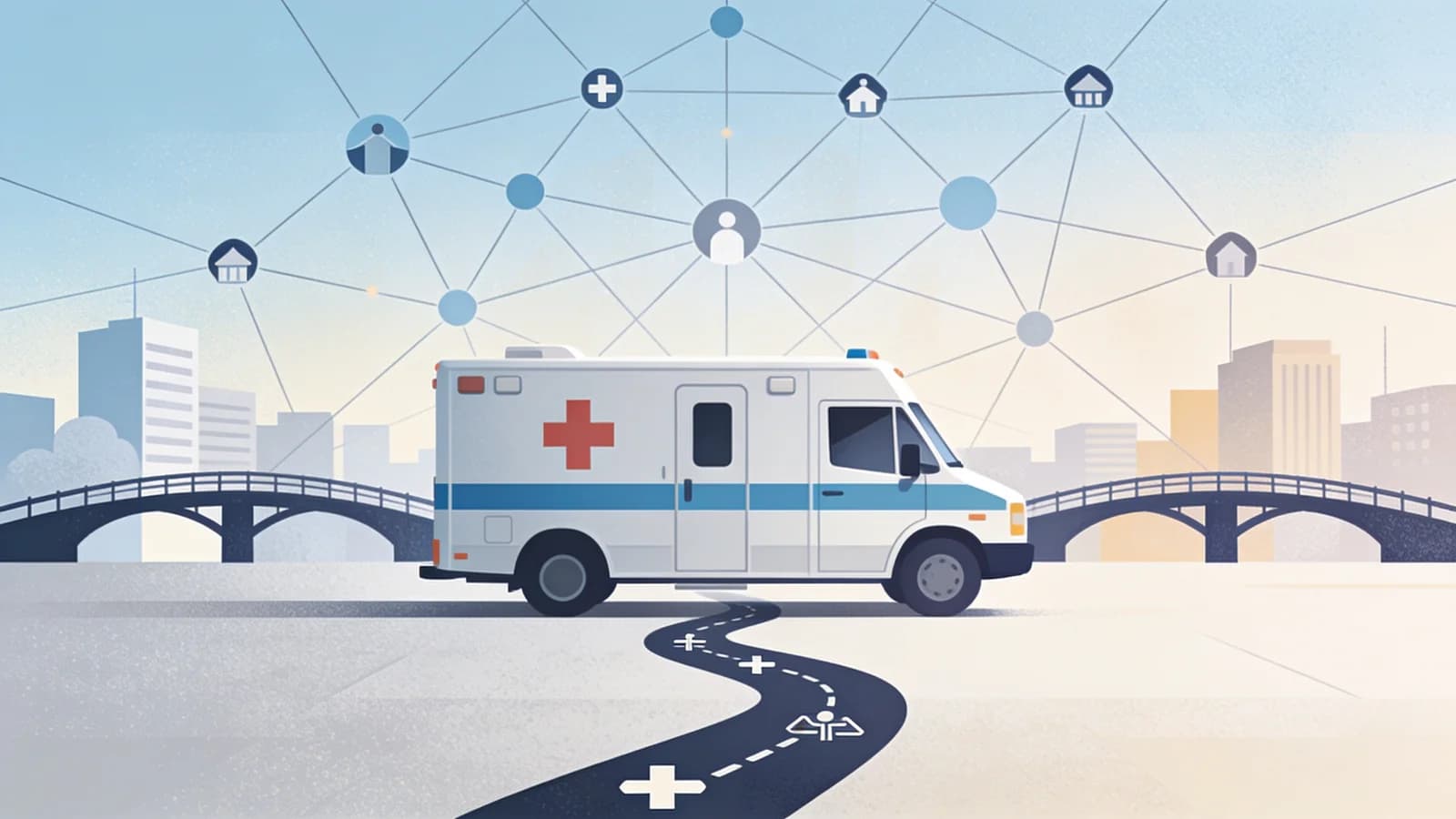
Street-Based Mobile Addiction Services Reach Thousands Previously Disconnected From Care
The gap between people who need addiction treatment and those who receive it has long been one of the most stubborn challenges in public health. Even as medication-assisted treatment for opioid use disorder has become more available, barriers of geography, housing instability, stigma, and past negative experiences with healthcare keep many people from accessing care.
A new study from Mass General Brigham suggests one promising solution: take the care directly to them. Published in the International Journal of Environmental Research and Public Health, the research demonstrates that street-based mobile addiction services can be successfully implemented across multiple organizations and communities, reaching thousands of people who would otherwise remain disconnected from the healthcare system.
From Single Clinic to Statewide Network
The story begins in 2018, when the Kraft Center for Community Health at Mass General Brigham launched Community Care in Reach—a single mobile clinic designed to bring addiction treatment and harm reduction services directly to people at high risk of drug-related harm. The model was simple but revolutionary: instead of requiring patients to navigate complex healthcare systems, the healthcare system would come to them.
The program targeted people who were unhoused or at risk of losing housing, those with complex medical and social needs, and individuals who had fallen through the cracks of traditional care. Staffed by interdisciplinary teams including physicians, nurses, peer recovery specialists, and social workers, the mobile units provided a comprehensive range of services: overdose prevention education, naloxone distribution, wound care, infectious disease testing, and—critically—initiation of buprenorphine treatment for opioid use disorder.
What started as a single clinic has grown into a network of six programs across Massachusetts, supported by the Massachusetts Department of Public Health and the Kraft Center. The new study examines how this expansion worked in practice—and what it achieved.
The Numbers: 17,887 Encounters, 1,227 Treatment Initiations
Between January 1, 2022, and June 30, 2024, the six mobile programs conducted 17,887 harm reduction encounters—interactions focused on minimizing the negative health, social, and legal consequences of drug use. These included distributing naloxone to reverse overdoses, providing sterile supplies to prevent infectious disease transmission, and offering education about safer use practices.
Clinical encounters—actual medical care provided to individuals—totaled 16,117, serving 4,645 unique individuals. Among these, 1,227 people initiated buprenorphine treatment, a medication-assisted treatment that reduces opioid cravings and overdose risk. Of those who started buprenorphine, 15% remained in treatment after 180 days.
That retention rate may seem modest, but context matters. Traditional office-based buprenorphine treatment often struggles with retention in the first months, particularly among populations with housing instability and complex social needs. The mobile model achieved comparable retention while reaching people who had previously been entirely outside the healthcare system.
"Our findings reveal that the model can be expanded to reach and serve adults with very complex needs," said Dr. Elsie M. Taveras, Chief Community Health and Health Equity Officer at Mass General Brigham and the study's senior author. "The physical presence of mobile units can offer a popular, low-barrier access point for care."
Adaptability Across Settings
One of the study's most significant findings concerns adaptability. The six programs were operated by different types of organizations—including academic medical centers and community health centers—across diverse geographic and social contexts. Despite these variations, all programs succeeded in engaging hard-to-reach individuals.
"Our model proved highly adaptable across different regions," Dr. Taveras noted. "The successful deployment of new mobile teams demonstrated that street-based mobile addiction services can be effectively operated by differing entities."
This adaptability is crucial for policy makers and healthcare administrators considering similar programs. It suggests that mobile addiction services are not dependent on a single organizational model or resource-rich academic environment. Community health centers, which already serve many marginalized populations, could potentially replicate the approach.
Challenges and Realities
The researchers were transparent about the challenges encountered across the six programs. Staffing mobile units with the right mix of clinical expertise and cultural competence requires significant investment. Navigating the regulatory landscape for controlled substance prescribing in mobile settings adds complexity. Weather, vehicle maintenance, and safety concerns create operational hurdles that fixed-site clinics do not face.
Perhaps most importantly, the study highlights the gap between initiation and retention. While mobile units successfully engaged over a thousand people in buprenorphine treatment, 85% had discontinued by the six-month mark. This pattern reflects broader challenges in addiction treatment, where multiple treatment episodes are often necessary for sustained recovery. But it also suggests that mobile services may need stronger linkages to ongoing care—pathways that help people transition from street-based initiation to more stable, long-term treatment relationships.
A Model for Other Communities
Massachusetts is not the only place experimenting with mobile addiction services. Similar programs have emerged in California, New York, and other states facing high rates of overdose and homelessness. The Mass General Brigham study provides valuable evidence for these efforts, demonstrating that mobile models can achieve meaningful reach and engagement.
For rural communities, where geographic barriers compound the challenges of addiction treatment access, mobile units may be particularly valuable. A mobile clinic can cover a wide service area, bringing expertise and medications to towns that lack permanent addiction treatment infrastructure. The study's findings about adaptability suggest that rural health systems, despite resource constraints, could potentially implement scaled versions of the model.
The research also has implications for how we think about healthcare delivery more broadly. The traditional model of healthcare—patients traveling to fixed facilities, navigating appointment systems, and interacting with providers in formal clinical settings—does not work for everyone. For people whose lives are characterized by instability, mobility, and marginalization, meeting them where they are may be not just compassionate but essential.
Policy and Funding Considerations
Sustaining and expanding mobile addiction services requires policy support. Medicaid reimbursement for mobile services varies by state, and billing for services delivered outside traditional clinical settings can be complex. The Massachusetts programs benefited from support from the state Department of Public Health, but long-term sustainability may require integration into standard healthcare financing.
The study's authors suggest that their findings should inform policy discussions about how to extend addiction treatment to populations that remain underserved. As overdose deaths have begun to decline nationally, ensuring that the hardest-to-reach individuals are not left behind becomes increasingly important. Mobile services represent one proven approach to closing that gap.
For the thousands of people who received naloxone, started buprenorphine, or simply had a respectful medical encounter through Community Care in Reach, the mobile clinics have already made a difference. The study confirms what frontline workers have long known: when healthcare comes to the streets, people show up.
Sources
Editorial Board
LADC, LCPC, CASAC
The Rainier Rehab editorial team consists of licensed addiction counselors, healthcare journalists, and recovery advocates dedicated to providing accurate, evidence-based information about substance abuse treatment and rehabilitation.
Related Articles
Wildfire Smoke Is Quietly Disrupting Opioid Treatment Access for Millions
Air quality emergencies create life-threatening barriers for patients on medication-assisted treatment, yet public health warnings rarely mention this hidden risk
One in Five Pharmacies Block Access to Buprenorphine, Study Finds
New research reveals 20% of U.S. pharmacies refuse to dispense buprenorphine, creating critical barriers to opioid addiction treatment despite federal expansion efforts.
Buprenorphine Access Surges in Rural America, but Cities Lag Behind on Emergency Department Treatment
New CDC data reveals surprising trends in addiction medication access: rural pharmacies now dispense more buprenorphine per capita than urban ones, while ED-based treatment remains an urban privilege.