
Oregon Spent $1.5 Billion on Addiction. Two Percent Went to Preventing It.
Oregon spent $1.5 billion on substance use disorder between 2023 and 2025. Of that, $39.1 million — about 2.6 percent — went to programs the state classified as prevention. When the Chicago consulting firm Third Horizon went through the contracts to verify that figure, it could confirm only $31.2 million as genuine primary prevention. Of that, $18.2 million stayed inside state government, and $15 million of it was spent enforcing regulations on retail alcohol sales.
That leaves roughly $13 million out of $1.5 billion that reached community organizations to stop people from developing an addiction in the first place.
Those numbers come from a 246-page assessment released this week, mandated by House Bill 3321, which Oregon lawmakers passed last year after a six-month investigation by The Lund Report, the University of Oregon's Catalyst Journalism Project and Oregon Public Broadcasting documented that most Oregon schools were ignoring a decades-old legal requirement to run research-based drug prevention programs. The story was republished by OPB on Oct. 1.
Eleven Agencies, One Shrinking Slice
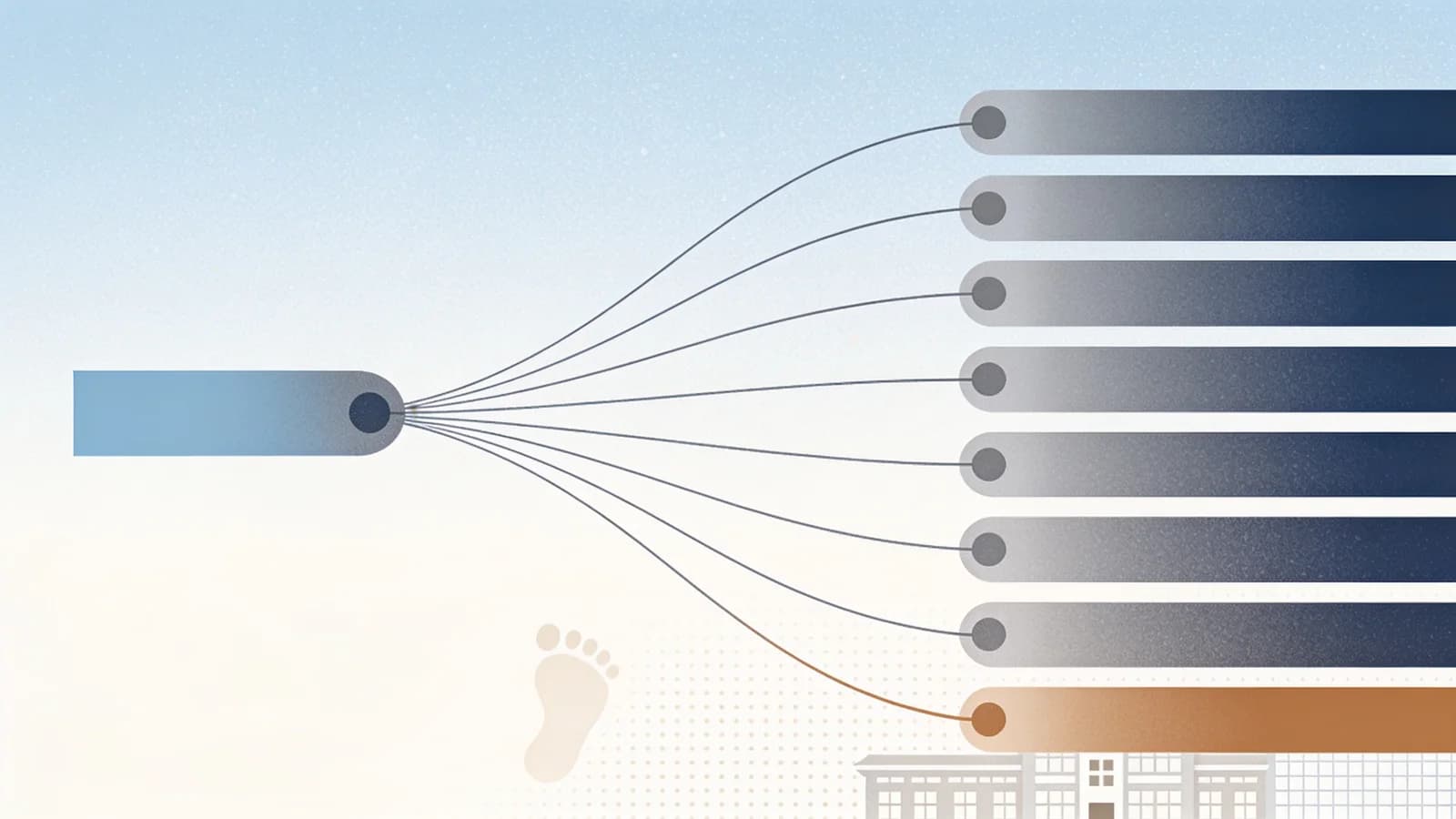
The money is spread across eleven state agencies, and the audit's central complaint is that nobody can follow it. The report describes data systems that cannot trace dollars from appropriation to program, definitions of "prevention" that shift between agencies, and — in the consultants' blunt phrasing — "no standing structure championing prevention funding across agencies, so there is no venue in which these problems are anyone's responsibility to solve."
"Funding is spread across agencies and purposes, definitions have been inconsistent, and dollars are difficult to trace," said Pam Pearce, a prevention educator and advocate from West Linn who helped push HB 3321 through the legislature. She drew a distinction the report leans on heavily: money that is blended across purposes versus money that is braided while remaining separately identifiable. Oregon, the audit suggests, has been blending.
Sen. Lisa Reynolds, a pediatrician who sits on the state Alcohol and Drug Policy Commission, called the findings "pretty stark." Her summary of the problem was less bureaucratic than the report's: "We pat ourselves on the back for allocating this money, and then we're not necessarily following up on what happened — what were the results."
A Mandate Without Money
Since 1989, Oregon law has required every public school district to maintain a research-based plan to equip students with the skills to avoid addiction later in life. The state provides no funding to do it, and until recently devoted almost no staff to supporting it.
Of Oregon's 197 public school districts, 65 responded to the auditors' questions, and only 19 had completed the plan the law requires. The Oregon Department of Education, the agency tasked with enforcing the mandate, employed a single prevention coordinator during the two-year period studied and funded a single one-time campaign. Districts received neither money nor meaningful technical assistance.
"The Youth at Highest Risk Get the Least"
The audit's summary lists three findings in language designed to be quoted. The first is that services aimed at young people showing early signs of risk are rare in Oregon, and that none of them receive state funding. The second is the schools finding. The third concerns the workforce: the people qualified to deliver prevention programming are few, thinly distributed, and concentrated away from the rural counties that face the sharpest substance use problems. Nearly half of Oregon's counties had no certified prevention specialist at all.
The stakes behind those numbers are well documented. Adolescents who try illicit drugs before age 15 are more than six times as likely to develop a substance use disorder as those who wait until 21 or older, and more than 90 percent of adults with an addiction began using in their youth. Oregon's baseline rate of disorder is already elevated: nearly 21 percent of residents 12 and older met criteria for a substance use disorder in 2023–24, against just under 18 percent nationally.
Rep. Tawna Sanchez, one of the bill's sponsors, pointed to a structural obstacle that any reform will have to work around — Oregon's strong tradition of school-district local control. She also argued the 1989 framework is simply out of date. "Substances have also changed, and we are in a new world from the one we were in in 1989," she told The Lund Report. "The drugs and alcohol we are dealing with now are so much more powerful than they have been in the past."
Three Years of Repair, Half Built
The audit exists because of journalism. In 2024, The Lund Report, the University of Oregon's Catalyst Journalism Project and OPB published a six-month investigation showing that most Oregon schools were not using research-based prevention programs despite a state law and administrative rules requiring it. The series documented that the science behind effective prevention had improved substantially — and that Oregon did almost nothing to promote it while other states built statewide systems.
Lawmakers responded with two bills: HB 3321, which commissioned this assessment, and HB 2029, which set up a new prevention structure. The audit is the first hard look at whether the apparatus those bills envisioned has been funded. Its answer is that the mandate was created and the money was not, leaving Oregon with a legal obligation and a single coordinator to enforce it.
The Case for Spending Upstream
The audit's economic argument is the part most likely to survive the legislative session. Third Horizon puts the return on primary prevention at as much as $63 for every dollar spent, against roughly $4 to $7 for treatment. Those figures are the consultants' synthesis rather than new research, and long-horizon prevention returns are notoriously sensitive to which costs you count, but the direction of the gap is not seriously contested in the prevention literature.
The awkward implication is that Oregon has been funding the stage of the continuum where the money buys the least, because that is the stage where the spending is easiest to attribute to a visible service. Prevention is invisible when it works. That is precisely why it loses budget fights.
Six Things the Consultant Wants
The report's recommendations are specific enough to become bill language.
- Adopt the HB 3321 definition of primary prevention and require every funded agency, school and organization to use it.
- Increase state prevention spending by roughly eight times its current level, funded through a dedicated revenue stream — the report points at liquor sales.
- Replace the fragmented agency-by-agency approach with a coordinated, region-based system with unified staffing, plans, contracts and reporting.
- Expand services for higher-risk youth, give public awareness campaigns a youth focus, and create a financed central state prevention office responsible for training, data tracking and technical assistance.
- Grow and sharpen the credential for certified prevention specialists, particularly outside the Willamette Valley.
- Make the money flow visible, with the Alcohol and Drug Policy Commission reviewing state and federal substance use spending plans.
A spokesperson for the Oregon Department of Education said the agency has stood up dedicated staff capacity for school-based prevention, developed resources and professional learning with one-time legislative funding, and convened a Substance Use Prevention Advisory Group with the Alcohol and Drug Policy Commission and Oregon Health Authority. "These efforts are relatively new, and ODE's prevention infrastructure is still developing," the spokesperson said. Oregon Health Authority leadership did not respond to the report before publication. A spokesperson for Gov. Tina Kotek said her staff was still reviewing it and that "the Governor remains committed to enhancing cost-effective prevention programs for Oregon's youth."
What the Report Doesn't Settle
The audit is an accounting of state spending, not an evaluation of outcomes. It cannot say whether the $39 million Oregon did spend on prevention worked, because the data systems that would answer that question are among the things it found missing. It also covers a two-year window ending in 2025, before several of the changes ODE describes took effect.
What it does establish is that Oregon built a prevention mandate in 1989, added money after a 2024 investigative series forced the issue, and still has not built the machinery to deliver either. Advocates who lost children to fentanyl — including Jon Epstein, whose 18-year-old son died of an accidental overdose in 2020 — have been making that argument for years; the audit supplies the ledger.
For families trying to find help now rather than in the next budget cycle, the practical picture is unchanged by the report. Oregon's treatment system remains the entry point, and levels of care range from outpatient counseling to residential programs. For adolescents in particular, the overlap between early substance use and untreated mental health conditions means dual diagnosis care is often the more realistic starting point than a standalone addiction program — which is one more reason the prevention funding gap matters. The young people most likely to need that care are the ones Oregon has the fewest tools to reach.
Sources
Editorial Board
LADC, LCPC, CASAC
The Rainier Rehab editorial team consists of licensed addiction counselors, healthcare journalists, and recovery advocates dedicated to providing accurate, evidence-based information about substance abuse treatment and rehabilitation.
Related Articles

The Recovery Housing Boom Meets Its Reckoning as Ohio, Georgia and Arizona Write New Rules
Ohio's sober living homes grew 400% in four years. Now Ohio, Georgia and Arizona are writing new rules on certification, fraud oversight and zoning.
RFK Jr. Announces $700 Million Federal Initiative Targeting Addiction, Mental Health, and Homelessness
HHS Secretary Robert F. Kennedy Jr. unveils major funding package emphasizing faith-based recovery programs and evidence-based treatment for vulnerable populations.
Connecticut Fines All Five Major Insurers for Mental Health Parity Violations in Landmark Enforcement
State insurance regulators find Aetna, Anthem, Cigna, ConnectiCare, and UnitedHealthcare systematically underpaid mental health providers and restricted access to care.