
The Recovery Housing Boom Meets Its Reckoning as Ohio, Georgia and Arizona Write New Rules
On a golf course in Roswell, Georgia, behind the kind of landscaping that keeps $600,000 homes private, a 22-year-old named Izzy Lawter is learning how to live sober. Her housemates share their daily agendas, attend a recovery meeting every day and submit to random drug tests. Rent runs $1,500 a month, utilities included, and for now her mother pays it. To the neighbors, the house is supposed to be invisible. To the state of Georgia, it barely exists at all — because Georgia, like most of the country, has no licensing system, no mandatory standards and no real map of where its recovery residences are.
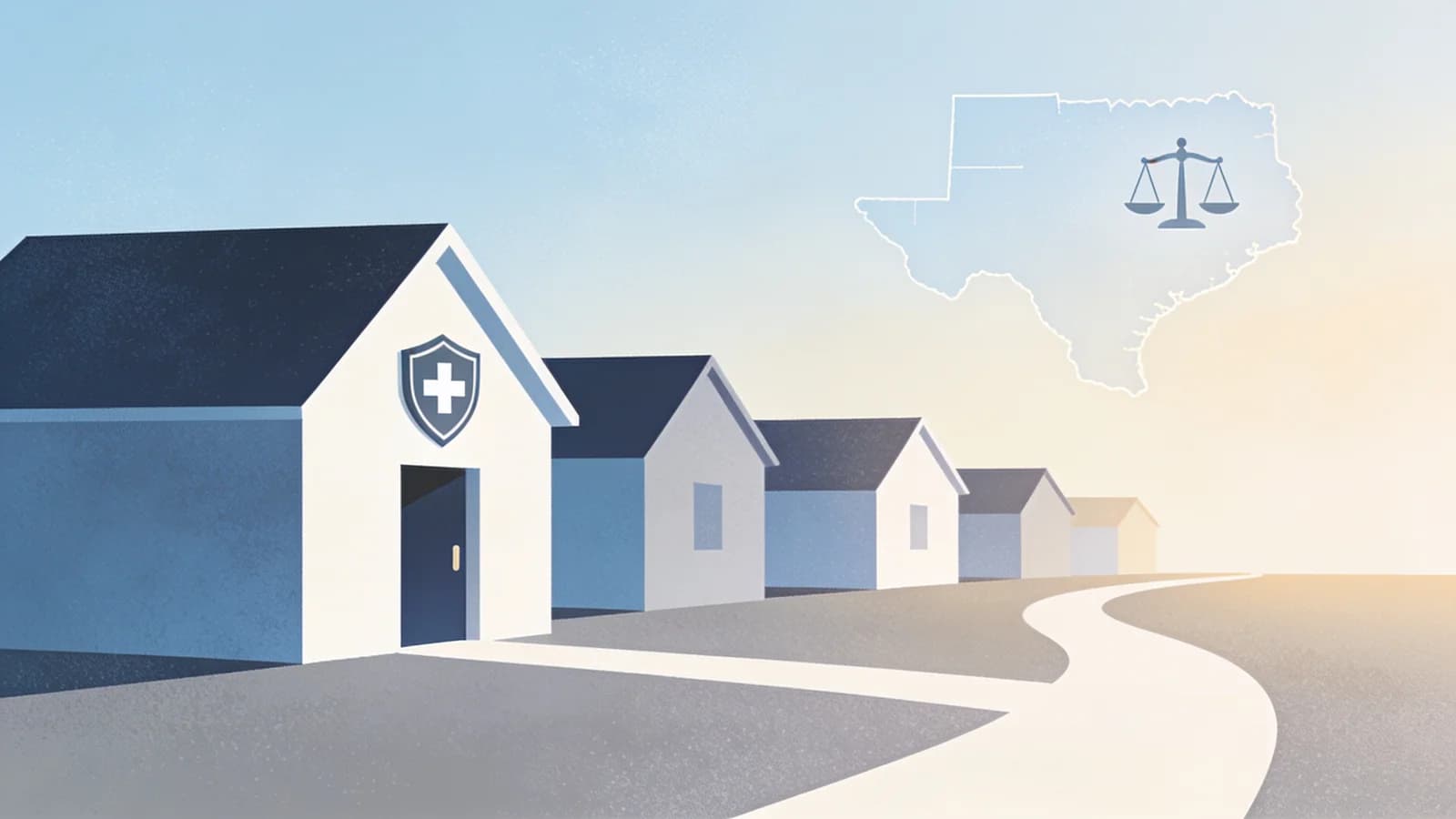
That regulatory vacuum is suddenly getting attention. In the span of a few weeks, three states have moved to write rules for the sober living industry: Ohio's governor signed an executive order creating state certification, an Arizona bill giving cities and counties power to register sober living homes won final House approval, and in Georgia a working group of lawmakers is weighing whether to mandate certification for an industry that has operated on the honor system since 1987.
From 356 Houses to More Than 1,700
The numbers out of Ohio explain why regulators are paying attention. In 2022, the state counted 356 recovery houses. Today there are more than 1,700 — growth of over 400 percent in four years, according to the state's behavioral health department. Some of that expansion reflects genuine need: 18.3 percent of Ohioans aged 12 and older met criteria for a substance use disorder in 2021–2022, more than a full percentage point above the national average, and operators in hard-hit southeast Ohio say their houses are almost always full.
But growth that fast attracts more than need. Jack Pepper, administrator of the Athens City-County Health Department, told The Post that many of the new facilities are for-profit operations, and he described the dynamic bluntly: anywhere healthcare reimbursement creates an opportunity, opportunistic organizations move in, expand rapidly, and let the details get lost in the mix. Governor Mike DeWine's executive order, signed August 10, is designed to catch those details.
What Ohio's Order Actually Does
The order hands the state's behavioral health department authority to build a certification program for recovery housing operators, with an explicit goal of guarding against fraud, waste and abuse. Homes already holding certifications will have them reviewed for recognition under the new framework. Crucially, the order gives the department power to refer any recovery home suspected of fraud to the Ohio Attorney General's Office — turning what has been a quality-assurance conversation into a potential law enforcement one.
The order's language frames the stakes around residents rather than operators, promising a standard that ensures "Ohioans seeking recovery have access to safe, stable, secure living conditions, and that public resources supporting these services are managed with integrity, transparency and accountability."
On the ground in Athens County, the money flows through the local Alcohol, Drug Addiction and Mental Health Services Board — known as the 317 Board — which funds recovery houses including The Gathering Place, the John W. Clem House and Briggs House, and the Serenity Grove Recovery House for women. Community services manager Kim Crum says the state has not yet announced how monitoring will work locally. For now, the board does its own quality checks on a network that routinely places people into less intensive housing after six months of sobriety at a higher level of care.
In Georgia, the Fight Is Over Where Recovery Can Live
Georgia's battle looks different. The state has roughly 256 recovery homes spread across 159 counties, most clustered around metro Atlanta, and none of them are required to hold a license. The closest thing to oversight is the Georgia Association of Recovery Residences, a voluntary certification body that seven programs founded in 1987 to distinguish themselves with quality standards and third-party review. Nearly four decades later, membership is still optional.
The friction point is zoning. The federal Fair Housing Act Amendments of 1988 protect recovery residences as housing for people with disabilities, but local governments have learned to work around the protections by defining how many unrelated people constitute a "family." In Roswell, three unrelated people can share a house — or six, if the operator accepts a "group home" designation that triggers commercial-grade building requirements.
Ian Neubauer, an attorney and person in long-term recovery who has run Atlanta-area recovery houses since 2013 and now owns Second Chance Recovery Residences, lived that machinery firsthand. After a neighbor spotted photos of one of his homes online, a complaint to the fire marshal set off inspections, violation notices, cease-and-desist orders and zoning hearings. Inspectors flagged the kitchen's six-burner Wolf stovetop — a "board and care occupancy," he was told, may have no more than five burners — and demanded fire sprinklers and automatic closing doors throughout what is otherwise an ordinary suburban house. Retrofitting, he estimates, would run into the tens or even hundreds of thousands of dollars.
Others have fared worse. Kai Thorup spent 2025 trying to open the Halcyon House, a non-clinical men's sober living home in College Park, only to watch neighbors email city officials in coordinated opposition. The delays worked. "We have shuttered the doors," Thorup said. "Everything was sold off in a fire sale."
'Bad Actors' Made the Case for Rules
The paradox of Georgia's debate is that the industry needs protection from two directions at once: from cities that zone it out of existence, and from operators who give it a bad name. State Senator Kay Kirkpatrick discovered the second problem when she sponsored a 2021 bill banning patient brokering — paying or receiving anything of value for referring people to addiction treatment providers. When she presented it, she recalled, House committee members "were shocked to find out that nobody really regulates this industry and nobody really knows where these places are." The law passed, and an unscrupulous landlord selling a spot on a couch as "sober living" now faces up to ten years in prison.
The research record is not what NIMBY campaigns imagine. Studies of Oxford House-style recovery residences show strong outcomes for residents and minimal risk to neighbors, and the National Institute on Drug Abuse notes that 40 to 60 percent of people with substance use disorder relapse — a rate that stable, peer-supported housing is specifically designed to lower. The need is compounded by Georgia's mental health gaps: nearly five million residents live in communities without enough mental health professionals, and more than 1.4 million people with mental illness go without care. For residents like Lawter, whose drinking was entangled for years with an undiagnosed mental illness, access to dual diagnosis care and a structured household is the difference between a treatment episode and an actual recovery.
The Certification Question
What Georgia lacks, advocates say, is a floor beneath the whole sector. GARR executive director Todd Wilson and other recovery community leaders testified last year before a state Senate study committee chaired by Senator Randy Robertson, pushing for legislation that would mandate some level of certification — similar to laws already on the books in Florida and Virginia. Robertson filed a bill late in the session, though its language did not touch zoning, the issue operators call the most fundamental barrier.
At an August meeting of the Georgia General Assembly's Working Group on Addiction and Recovery, Robertson signaled he understands both halves of the problem. The "not in my backyard" mentality cities apply to recovery centers "is not acceptable," he said, while also arguing that government has a role protecting consumers — "especially families who are trying to get their relatives well." His vision of the end state is modest on paper: not paint colors and grass length, he said, but making sure homes have the resources residents need.
Arizona, meanwhile, is approaching the same problem from the municipal side. Legislation that won final House approval last week would give cities and counties new powers to register sober living homes — a local-control answer to the same question Ohio answered with state certification and Georgia is still debating.
Why the Stakes Are Personal
Strip the policy language away and what remains is a housing question with clinical consequences. People leaving detox or residential treatment face a well-documented danger zone: research shows that returning to old friends and old routines invites relapse, and young adults aged 18 to 25 are the least likely of any age group to receive any treatment at all, according to SAMHSA. A well-run recovery residence inserts structure into that gap — curfews, meetings, drug testing, chores, and housemates who, as Neubauer puts it, prop each other up like family because that is functionally what they are.
Lawter, who was "blackout drunk and high every single day" for her first two years of college and survived eviction and a suicide attempt before landing in Roswell, is in no hurry to leave. "A lot of people try to rush out," she said, "but I love it a lot." Whether houses like hers are regulated into respectability, zoned into oblivion, or left to the honor system is now an active question in at least three statehouses — and the answers will help determine what the levels of care available after treatment actually look like for the next person who needs a door that opens.
Editorial Board
LADC, LCPC, CASAC
The Rainier Rehab editorial team consists of licensed addiction counselors, healthcare journalists, and recovery advocates dedicated to providing accurate, evidence-based information about substance abuse treatment and rehabilitation.
Related Articles

A Free Oregon Ranch Offers Addiction Recovery. Fifteen Former Residents Call It Harm.
InvestigateWest reports that 5Rock Ranch, an unlicensed Christian ministry in Yamhill County, took in women leaving rehab and jail with almost no state oversight.

Oregon Spent $1.5 Billion on Addiction. Two Percent Went to Preventing It.
A legislatively mandated audit found Oregon routed $39 million of $1.5 billion to prevention, gave school districts a mandate without funding, and cannot trace where the money went.

Connecticut Fines All Five Major Insurers for Mental Health Parity Violations in Landmark Enforcement
State insurance regulators find Aetna, Anthem, Cigna, ConnectiCare, and UnitedHealthcare systematically underpaid mental health providers and restricted access to care.