
Nearly Half of Outdoor Overdoses in One Florida County Happen Near Gas Stations, Study Finds
America's overdose debate tends to orbit the deaths. But for every fatal overdose, there are many more that end with a survivor — a person who wakes up in an emergency department or on a sidewalk, representing what may be the single best chance to connect them with treatment. New research from Florida Atlantic University's Schmidt College of Medicine suggests that chance is not randomly distributed. It clusters, in very specific places, and one of them is the neighborhood gas station.
The study, published in the journal Drug and Alcohol Dependence, mapped 1,661 non-fatal overdose events across Palm Beach County using the Florida Department of Health's overdose surveillance data. Florida logged more than 31,000 suspected overdose-related emergency department visits in 2024 alone, over 5,000 of them in Palm Beach County.
Where Outdoor Overdoses Cluster
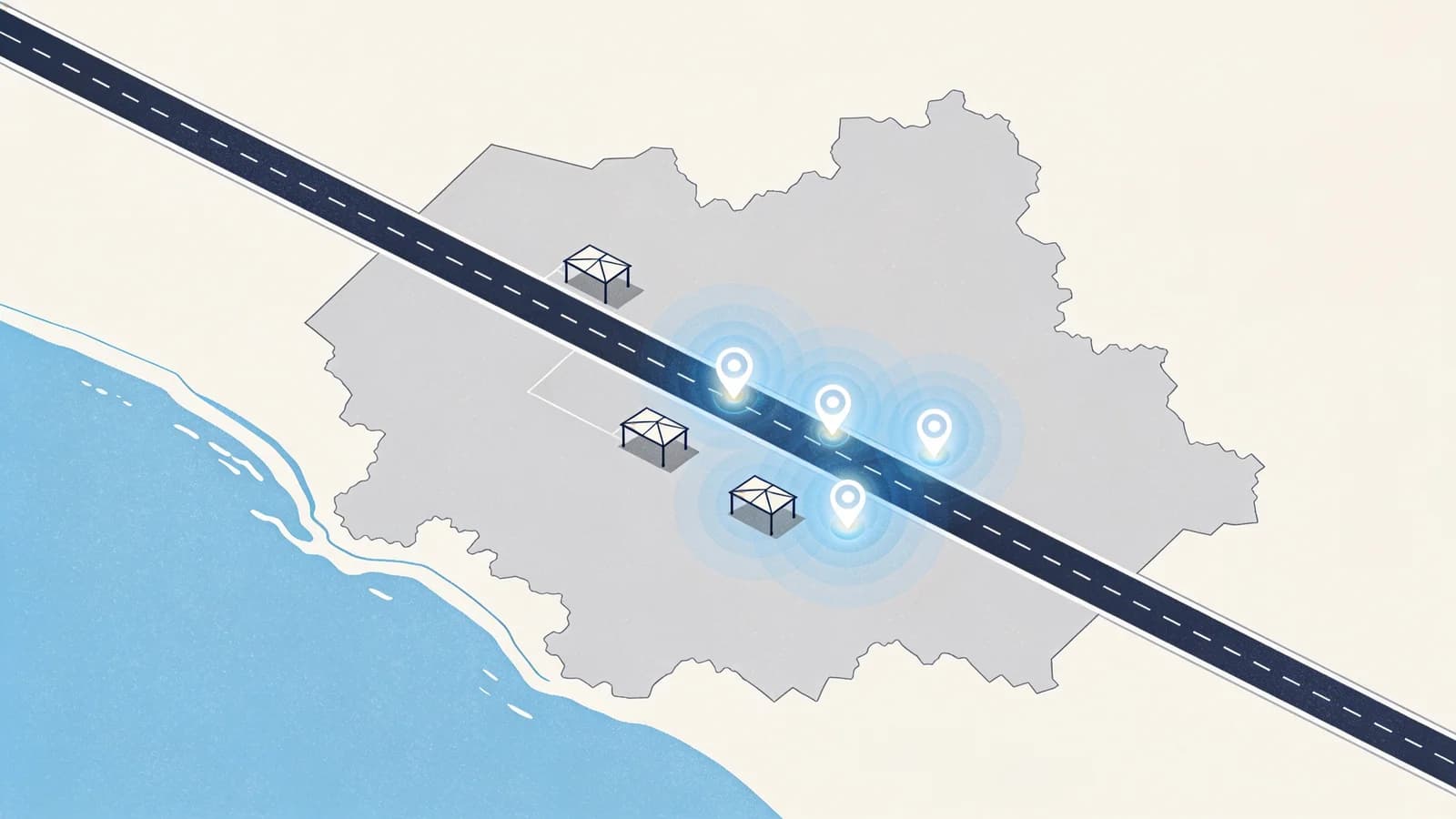
Nearly 40 percent of the overdoses analyzed happened outdoors, and those events followed a striking geography. Almost half of outdoor overdoses — 48 percent — occurred within a quarter mile of a gas station, compared with 23.5 percent of indoor events. Outdoor overdoses were also more likely to occur near major highways or interstates (33.6 percent versus 21.2 percent) and in non-residential areas (68.2 percent versus 32.8 percent). Across the county, 91 percent of mapped areas showed alignment between overdose and gas station distributions, with 45.5 percent showing statistically significant hotspot overlap, concentrated in eastern Palm Beach County along major transportation corridors.
The outdoor cases were not just geographically distinct. They more often involved stimulants and alcohol, and the people affected were more likely to be men, younger adults, uninsured — and, above all, unstably housed. Housing instability was the strongest factor in the entire analysis: someone without stable housing had more than five times the odds of overdosing within a quarter mile of a gas station compared with someone in stable housing.
The researchers are careful about causation. Gas stations do not cause overdoses. But they are open late, highly accessible and sit directly on the corridors where people without housing or transportation move through a county. That makes them a proxy for risk — and a potentially powerful targeting tool.
Turning a Map Into a Prevention Strategy
"Understanding overdose risk requires us to look beyond the individual and consider the places where people live, travel and spend time," said Dr. Maria C. Mejia, senior author and professor of population health at the Schmidt College of Medicine. Knowing where non-fatal overdoses cluster, she argued, lets officials place naloxone, outreach teams and treatment connections "in the places where they are most likely to be encountered."
That logic reframes the humble convenience store corridor as public health infrastructure. Naloxone vending machines, mobile outreach units and peer recovery specialists could be deployed along the corridors the data flags, rather than spread evenly across a map. The findings also strengthen the case for folding housing and social services into overdose prevention, since unstable housing so strongly predicted where people nearly died.
For families and providers, the study carries a quieter message: a non-fatal overdose is an intervention point, not just an emergency. Survival opens a door to opioid addiction treatment — if the system is positioned, geographically, to walk someone through it.
The study's first author is Whitney Van Arsdale of the Florida Department of Health in Palm Beach County; co-authors include Dr. Lewis S. Nelson, dean of the Schmidt College of Medicine.
Sources
Editorial Board
LADC, LCPC, CASAC
The Rainier Rehab editorial team consists of licensed addiction counselors, healthcare journalists, and recovery advocates dedicated to providing accurate, evidence-based information about substance abuse treatment and rehabilitation.
Related Articles
Extreme Heat Amplifies Overdose Risk, Yale Study Finds
New research reveals that rising temperatures significantly increase overdose mortality, with each degree of heat index elevation contributing to approximately 150 excess deaths annually.

British Columbia Naloxone Program Prevented 78% of Overdose Deaths, Study Finds
Landmark Canadian study shows take-home naloxone kits prevented nearly 4 in 5 fatal overdoses from 2019-2024, offering evidence for harm reduction strategies

U.S. Overdose Deaths Fall 13.2% to 69,147, Marking Steepest Decline in Years
CDC provisional data shows 69,147 predicted overdose deaths for the 12 months ending January 2026, a 13.2% decline as naloxone access and treatment expansion show measurable impact.