
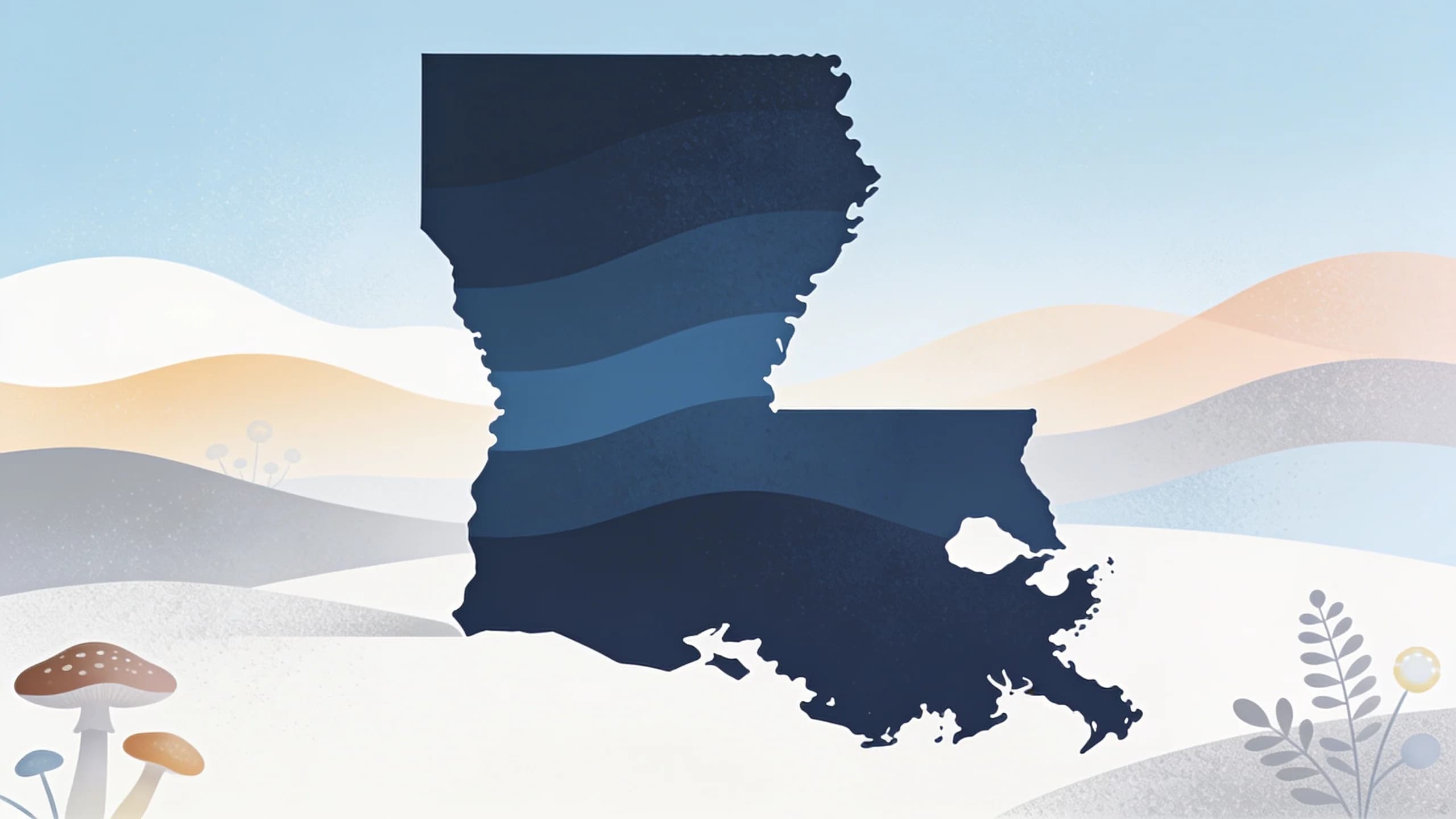
Louisiana Becomes First State to Fund Psychedelic Therapy Trials With Opioid Settlement Dollars
Louisiana has carved out a unique position in America's evolving approach to addiction treatment. By allowing legislation to create a psychedelic therapy pilot program—funded entirely through opioid settlement dollars—the state has become the first in the nation to redirect pharmaceutical industry penalties toward researching alternative treatments for substance use disorders.
The bill, which became law without Governor Jeff Landry's signature on June 26, establishes a framework for clinical trials investigating psilocybin, ibogaine, and MDMA as potential treatments for addiction and co-occurring mental health conditions. The legislation specifically targets Louisiana's share of the multi-billion dollar opioid settlements, directing those funds toward what supporters describe as innovative, evidence-based approaches to a crisis that has claimed hundreds of thousands of American lives.
Breaking From Traditional Settlement Spending
Most states have followed predictable patterns when allocating opioid settlement funds. The money typically flows toward expanding existing treatment infrastructure—more detox beds, additional counselors, wider naloxone distribution. Louisiana's approach represents a calculated gamble that some of the most promising addiction treatments may lie outside the conventional pharmaceutical toolkit.
The pilot program tasks state health officials with identifying academic medical centers qualified to conduct rigorous clinical trials. These institutions will investigate whether psychedelic-assisted therapy can succeed where traditional approaches have fallen short, particularly for individuals with treatment-resistant conditions. The legislation explicitly contemplates studies involving veterans, first responders, and others disproportionately affected by trauma-related substance use disorders.
Louisiana's decision comes as the state grapples with its own addiction crisis. While overdose deaths have declined nationally over the past year, Louisiana has experienced persistent challenges, particularly in rural communities where access to evidence-based treatment remains limited. The $600 million-plus the state expects to receive through various opioid settlements provides both the resources and, advocates argue, the obligation to explore every potentially effective intervention.
The Science Behind the Legislation
Research into psychedelic-assisted therapy has accelerated dramatically over the past decade. Johns Hopkins, NYU, and other major institutions have published findings suggesting that psilocybin—when combined with structured psychotherapy—can produce lasting reductions in depression and anxiety symptoms after just one or two sessions. For individuals whose substance use disorders co-occur with these conditions, the implications are significant.
Ibogaine, a naturally occurring compound derived from the African iboga shrub, has attracted particular attention for its unique mechanism of action. Unlike conventional addiction medications that manage withdrawal symptoms or block drug effects, ibogaine appears to interrupt the neurological patterns underlying addiction itself. Observational studies from Mexico and New Zealand, where ibogaine treatment operates in legal gray areas, have reported remarkable success rates for interrupting opioid dependence—though rigorous clinical trials remain limited.
MDMA-assisted therapy, currently under FDA priority review for PTSD treatment, addresses another critical intersection. Trauma and substance use disorders frequently co-occur, with many individuals using drugs or alcohol to self-medicate unresolved psychological wounds. If MDMA proves effective for PTSD, its role in comprehensive addiction treatment could expand substantially.
The Louisiana legislation acknowledges these preliminary findings while insisting on scientific rigor. The pilot program requires FDA oversight, institutional review board approval, and adherence to established clinical trial protocols. This structured approach distinguishes Louisiana's effort from jurisdictions that have simply decriminalized psychedelic substances without creating pathways for therapeutic use.
National Context and Growing Momentum
Louisiana's move arrives amid unprecedented federal attention to psychedelic medicine. In April, President Trump signed an executive order directing federal agencies to prioritize research into psychedelic therapies, including the creation of "National Priority Vouchers" to accelerate FDA review of promising treatments. The Department of Veterans Affairs has launched its first MDMA-assisted therapy trials, while the National Institutes of Health has substantially increased funding for psychedelic research.
Other states have taken notice. Texas established a medical psilocybin program for veterans in 2023. Colorado voters approved regulated therapeutic access to psilocybin in 2022. Oregon's voter-approved psilocybin therapy program, though recently scaled back by the legislature, demonstrated substantial public interest in alternative mental health treatments. Tennessee enacted legislation this spring specifically authorizing ibogaine clinical trials.
What distinguishes Louisiana's approach is the funding mechanism. By tapping opioid settlement dollars—money extracted from pharmaceutical companies whose marketing practices helped create the addiction crisis—the state has created a symbolic and practical link between past failures and future possibilities. The same industry that promoted OxyContin as non-addictive may now, indirectly, fund treatments that could render opioid dependence itself obsolete.
Implementation Challenges Ahead
Creating the pilot program represents only the first step. State health officials must now identify qualified research partners, establish protocols for participant recruitment, and navigate the complex regulatory landscape surrounding Schedule I substances. The FDA has shown increasing openness to psychedelic research, but approval for specific trials remains far from automatic.
The legislation also leaves significant questions unanswered. How much of Louisiana's opioid settlement allocation will ultimately flow to psychedelic research? Which patient populations will receive priority access? How will the state ensure equitable distribution of any proven treatments that emerge from the pilot program?
Critics have raised concerns about diversion of funds from proven interventions. Naloxone distribution, medication-assisted treatment expansion, and recovery support services all have established track records. Some addiction specialists worry that enthusiasm for novel approaches could siphon resources from these evidence-based foundations.
Proponents counter that the pilot program represents only a fraction of Louisiana's total settlement allocation. The state maintains substantial investments in conventional treatment infrastructure while simultaneously exploring whether psychedelic therapies could address the substantial portion of patients who do not respond to current options.
What This Means for Treatment Access
For individuals struggling with opioid addiction, Louisiana's experiment offers a distant but potentially significant promise. If clinical trials demonstrate safety and efficacy, psychedelic-assisted therapy could eventually join buprenorphine, methadone, and naltrexone as a standard treatment option—though likely reserved for specific populations and delivered in highly structured clinical settings.
The legislation also signals broader shifts in how policymakers conceptualize addiction treatment. The disease model of addiction, which emphasizes neurochemical changes in the brain, aligns naturally with pharmacological interventions. Psychedelic research suggests that psychological, emotional, and even spiritual dimensions may play equally important roles in recovery for some individuals.
Louisiana's pilot program will unfold over several years, with initial trials likely focusing on safety and dosing before expanding to efficacy studies. The state's experience—successes, failures, and implementation lessons—will inform similar efforts elsewhere. Other states watching Louisiana's progress may determine whether this funding model represents a template for their own settlement allocations.
The opioid crisis has forced American healthcare to confront the limitations of existing addiction treatments. Louisiana's willingness to explore unconventional approaches, backed by pharmaceutical industry settlement funds, reflects both desperation and hope—the recognition that current strategies, while valuable, have not ended the crisis, and the possibility that solutions may emerge from unexpected sources.
Editorial Board
LADC, LCPC, CASAC
The Rainier Rehab editorial team consists of licensed addiction counselors, healthcare journalists, and recovery advocates dedicated to providing accurate, evidence-based information about substance abuse treatment and rehabilitation.
Related Articles

Tennessee Enacts HOPE Act, Clearing Path for Ibogaine Clinical Trials
Tennessee becomes latest state to legalize FDA-approved ibogaine research, joining Texas and Arizona in studying the psychedelic for PTSD and opioid addiction treatment.

Psilocybin Therapy Clears Phase 3 Hurdle for Depression, Setting Stage for FDA Submission
Compass Pathways' COMP360 psilocybin therapy achieves primary endpoints in two Phase 3 trials for treatment-resistant depression, with FDA submission planned for late 2026.

FDA Fast-Tracks CS-1103: A New Weapon Against Fentanyl Overdoses
FDA grants Fast Track designation to CS-1103, a first-in-class molecule that binds and clears fentanyl from the body, potentially revolutionizing overdose treatment.