
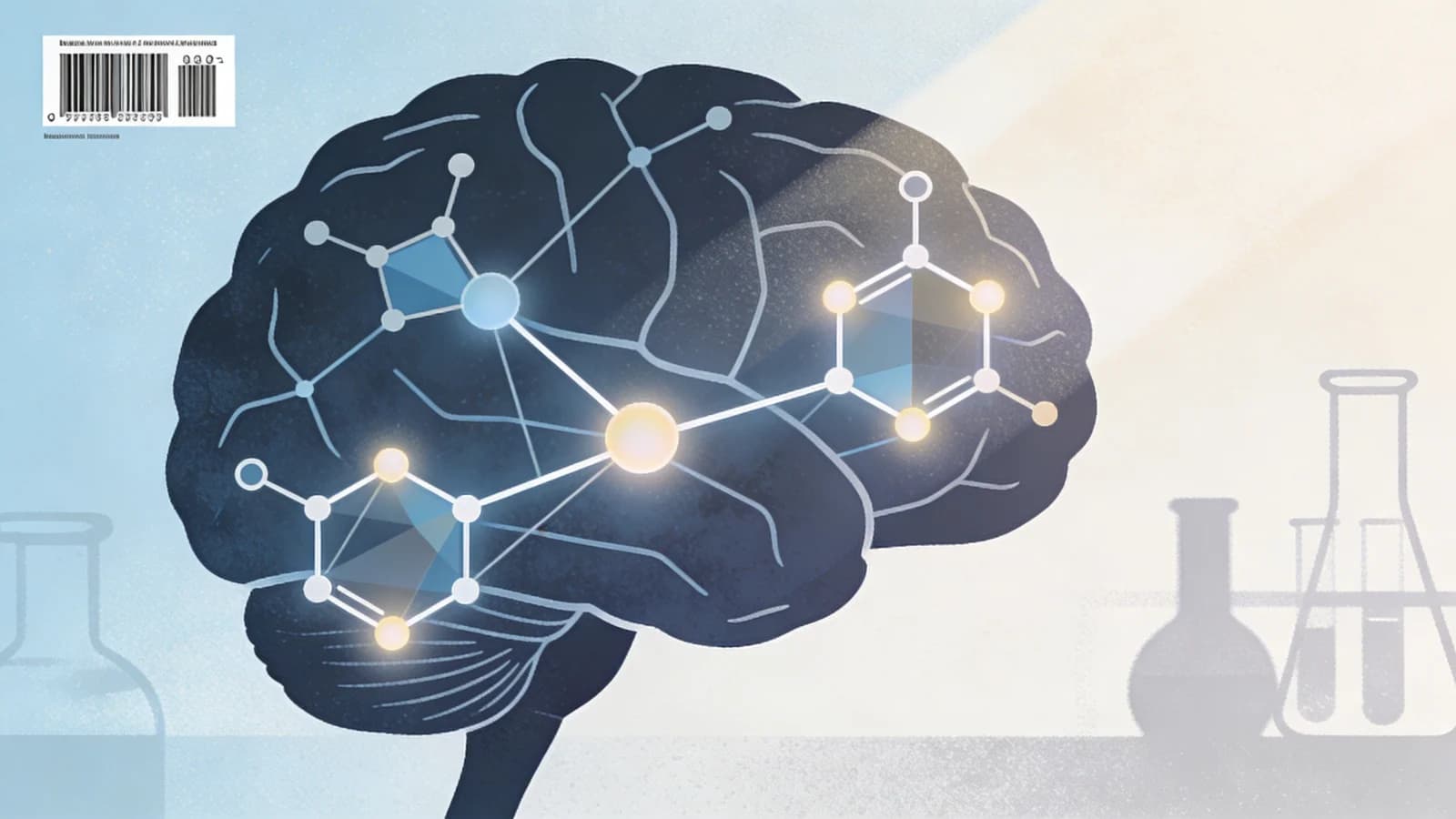
UC Davis Scientists Develop Non-Hallucinogenic Psychedelics That Could Treat Addiction Without the Trip
For decades, the therapeutic potential of psychedelic compounds has been entangled with their mind-altering properties. The very experiences that seemed to help people break free from depression, addiction, and trauma also limited who could safely access these treatments and where they could be administered. Now, a team at the University of California, Davis has opened a door that many in the field thought might remain closed: psychedelic-inspired medicine without the psychedelic experience itself.
The research, published in the Journal of the American Chemical Society, describes the creation of entirely new compounds that activate the same serotonin receptors targeted by psilocybin and other classical psychedelics—yet produce none of the hallucinogenic effects in animal testing. The discovery could fundamentally reshape how addiction and mental health treatment develops in the coming years.
How the Discovery Unfolded
The UC Davis team, led by chemistry professor Mark Mascal and including Ph.D. students Joseph Beckett and Trey Brasher, approached the problem from an unusual angle. Rather than modifying existing psychedelic compounds, they built new molecules from the ground up using amino acids—the fundamental building blocks of proteins—and tryptamine, a naturally occurring metabolite derived from the essential amino acid tryptophan.
The key innovation came when the researchers exposed these amino acid-tryptamine combinations to ultraviolet light. This photochemical process triggered transformations that yielded compounds no one had previously characterized. Using computer modeling, the team evaluated how 100 of these novel molecules interacted with the brain's 5-HT2A serotonin receptor, the primary target of psychedelic drugs and a receptor increasingly linked to neuroplasticity and healing.
Five compounds showed particular promise. The strongest performer, designated D5, acted as a full agonist at the 5-HT2A receptor—meaning it could trigger the maximum possible biological response from that system. In laboratory tests, D5 activated the receptor with 93% efficacy.
The Surprising Absence of Hallucinations
Given D5's potency at the 5-HT2A receptor, the researchers fully expected it to produce head twitch responses in mice, the standard behavioral indicator of hallucinogenic effects. Classical psychedelics like psilocybin reliably trigger these responses, which researchers consider analogous to the perceptual changes humans experience.
But the mice showed no such behavior.
"Laboratory and computational studies showed that these molecules can partially or fully activate serotonin signaling pathways linked to both brain plasticity and hallucinations, while experiments in mice demonstrated suppression of psychedelic-like responses rather than their induction," Beckett and Brasher explained in a joint statement.
This unexpected finding challenges fundamental assumptions about how psychedelics work. The prevailing theory has held that therapeutic effects and hallucinogenic effects were inextricably linked through 5-HT2A activation. If the UC Davis compounds can promote neuroplasticity—the brain's ability to form new connections and pathways—without perceptual distortion, it would separate the therapeutic mechanism from the experiential one for the first time.
Why This Matters for Addiction Treatment
The implications for substance use disorder treatment are substantial. Current psychedelic-assisted therapy requires careful clinical supervision, often lasting several hours per session. Patients must be screened for psychosis risk and other contraindications. The treatments are expensive and resource-intensive.
A non-hallucinogenic compound that retained therapeutic benefits could change the equation entirely. Such medications might be administered in standard clinical settings without the need for extended supervision. They could potentially reach populations currently excluded from psychedelic trials, including those with family histories of psychotic disorders or those whose work schedules cannot accommodate full-day treatment sessions.
The 5-HT2A receptor has emerged as a particularly promising target for addiction research. Studies suggest that activation of this receptor promotes dendritic growth and synaptic connectivity—essentially helping the brain rewire itself away from addictive patterns. Traditional psychedelics appear to achieve this through a combination of biological and psychological mechanisms. The UC Davis research raises the possibility that the biological component might be sufficient.
Unraveling the Mechanism
The research team is now investigating why D5 activates the 5-HT2A receptor without producing hallucinogenic effects. One hypothesis involves the complex pharmacology of serotonin signaling. The 5-HT2A receptor couples to multiple intracellular pathways, and different compounds might activate these pathways to different degrees. Perhaps D5 selectively triggers the signaling cascades associated with neuroplasticity while bypassing those linked to perceptual changes.
Another possibility involves other serotonin receptor subtypes. The brain contains at least 14 different serotonin receptors, and many psychedelic compounds interact with several of them. D5 might produce effects at other receptors that somehow counteract or modulate the hallucinogenic potential of 5-HT2A activation.
"We determined that the scaffold itself possesses a range of activity," Brasher noted. "But now it's about elucidating that activity and understanding why D5 and similar molecules are non-hallucinogenic when they're full agonists."
A New Therapeutic Scaffold
Beyond the specific compounds discovered, the research establishes what the authors call a "brand-new therapeutic scaffold"—a fundamentally different chemical architecture for serotonin-targeting drugs. Most psychedelic research has focused on variations of existing compound classes: tryptamines like psilocybin and DMT, phenethylamines like mescaline, or ergolines like LSD.
The UC Davis approach, using UV light to transform amino acid-based starting materials, creates molecules that don't fit neatly into any of these categories. This expands the chemical space available for drug development and suggests that other undiscovered compound classes might exist.
"The question that we were trying to answer was, 'Is there a whole new class of drugs in this field that hasn't been discovered?'" Beckett recalled. "The answer in the end was, 'Yes.'"
The photochemical synthesis method also offers potential advantages for manufacturing. The process is relatively simple and uses readily available starting materials, which could make production more scalable and environmentally sustainable than the complex syntheses required for many current psychedelic compounds.
The Road Ahead
Moving from animal studies to human trials will require substantial additional research. The team must characterize the pharmacokinetics of these compounds—how they're absorbed, distributed, metabolized, and excreted. They'll need to assess safety profiles across longer timeframes and in models more closely approximating human physiology.
If the non-hallucinogenic property holds in humans, the clinical development path would likely differ significantly from that of classical psychedelics. Without the need for specialized psychotherapy protocols and extended supervision, these compounds might follow more conventional drug development routes, potentially reaching patients faster and at lower cost.
The research was funded by the National Institutes of Health and the Source Research Foundation, reflecting federal interest in developing new approaches to mental health and addiction treatment. As the nation continues grappling with substance use disorders that claim over 70,000 lives annually, novel therapeutic strategies are urgently needed.
For a field that has long accepted the psychedelic experience as inseparable from the therapeutic benefit, the UC Davis findings represent a potential paradigm shift—one that could make the healing properties of these remarkable compounds accessible to far more people than ever before.
Sources
Editorial Board
LADC, LCPC, CASAC
The Rainier Rehab editorial team consists of licensed addiction counselors, healthcare journalists, and recovery advocates dedicated to providing accurate, evidence-based information about substance abuse treatment and rehabilitation.
Related Articles

First New Smoking Cessation Drug in 20 Years: Cytisinicline Nears Market as Company Builds Commercial Team
Achieve Life Sciences assembles veteran pharmaceutical leadership team from Verona Pharma ahead of FDA decision on cytisinicline, the first novel smoking cessation therapy since 2006.

How GLP-1 Drugs Rewire the Brain's Reward System: New NIH Study Opens Door to Addiction Treatment
NIH-funded research reveals how oral GLP-1 medications penetrate deep into brain reward circuits, offering new pathways for treating substance use disorders beyond weight loss.

Texas Prepares to Launch Medical Psilocybin Program by End of 2026, Joining National Push for Psychedelic Therapy
Texas is developing a medical psilocybin program to treat depression, PTSD, and substance use disorders, with support from Trump's executive order and FDA fast-tracking.