
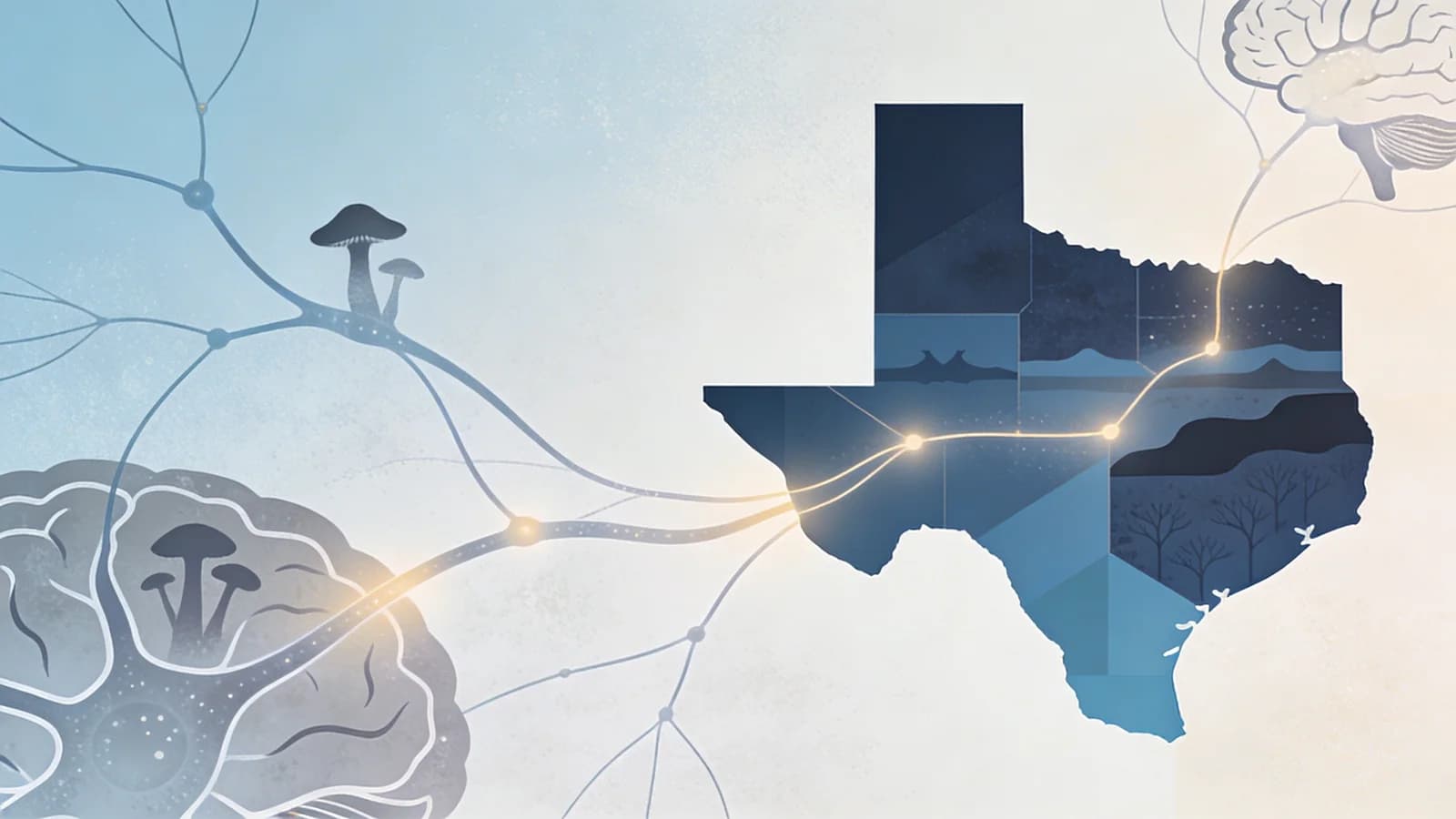
Texas Prepares to Launch Medical Psilocybin Program by End of 2026, Joining National Push for Psychedelic Therapy
Texas is positioning itself at the forefront of a medical revolution. By the end of 2026, the state expects to launch a medical psilocybin program that will offer psychedelic-assisted therapy to patients with depression, PTSD, substance use disorders, and those facing end-of-life psychological distress. The initiative arrives as the FDA fast-tracks multiple psychedelic compounds and the Trump administration signals unprecedented federal support for these treatments.
The convergence of state-level innovation and federal policy shifts represents a dramatic departure from decades of prohibition. For thousands of Texans who have exhausted conventional treatments, the program offers hope where pharmaceutical antidepressants and talk therapy have failed.
The Science Behind Psychedelic Therapy
Psilocybin, the psychoactive compound found in certain mushrooms, works differently from traditional psychiatric medications. Rather than requiring daily dosing over months or years, psychedelic-assisted therapy typically involves one to three supervised sessions where patients ingest the compound and undergo guided psychological exploration.
"Psychedelic-assisted therapy involves one or a few psychedelic experiences which support ongoing therapy, and the effects are felt quickly, within hours to days," explains Dr. Lynnette Averill, who leads a psilocybin clinical trial at Baylor College of Medicine and the Menninger Clinic in Houston.
Researchers believe psychedelics promote neuroplasticity—the brain's ability to form new neural connections. In therapeutic contexts, this neuroplastic window allows patients to process trauma, break rigid thought patterns, and develop healthier perspectives. The treatment model combines the psychedelic experience with preparatory and integration therapy sessions, creating a comprehensive approach that addresses root causes rather than merely managing symptoms.
Federal Momentum Accelerates
The Texas program gains tailwind from two major federal developments. In April, President Trump signed an executive order directing federal agencies to accelerate research and access to psychedelic treatments for serious mental illness. The order explicitly supports states developing their own programs and establishes a $50 million funding pool through the Advanced Research Projects Agency for Health (ARPA-H).
Weeks later, the FDA announced it would award National Priority Vouchers to three companies developing psychedelic therapies. These vouchers fast-track the approval process for psilocybin compounds targeting treatment-resistant depression and major depressive disorder, as well as methylone—a compound similar to MDMA—for PTSD. Each had previously received Breakthrough Therapy designation, the FDA's recognition that these treatments demonstrate substantial improvement over existing options.
Why Texans Are Seeking Treatment Abroad
The demand for these therapies already exists. Thousands of veterans, first responders, and civilians have traveled to countries where psychedelic treatment is legal, spending tens of thousands of dollars on programs in Mexico, Costa Rica, and Jamaica after exhausting options at home.
Garrett Coppedge, an Austin attorney diagnosed with complex PTSD and major depressive disorder, represents this growing population. After years of antidepressants, talk therapy, and ketamine infusions provided only temporary relief, he traveled to Mexico in February for ibogaine-assisted therapy.
"And I love being a lawyer," Coppedge said, describing his choice between seeking alternative treatment or leaving his profession. "So it really broke my heart."
His experience at The Mission Within, a clinic operating just south of the California border, included medical screening, preparation sessions with therapists, and guided psychedelic experiences alongside special operations veterans facing similar struggles. Marine Corps combat veteran Ryan Roberts, who underwent treatment at the same facility, reported that ibogaine helped resolve chronic migraines from a traumatic brain injury sustained during combat.
The Texas Program: What We Know
While specific regulatory details remain under development, the Texas program will likely follow models being established in other states. Oregon and Colorado have already implemented psilocybin frameworks, providing templates for licensing facilitators, establishing safety protocols, and determining eligibility criteria.
The Texas Department of State Health Services is expected to release draft regulations this summer, with public comment periods before final implementation. Key questions include whether the program will require referral from licensed mental health professionals, what screening will exclude patients with certain psychiatric or medical conditions, and how facilitators will be trained and certified.
Former Governor Rick Perry has emerged as an unexpected advocate, helping secure tens of millions in funding for psychedelic research at the University of Texas Dell Medical School. This research infrastructure positions Texas to contribute to the growing evidence base while developing its own treatment protocols.
Implications for Addiction Treatment
For people struggling with substance use disorders, the Texas program could expand treatment options significantly. Clinical trials have shown promising results for psilocybin in treating alcohol use disorder and tobacco dependence, with ongoing studies examining its efficacy for opioid and stimulant addiction.
The mechanism appears related to psychedelics' ability to interrupt compulsive behavioral patterns and provide patients with new perspectives on their relationship with substances. Unlike medication-assisted treatment options such as buprenorphine or methadone, which manage withdrawal and cravings, psychedelic therapy aims to address underlying psychological drivers of addiction.
Challenges and Cautions
Despite the enthusiasm, significant challenges remain. Psychedelic therapy requires specialized training for facilitators, careful medical screening to exclude patients with conditions like schizophrenia or uncontrolled bipolar disorder, and appropriate clinical settings. The treatments are not appropriate for everyone, and adverse psychological reactions, while rare in controlled settings, can occur.
Cost represents another barrier. Without insurance coverage, which remains limited for psychedelic therapy, treatment could run thousands of dollars per session. Advocates hope that FDA approval and expanded research will eventually lead to coverage parity, but this transition could take years.
A Shifting Landscape
The Texas program reflects broader changes in how American medicine conceptualizes mental health and addiction treatment. After decades of reliance on daily pharmaceutical management, the field is increasingly open to interventions that produce rapid, durable change through intensive therapeutic experiences.
As 2026 progresses, Texas will join a growing number of states navigating the complex work of making these treatments accessible while maintaining safety standards. For patients who have cycled through conventional options without success, the program represents not just a new treatment modality, but a fundamental rethinking of what healing from mental illness and addiction might look like.
Editorial Board
LADC, LCPC, CASAC
The Rainier Rehab editorial team consists of licensed addiction counselors, healthcare journalists, and recovery advocates dedicated to providing accurate, evidence-based information about substance abuse treatment and rehabilitation.
Related Articles
Trump's Psychedelics Order: FDA Vouchers, $50M Federal Push
President Trump signed an executive order accelerating psychedelic drug research, directing FDA priority vouchers, Right to Try access, and $50 million in federal-state partnerships.
UC Davis Scientists Develop Non-Hallucinogenic Psychedelics That Could Treat Addiction Without the Trip
Researchers create a new class of compounds that activate serotonin receptors linked to brain healing without causing hallucinations, potentially opening addiction treatment to broader populations.
FDA Fast-Tracks Psychedelic Therapies for Depression, PTSD
Agency accelerates regulatory action on psilocybin, methylone, and noribogaine following Trump executive order, issuing priority vouchers and clearing Phase 1 studies.