
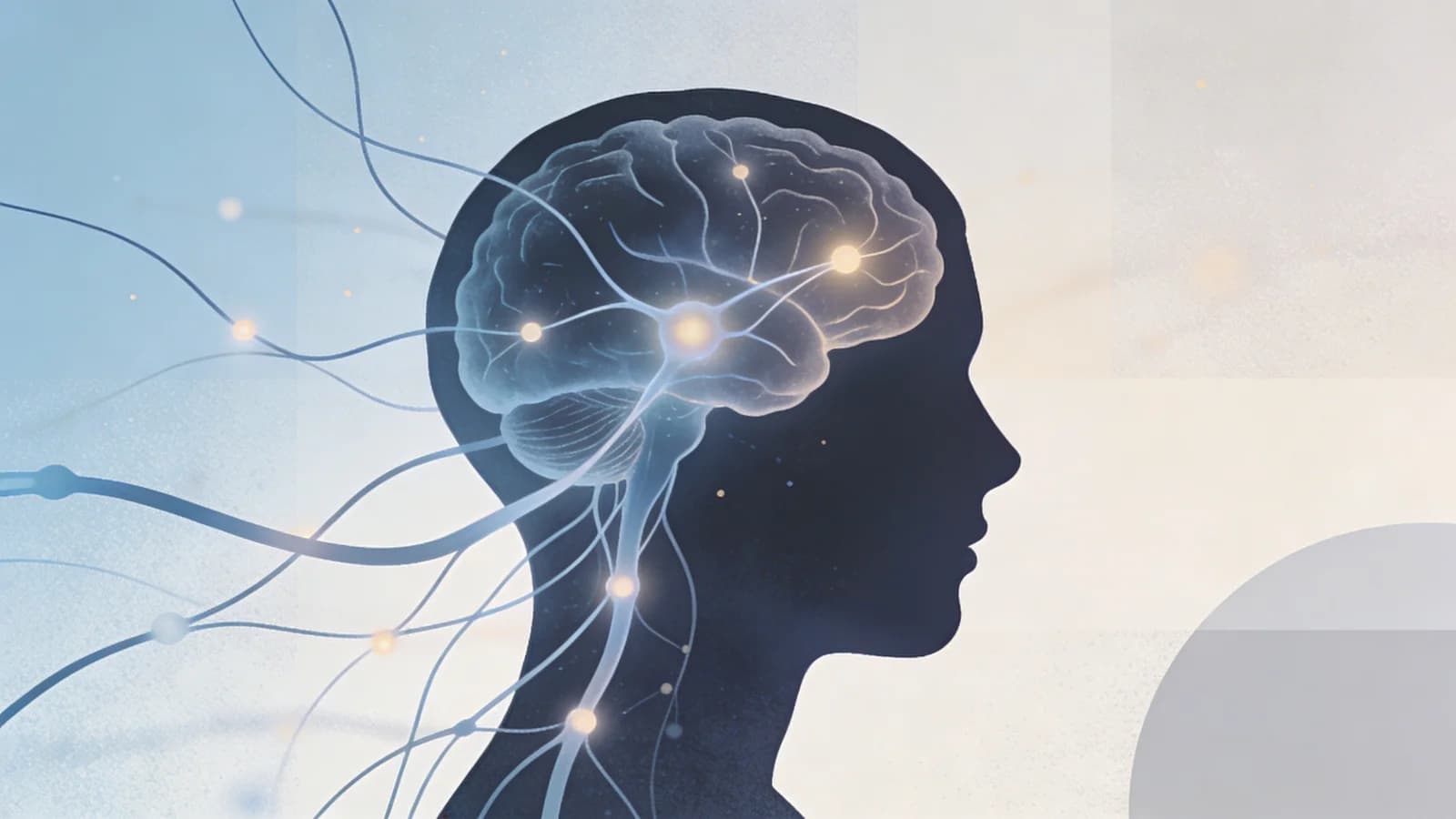
Single Psilocybin Dose Produces Lasting Brain Changes, Study Finds
For decades, clinicians have observed that psychedelic experiences can catalyze profound psychological shifts. Now, neuroscientists at UC San Francisco and Imperial College London have documented something more concrete: a single dose of psilocybin appears to physically reshape the brain in ways that persist for weeks.
Published in Nature Communications, the study tracked 28 healthy adults with no prior psychedelic use through two experimental sessions. First, participants received a 1 mg placebo dose. One month later, they took a 25 mg dose of psilocybin—the standard therapeutic amount used in clinical trials for depression and addiction treatment.
Measuring the Unmeasurable
The research team employed a sophisticated battery of neuroimaging techniques: EEG to track electrical activity, MRI to map structure, and diffusion tensor imaging (DTI) to measure water movement along neural pathways. What they found challenges conventional assumptions about how quickly the brain can reorganize itself.
Within 60 minutes of ingestion, EEG recordings showed a sharp spike in brain entropy—a measure of neural diversity. Low-entropy brains fall into predictable, repetitive patterns. High-entropy brains process richer, more varied streams of information. This elevated entropy outlasted the drug's acute effects, persisting as participants returned to baseline consciousness.
More striking were the structural changes visible a month later. DTI scans revealed that participants' white matter tracts appeared more structurally intact than before. This finding runs counter to typical aging patterns, which tend to weaken these connections over time. The most pronounced changes occurred in pathways linking frontal and midbrain regions—areas governing self-reflection, emotional regulation, and decision-making.
"Psychedelic means 'psyche-revealing,' or making the psyche visible," said senior author Robin Carhart-Harris, PhD, the Ralph Metzner Distinguished Professor of Neurology at UCSF. "Our data shows that such experiences of psychological insight relate to an entropic quality of brain activity and how both are involved in causing subsequent improvements in mental health."
The Insight Connection
The study uncovered a critical link between brain states and psychological outcomes. Participants who experienced the largest entropy increases also reported the most profound insights the following day—deeper emotional self-awareness, shifted perspectives on personal challenges, and a sense of mental clarity.
These insights correlated with measurable improvements in well-being that lasted two to four weeks. On cognitive flexibility tests administered a month post-dose, participants demonstrated enhanced ability to adapt their thinking to new information—a capacity often impaired in depression and addiction.
"Psilocybin seems to loosen up stereotyped patterns of brain activity and give people the ability to revise entrenched patterns of thought," said Taylor Lyons, PhD, a research associate at Imperial College London and study co-author. "The fact that these changes track with insight and improved well-being is especially exciting."
All but one participant described the 25 mg experience as the most unusual state of consciousness they had ever encountered. The remaining participant ranked it among their top five most significant mental experiences.
Implications for Addiction Treatment
The findings carry particular weight for substance use disorder research. Addiction often involves rigid, repetitive patterns of thought and behavior—what clinicians call "stuck" cognitive loops. The study suggests psilocybin may temporarily disrupt these loops at a neurological level, creating a window for psychological restructuring.
Previous research has demonstrated psilocybin's efficacy in treating alcohol use disorder, tobacco dependence, and cocaine addiction. This new data helps explain why it works. By increasing brain entropy and promoting neuroplasticity, the compound appears to enhance the brain's capacity for change—precisely what recovery requires.
The structural integrity improvements in white matter tracts are especially relevant. These pathways facilitate communication between brain regions involved in craving, impulse control, and reward processing. Strengthening them could theoretically support long-term recovery by improving self-regulation capacities.
Calibrating the Experience
One of the study's most practical contributions involves dosage optimization. If brain entropy during the experience predicts therapeutic outcomes, clinicians might eventually use real-time EEG monitoring to calibrate doses—ensuring patients receive enough to support insight and recovery without excessive stimulation.
This approach would address a longstanding challenge in psychedelic therapy: the narrow therapeutic window. Too little produces minimal effect; too much can overwhelm patients with anxiety or confusion. Objective biomarkers could help clinicians navigate this balance more precisely.
Limitations and Next Steps
The researchers caution that their findings require replication. The sample size was modest, and all participants were healthy adults without mental health diagnoses. Whether similar changes occur in clinical populations—depressed patients, individuals with opioid addiction, trauma survivors—remains an open question.
Additionally, the one-month follow-up period, while longer than most acute drug studies, cannot establish whether these changes persist over months or years. Longitudinal studies tracking participants for six months or longer would clarify the durability of psilocybin's neuroplastic effects.
Carhart-Harris acknowledges these uncertainties while emphasizing the significance of documenting biological mechanisms underlying psilocybin's therapeutic effects.
"We already knew psilocybin could be helpful for treating mental illness," he said. "But now we have a much better understanding of how."
The Broader Context
The study arrives at a pivotal moment for psychedelic medicine. With FDA priority vouchers supporting accelerated research and the Trump administration's recent executive order directing federal agencies to facilitate psychedelic studies, the field is gaining institutional legitimacy.
Several psilocybin trials for addiction are currently underway, including studies targeting alcohol use disorder at Johns Hopkins and NYU. This new neuroimaging data provides a mechanistic rationale for these efforts, potentially strengthening the evidence base for regulatory approval.
For patients and families navigating addiction, the research offers something equally valuable: hope grounded in neurobiology. The brain's capacity for change—neuroplasticity—may be more robust than previously imagined. And substances once dismissed as mere intoxicants might, in controlled therapeutic contexts, help unlock that capacity.
The psychedelic renaissance in psychiatry is often framed as a return to pre-prohibition research traditions. But studies like this suggest something more: a genuinely new understanding of how consciousness, brain structure, and healing intersect. The psyche revealed, as Carhart-Harris puts it, may be more malleable than we thought.
Editorial Board
LADC, LCPC, CASAC
The Rainier Rehab editorial team consists of licensed addiction counselors, healthcare journalists, and recovery advocates dedicated to providing accurate, evidence-based information about substance abuse treatment and rehabilitation.
Related Articles
USC Launches First-Ever Clinical Trial of Psilocybin Therapy for Mental Health
University of Southern California receives funding to launch its first clinical study of psilocybin-assisted therapy combined with mindfulness meditation for mental well-being.
Single Dose of Psilocybin Shows Rapid Antidepressant Effects in Swedish Trial
First randomized double-blind study in Sweden finds psilocybin provides clinically meaningful depression relief within days, with 53% remission rate at six weeks.
A Pilot Put an EEG Rig in an Addiction Clinic. Making Music Moved One Brain Signal.
A 16-person pilot recorded EEG during music therapy at a London addiction service and found immediate craving drops plus a shift in frontal alpha asymmetry.