
Cocaine Now Appears in 61% of Cuyahoga County Overdose Deaths. Fentanyl Fell Too Fast for Anyone to Notice the Swap.
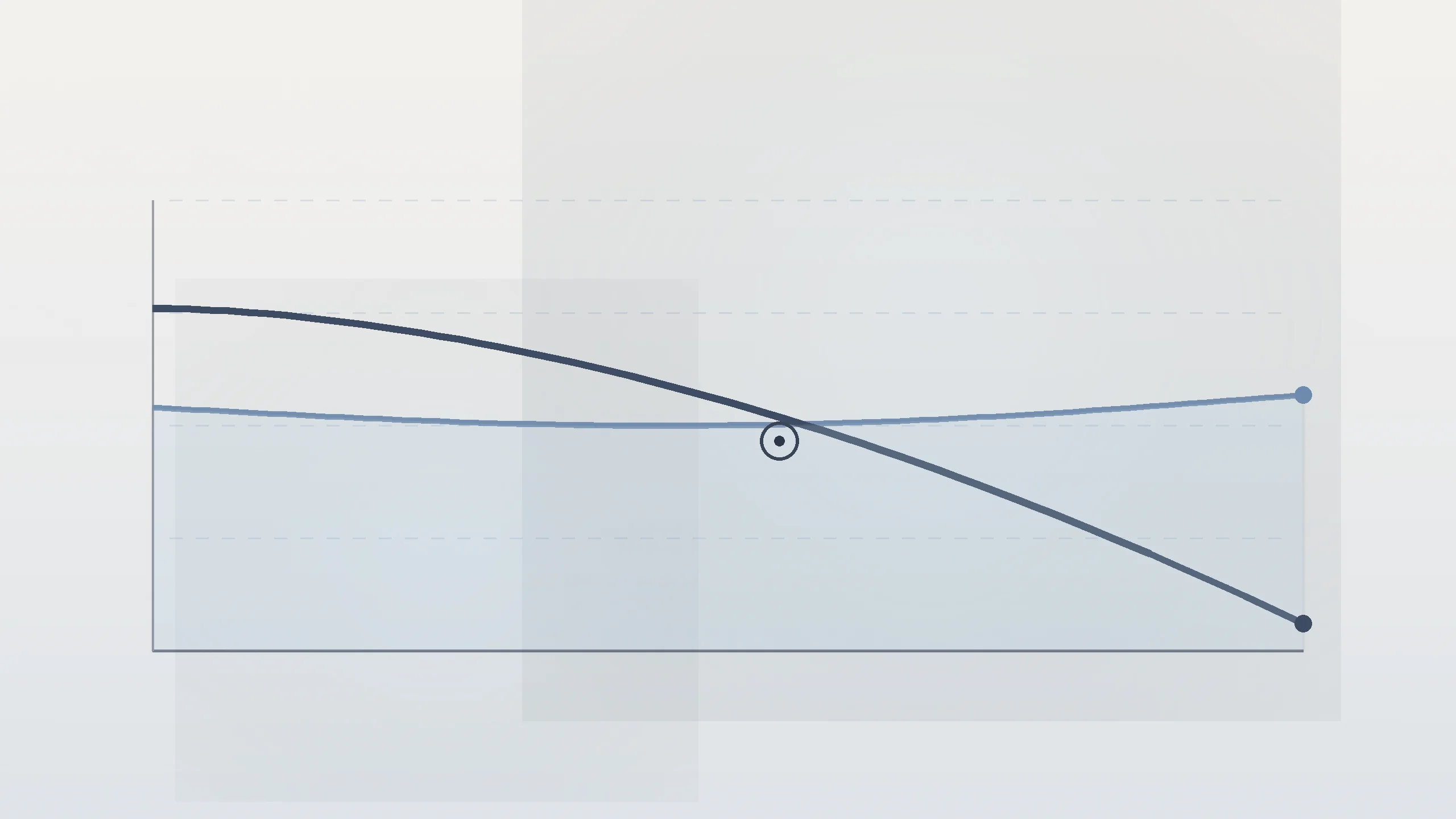
Cuyahoga County's overdose death rate has been falling for three years, which is the good news that has been reported steadily since 2024. Buried in the same medical examiner records is a structural change in what is killing people: cocaine is now involved in about 61% of the county's overdose deaths, fentanyl in about 39%. The percentages overlap, because some deaths involve both. But the ranking has flipped, and the reason is not that cocaine got worse.
It is that fentanyl got better. Fentanyl-involved deaths in the county fell from 469 in 2023 to 276 in 2024 and 140 in 2025 — a decline of roughly 70% in two years. Cocaine-involved deaths fell from 358 to 232 to 221 over the same period, about 38%. Total overdose deaths went 635, then 419, then 363. One curve dropped off a cliff. The other flattened into a plateau, and the plateau is now the bigger of the two.
What the county's own records show
The numbers come from completed death investigations, which is a narrower and more reliable dataset than the suspected-death alerts that county officials issue in real time. In 2025, Cuyahoga recorded 221 overdose deaths involving cocaine. Of those, 85 also involved fentanyl and 136 did not — 61.5% of cocaine-involved deaths had no fentanyl in them at all.
Through Oct. 19 of this year, the medical examiner had confirmed 124 cocaine-involved deaths. Fifty-four also involved fentanyl. Seventy, or 56.5%, did not.
That matters because the standard story about the stimulant era is a story about contamination: people think they are buying powder or a pressed pill and get fentanyl instead. In Cuyahoga, most cocaine deaths are not that. In 69 of the 136 fentanyl-free cocaine deaths in 2025, cocaine was the only drug listed in the cause of death. Another 67 involved cocaine plus at least one other substance that was not fentanyl. In the 2026 cases, 42 were cocaine alone among the 70 without fentanyl.
Cocaine by itself can kill. It is a sodium-channel blocker and a potent vasoconstrictor; at sufficient dose it produces arrhythmias, myocardial infarction, seizures, hyperthermia and cerebral hemorrhage, and the margin between a recreational dose and a fatal one is narrow and unpredictable because purity varies enormously from batch to batch. Naloxone does nothing for any of that.
The alert that hasn't been classified yet
On Nov. 6, county officials warned of 40 suspected overdose deaths over roughly five weeks in October and November, 17 of them Black residents. Medical Examiner Dr. Thomas Gilson said a majority of preliminary drug screenings in those cases were positive for cocaine, with about half of those also showing fentanyl. "Prevention and treatment of drug use work, and are as important as ever," he said in the announcement.
Those 40 deaths are preliminary. Final drug classifications have not been released, which means they cannot yet be compared with the completed 2025 and 2026 figures. That distinction is doing real work in this story: preliminary screening detects what is present, while a completed investigation determines what caused or contributed to death. The medical examiner's office has been explicit that finding a drug in a toxicology panel does not establish that it killed anyone.
If the preliminary pattern holds through classification, the five-week cluster would be the second consecutive signal that the stimulant share of county deaths is not a statistical artifact. If it does not, the crossover still stands on its own — 221 cocaine-involved deaths against 140 fentanyl-involved deaths in 2025 is not a close call.
Why the stimulant side of the epidemic behaves differently
The national picture has been drifting the same way. Fentanyl deaths have fallen steeply across most of the country since 2023, and several states have recorded their lowest overdose totals in a decade. Stimulant deaths have not followed. Cocaine and methamphetamine supply has become cheaper and more potent, and treatment for stimulant use disorder remains the weakest part of the addiction medicine toolkit: there is no FDA-approved medication for cocaine or methamphetamine use disorder, and no equivalent of buprenorphine to stabilize someone through early recovery.
What exists instead is behavioral treatment with a real evidence base. Contingency management — paying people for verified drug-negative tests, usually with small retail vouchers — has the strongest randomized evidence of any intervention for stimulant use disorder, and it remains underused because of a long-standing prohibition on incentive payments in federal health programs and a persistent discomfort among clinicians about the idea of paying patients. For people who also meet criteria for an opioid use disorder, opioid addiction treatment still has to run in parallel, because the two supplies are now frequently used together and the opioid side is the part with a pharmacological answer.
For cocaine specifically, the care that works looks unglamorous: stimulant addiction treatment built around contingency management, cognitive behavioral therapy, and aggressive management of the cardiovascular risk that comes with chronic use. There is no shot, no monthly injection, no take-home medication.
The harm reduction problem with a stimulant-led epidemic
Cuyahoga County launched a public campaign in July called Signs of OD, aimed at teaching residents to recognize a cocaine overdose: chest pain, seizures, racing pulse, heavy sweating, paranoia, confusion, loss of consciousness. The county's alert paired that with guidance that reads like a correction to a decade of opioid-only messaging — sit the person upright, because slumping forward can obstruct the airway; do not use alone; call 911 and invoke Ohio's Good Samaritan law, which shields both the person overdosing and the person who called from minor possession charges.
The awkward part is naloxone. Everyone in the county has been told for years to carry it, and they should keep carrying it, because witnesses rarely know what was in the bag. The CDC's guidance is to give naloxone whenever opioids might be involved, since it will not harm someone who has not taken an opioid. But it will not touch cocaine's direct toxicity, and in a county where three of every five overdose deaths involve cocaine, a naloxone-only response leaves most of the risk unaddressed.
What fills the gap is thinner: fentanyl test strips, which tell you what is not in a bag but not how much cocaine is; overdose prevention sites, which Ohio does not permit; and emergency department protocols for cocaine-associated chest pain, which are well established but only help if the person gets to a hospital.
What the county numbers cannot tell you
Three limits are worth stating plainly. The first is that "cocaine-involved" is not "cocaine-caused." The medical examiner counts every drug found in a death investigation, so a person who died of a gunshot wound with cocaine in their system may appear in the same tally as a fatal arrhythmia. The second is that the 2026 figures are provisional and will grow as investigations close. The third is that the crossover is a ratio effect as much as a cocaine effect: the absolute number of cocaine deaths has barely moved in two years, and could plausibly fall next year while cocaine's share keeps rising, if fentanyl deaths continue dropping faster.
That last point is the one worth carrying into how the county spends its settlement money. A declining overdose total is the kind of number that makes a problem feel solved, and Cuyahoga's total has fallen by 43% since 2023. But the composition of the deaths has changed under the total, from a crisis with a medication to a crisis without one. The 40 deaths in five weeks that prompted the November alert are a reminder that the plateau is not flat. It is where the next few years of this epidemic are going to be fought, and the tools there are behavioral, slow and underfunded in a way that naloxone distribution never was.
Sources
- cleveland.com, "Cocaine overtakes fentanyl in Cuyahoga overdose death statistics" (Nov. 12, 2026)
- cleveland.com, "Most cocaine-related overdose deaths in Cuyahoga County did not involve fentanyl, records show" (Nov. 2026)
- WOIO / cleveland19.com, "Medical examiner: This drug drives all overdose deaths in Cuyahoga County" (Nov. 6, 2026)
- Ideastream Public Media, "Spike in overdose deaths prompts public health alert in Cuyahoga County" (Nov. 6, 2026)
Editorial Board
LADC, LCPC, CASAC
The Rainier Rehab editorial team consists of licensed addiction counselors, healthcare journalists, and recovery advocates dedicated to providing accurate, evidence-based information about substance abuse treatment and rehabilitation.
Related Articles

Where Orange County Packs the Most Rehabs, Out-of-State Visitors Overdose Most
California emergency data show out-of-state visitors overdosed 159% more than expected where rehab centers cluster. The researchers suspect predatory operators.

Minnesota's Opioid Deaths Fell for a Third Straight Year. Its Total Overdose Toll Still Rose.
Minnesota recorded 671 opioid overdose deaths in 2025, down from 1,039 in 2022, yet total overdose deaths rose 3 percent as meth and cocaine filled the gap.
Ontario Mothers' Substance-Related ER Visits More Than Doubled. Other Women's Barely Budged.
A 16-year study of 5 million Ontario females finds substance-related emergency care rising 4.8 percent a year among birthing parents, against 1.7 percent in matched peers.