
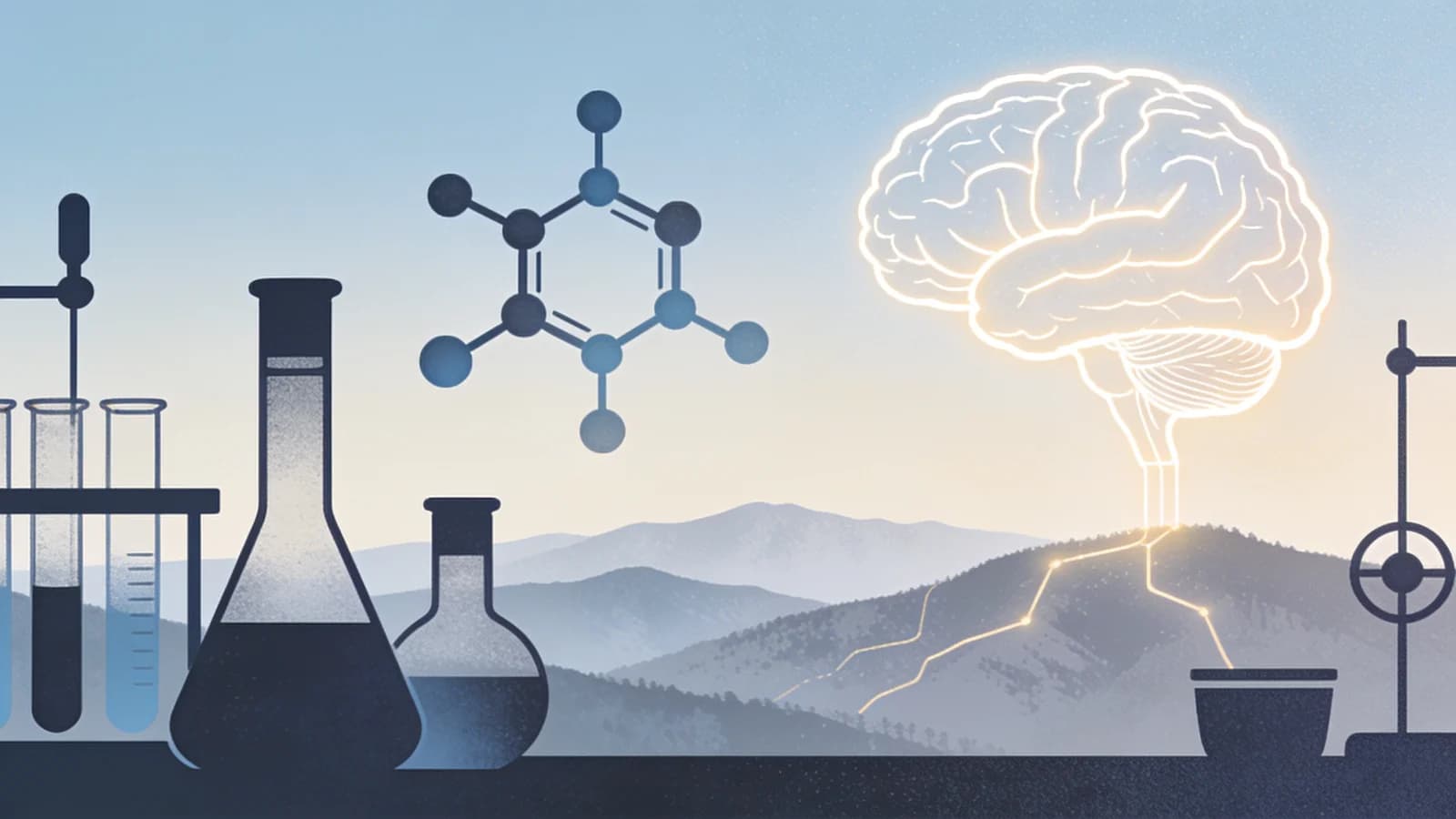
NIDA Funds Carilion Clinic Trial Testing Psilocybin for Cocaine Addiction
Carilion Clinic in Roanoke, Virginia, will soon become one of the few places in the country where patients can receive psilocybin as part of a formal addiction treatment study, after the National Institute on Drug Abuse awarded the health system's chief of psychiatry more than $600,000 to test the psychedelic compound against cocaine addiction.
The grant went to Dr. Albert Arias, a 25-year veteran of addiction psychiatry who also teaches at the Virginia Tech Carilion School of Medicine. His project will examine whether psilocybin, paired with structured psychotherapy, can reduce cocaine use — a condition for which no FDA-approved medication currently exists, leaving clinicians reliant on behavioral therapies alone.
A phased bet on psilocybin
The initial award funds the first stage of a phased project assessing safety, tolerability and early signs of efficacy. If results prove promising, NIDA funding could grow to $3.5 million to support a larger clinical research phase, WFIR reported.
For patients in the Roanoke region, the trial opens access to an intervention available at only a handful of facilities nationwide. "There might be maybe one other place in the country — or a couple, you know, that are coming online — where they could get this as part of research trials, but it's a unique offering for sure," Arias said.
Why researchers keep returning to psychedelics
The study is not a shot in the dark. Psychedelic compounds — ibogaine most prominently — have been investigated as treatments for substance use disorders with some success since the 1960s, and psilocybin has drawn intense scientific interest more recently, largely as a candidate therapy for depression and anxiety.
"So people are kind of reviving the question of, 'Hey, could it also work for treating addictions, and might some of the mechanisms be similar?'" Arias said.
That question carries particular weight for cocaine use disorder, where treatment has barely changed in decades. Unlike opioid addiction — for which medication-assisted treatment with methadone, buprenorphine or naltrexone is well established — stimulant addiction has no pharmacological anchor. A compound that could blunt cravings or reshape the psychological grip of cocaine would fill one of the largest gaps in addiction medicine.
Whether psilocybin can do that remains an open question the Carilion trial is designed to start answering. But NIDA's willingness to fund the work — with a built-in path to a much larger investment — signals that federal researchers now view psychedelic-assisted therapy for addiction as a serious line of inquiry rather than a fringe experiment.
Sources
Editorial Board
LADC, LCPC, CASAC
The Rainier Rehab editorial team consists of licensed addiction counselors, healthcare journalists, and recovery advocates dedicated to providing accurate, evidence-based information about substance abuse treatment and rehabilitation.
Related Articles
USC Launches First-Ever Clinical Trial of Psilocybin Therapy for Mental Health
University of Southern California receives funding to launch its first clinical study of psilocybin-assisted therapy combined with mindfulness meditation for mental well-being.

Psilocybin Shows Promise for Cocaine Use Disorder in Landmark JAMA Study
A randomized quadruple-blind trial found psilocybin-assisted therapy achieved 30% complete abstinence at 180 days vs 0% with placebo, with 72% reduced relapse risk.
Single Dose of Psilocybin Shows Rapid Antidepressant Effects in Swedish Trial
First randomized double-blind study in Sweden finds psilocybin provides clinically meaningful depression relief within days, with 53% remission rate at six weeks.