

How Weight-Loss Drugs Could Revolutionize Addiction Treatment by Targeting the Brain's 'Craving Center'
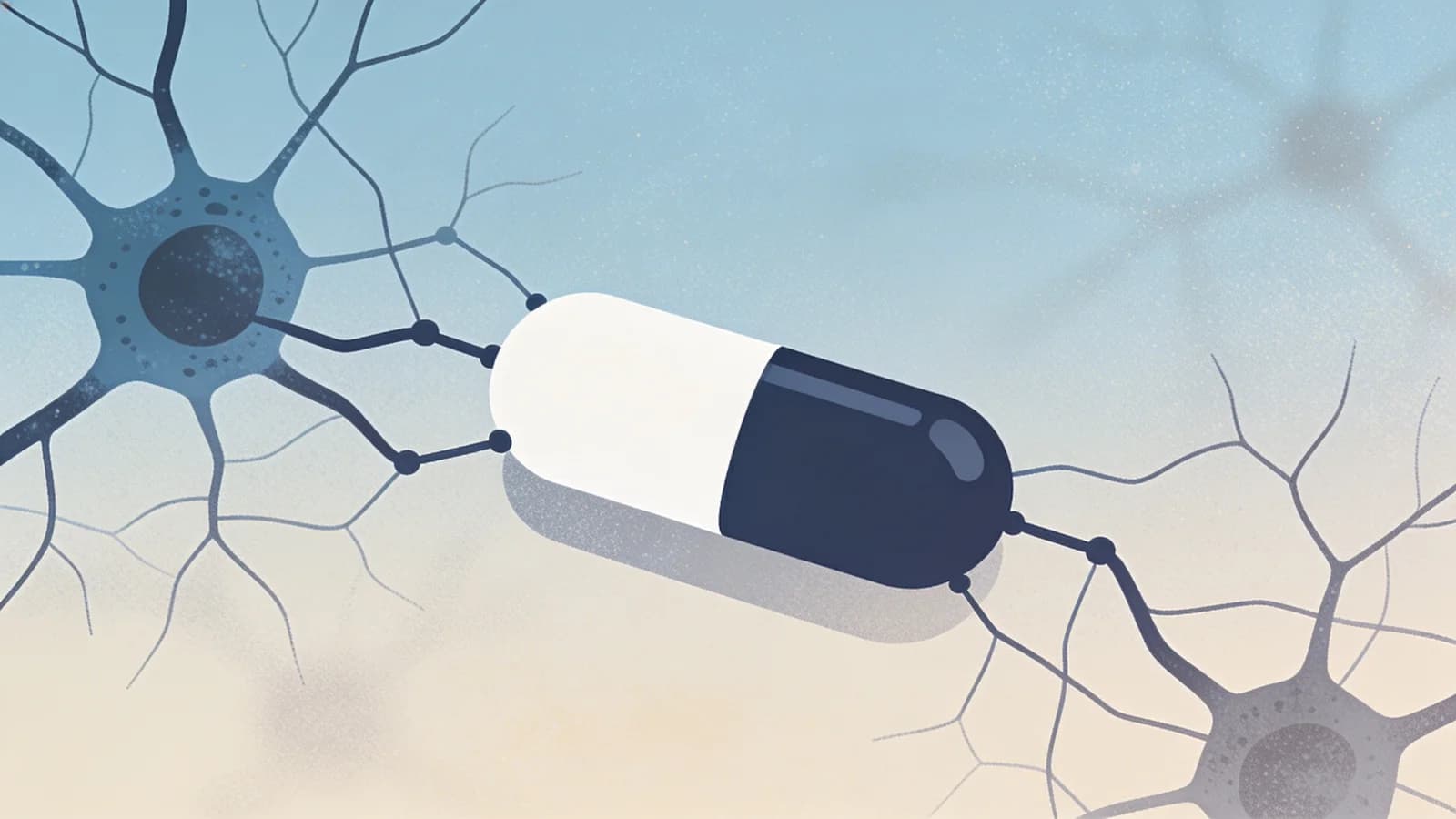
For decades, addiction research has fixated on the brain's dopamine system—the ventral tegmental area and nucleus accumbens—as the primary machinery of reward and craving. These regions produce the neurotransmitter dopamine that makes us feel good when we encounter something pleasurable, from food to drugs. Yet a persistent mystery has confounded scientists: why do GLP-1 agonist drugs, developed for diabetes and weight loss, seem to reduce cravings not just for food but for alcohol, cocaine, amphetamines, opiates, and nicotine?
The answer, according to emerging research, lies in a brain region that has spent half a century in neuroscience's shadow: the lateral septum. This small structure may function as the brain's "craving center," translating our conscious thoughts about rewards into the dopamine-driven feelings that drive us to seek them out.
The GLP-1 Puzzle
Drugs like Ozempic, Wegovy, and Mounjaro mimic the GLP-1 hormone to stimulate insulin release, slow digestion, and increase feelings of fullness. Originally developed for type 2 diabetes, their dramatic weight-loss effects quickly captured public attention. But early clinical observations revealed something unexpected: patients taking these medications were also drinking less alcohol. Animal studies soon confirmed that GLP-1 agonists reduced consumption of cocaine, amphetamines, opiates, and nicotine—not just food.
The mechanism behind these effects remained elusive. The ventral tegmental area and nucleus accumbens, the canonical reward centers, lack significant density of GLP-1 receptors. If GLP-1 drugs weren't acting directly on the dopamine machinery, where were they exerting their anti-consumption effects?
Rediscovering the Lateral Septum
The lateral septum's story in neuroscience began in 1953 when researchers Joseph Brady and Walle Nauta coined the term "septal rage" after observing that animals with damage to this region showed increased aggression. Direct stimulation, conversely, reduced aggression. This early finding framed the lateral septum primarily as a regulator of emotional responses.
Modern research has revealed a far more sophisticated role. The lateral septum receives massive input from the hippocampus—the brain region famous for forming long-term episodic memories and containing "place cells" that track our position in space and time. The hippocampus tells us "where and when we are." The lateral septum adds a critical third dimension: "what is good in this place."
Neurons in the lateral septum contain their own place cells, but these cells respond strongly to rewards. They effectively tag locations with value information, then share this integrated data with the dopamine-producing regions downstream. In this framework, the lateral septum serves as the bridge between our conscious perception of rewards—our ability to think about and imagine desirable things—and the brain's machinery for producing the pleasure that motivates us to pursue them.
This is precisely where craving lives: in the gap between thinking about a reward and feeling motivated to obtain it. For people struggling with alcohol use disorder or other substance dependencies, this insight offers a new way of understanding how cravings operate and, potentially, how to interrupt them.
The GLP-1 Connection
The lateral septum is absolutely loaded with GLP-1 receptors—among the highest densities in the brain. Recent studies have shown that direct GLP-1 activation in this region reduces food consumption in rodents. Earlier this year, research demonstrated the same effect for alcohol consumption. Work from the University of Otago has revealed that GLP-1 drugs reduce a type of neural activity in the lateral septum that may impair its ability to communicate with other brain regions.
These findings suggest a clear mechanism: GLP-1 agonists may work by quieting the lateral septum's translation of reward thoughts into reward motivation. The drugs don't necessarily make food or drugs less pleasurable when consumed—they may instead reduce the preoccupation, the mental imagery, the constant background thinking about the next dose or the next meal that characterizes addiction.
This hypothesis aligns with clinical observations. Patients on GLP-1 drugs often report that food simply stops being a constant mental presence. The "food noise" quiets. Similar reports are emerging for alcohol and other substances. The effect is not primarily about nausea or physical fullness—it's about a shift in the mental landscape of desire.
Implications for Addiction Medicine
The lateral septum hypothesis opens several promising avenues for addiction treatment. First, it provides a mechanistic rationale for the growing body of evidence that GLP-1 drugs reduce substance use across multiple categories. Medication-assisted treatment for addiction has historically relied on a limited toolkit—opioid agonists like methadone and buprenorphine, opioid antagonists like naltrexone, and a few other options. GLP-1 agonists, already approved for other indications and increasingly available, could dramatically expand the pharmacological arsenal.
Second, the research reframes how we think about the brain's reward system. The traditional dopamine-centric view, while not wrong, was incomplete. The lateral septum's role in conscious reward perception suggests that interventions targeting the cognitive or mental imagery aspects of craving—approaches like mindfulness-based relapse prevention—may be working through this same neural circuitry. Integrating pharmacological and behavioral interventions that both engage the lateral septum could prove more effective than either approach alone.
Third, the findings highlight the importance of understanding craving as distinct from consumption. A treatment that reduces the obsessive thinking about substances without necessarily reducing the pleasure of using them (should use occur) could still be enormously valuable for preventing relapse. The mental space cleared by reduced preoccupation allows other recovery processes—therapy, social connection, meaningful activity—to take root.
Limitations and Future Directions
Much of the current evidence comes from animal studies. While the rodent lateral septum shares fundamental organizational principles with the human version, direct translation always carries uncertainty. Human neuroimaging studies are needed to confirm that GLP-1 drugs modulate lateral septum activity in ways consistent with the animal data.
Additionally, the lateral septum is not a uniform structure. It contains multiple cell types with different projection patterns and functions. The specific circuits through which GLP-1 agonists exert their effects remain to be mapped in detail. Some lateral septum outputs may promote rather than reduce reward seeking under certain conditions, suggesting the need for targeted interventions.
The long-term consequences of chronic lateral septum modulation also require study. GLP-1 drugs were developed for metabolic conditions and their safety profile for long-term use is still being established. Effects on mood, cognition, and other functions that depend on normal reward processing warrant careful monitoring.
A New Era in Understanding Craving
The discovery that GLP-1 drugs may work by acting on the lateral septum represents more than just an explanation for a pharmacological side effect. It fundamentally reshapes our understanding of how the brain processes rewards and generates the cravings that drive addiction. By distinguishing the conscious perception of rewards from the dopamine-mediated pleasure they produce, the research opens new conceptual space for intervening in the addiction cycle.
For the millions of people struggling with substance use disorders, this scientific progress offers hope for more effective treatments that target craving at its neural source. The lateral septum, overlooked for decades, may prove to be one of the most important frontiers in addiction neuroscience.
Sources
Editorial Board
LADC, LCPC, CASAC
The Rainier Rehab editorial team consists of licensed addiction counselors, healthcare journalists, and recovery advocates dedicated to providing accurate, evidence-based information about substance abuse treatment and rehabilitation.
Related Articles
GLP-1 Drugs Show Promise for Treating Addiction, Analysis of 1.3 Million People Finds
New research reveals GLP-1 medications like Ozempic and Wegovy may significantly reduce opioid overdoses and alcohol intoxication rates.

GLP-1 Drugs Plus Therapy Show Promise for Alcohol Use Disorder in New Study
Research finds semaglutide combined with cognitive behavioral therapy reduces alcohol cravings more than therapy alone, suggesting new approach to addiction treatment

GLP-1 Weight-Loss Drugs Show Remarkable Promise in Fighting Addiction, Large Veterans Study Finds
New research on 600,000+ veterans reveals GLP-1 drugs like Ozempic and Wegovy significantly reduce substance use disorders across alcohol, opioids, cocaine, and nicotine.