
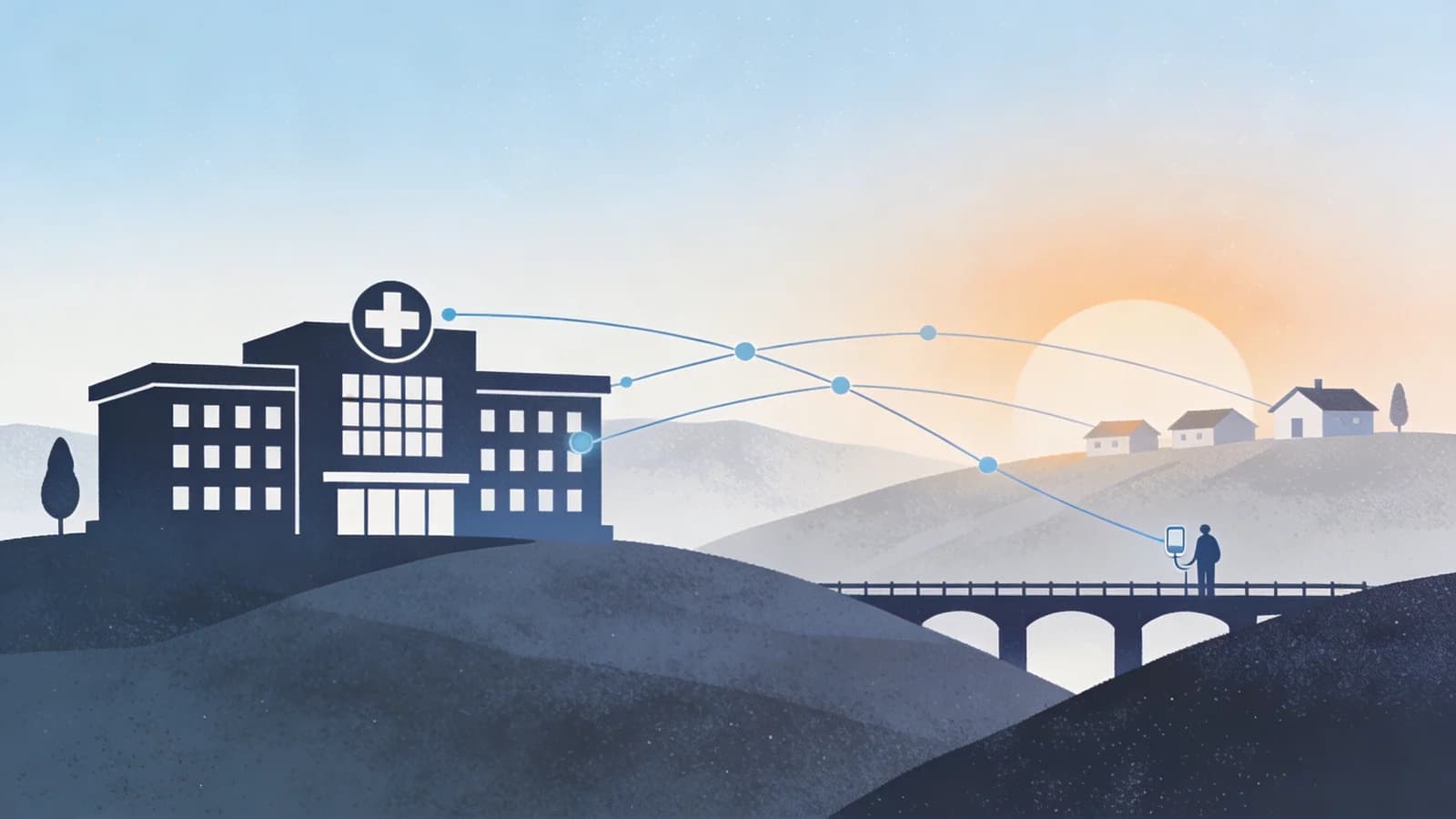
Mercy Hospital Lebanon Pilots Emergency Department Program to Bridge Rural Opioid Treatment Gap
In the emergency department at Mercy Hospital Lebanon, Missouri, staff have long faced a frustrating reality. Patients arrive in the grip of opioid withdrawal, desperate for help, only to be discharged with little more than a pamphlet and a phone number for services that might not have an opening for weeks.
"These patients are presenting to our emergency department, and when we're discharging them, there are not a lot of resources in our community," explains Jen Speer, Executive Director of Operations for Mercy Hospital Lebanon and Rolla. "There may be one or two, but these patients are coming in the middle of the night."
The statistics underscore the urgency. According to the Centers for Disease Control and Prevention, 217 Americans died each day from opioid overdoses in 2023, with rural communities bearing a disproportionate share of that burden. The gap between recognition of need and access to care has proven deadly.
Now, Mercy Hospital Lebanon is testing a different approach. Through a new pilot program launched this month, patients who arrive at the emergency department with opioid use disorder receive a three-day supply of medication to manage withdrawal symptoms, along with something equally valuable: a guaranteed virtual appointment with an addiction specialist within 72 hours.
The Critical First 72 Hours
Healthcare providers have long understood that the period immediately following an emergency department visit represents a pivotal window for patients with substance use disorders. During these first 72 hours, individuals may experience intense withdrawal symptoms while simultaneously facing the logistical and psychological barriers that have historically prevented them from engaging with treatment services.
The delay between discharge and first appointment has emerged as a significant contributor to relapse and subsequent emergency department returns. For patients in rural areas, where addiction specialists may be scarce and transportation options limited, this gap can stretch from days into weeks.
"We were looking at how to create something that can help fill the gaps," Speer says. The pilot program represents Mercy's attempt to bridge that critical period with immediate pharmaceutical support and rapid connection to ongoing care.
How the Program Works
When a patient presenting with opioid use disorder is deemed appropriate for the program, emergency department physicians provide a three-day supply of medication designed to ease withdrawal symptoms and reduce immediate cravings. This pharmaceutical bridge serves a dual purpose: it addresses the physiological distress that might otherwise drive patients back to illicit opioid use, and it demonstrates the hospital's commitment to treating addiction as a medical condition rather than a moral failing.
Simultaneously, staff coordinate with Virtual Substance Use, a telehealth partner, to schedule a virtual appointment within three days. This rapid connection to specialized care addresses what has historically been one of the most significant barriers to treatment engagement: the waiting period during which motivation wanes and withdrawal symptoms intensify.
The virtual component proves particularly crucial for rural patients. Lebanon, Missouri, sits in Laclede County, where geographic isolation and limited public transportation have long complicated access to specialty addiction services. Telehealth eliminates the need for patients to travel potentially hours to reach the nearest addiction medicine provider, removing a barrier that has derailed countless recovery attempts.
A Model for Rural Healthcare
Mercy's pilot program arrives at a moment of growing recognition that rural America's opioid crisis requires solutions tailored to rural realities. Metropolitan treatment models, with their emphasis on intensive outpatient programs and frequent in-person counseling sessions, often prove impractical in communities where patients may live an hour or more from the nearest provider.
The approach also reflects evolving understanding of how best to engage patients with opioid use disorder. Traditional models that require multiple appointments, extensive intake procedures, and weeks-long waits before medication initiation have shown poor retention rates. By contrast, low-barrier approaches that provide immediate relief and rapid connection to care have demonstrated significantly better outcomes.
For patients seeking opioid addiction treatment, the Mercy model offers a promising template. The combination of emergency department initiation, pharmaceutical bridging, and telehealth follow-up addresses the three most common points of failure in traditional referral systems: the withdrawal period, the waiting period, and the transportation barrier.
Broader Implications
If successful, the Mercy pilot could inform similar initiatives across rural Missouri and beyond. The state's overdose death rate has remained stubbornly high, with synthetic opioids—primarily fentanyl—driving mortality even as national trends show improvement in some regions.
The program also aligns with broader shifts in addiction medicine toward what practitioners call "low-threshold" care. This approach prioritizes rapid engagement and harm reduction over traditional requirements that patients demonstrate readiness for treatment or commit to abstinence before receiving support.
Research has consistently shown that patients who receive medication for opioid use disorder—particularly buprenorphine and methadone—have dramatically reduced mortality rates compared to those who attempt to quit without pharmaceutical support. Yet access to these medications remains uneven, particularly in rural areas where fewer physicians have obtained the necessary waivers to prescribe buprenorphine.
Challenges and Questions
While the pilot program represents an innovative approach, questions remain about its scalability and long-term effectiveness. Three days of medication, while sufficient to bridge the gap to a telehealth appointment, may not be adequate for patients with more severe dependence or those facing significant psychosocial challenges.
The virtual follow-up model, while removing transportation barriers, also presents limitations. Patients without reliable internet access or those who struggle with the technology may find telehealth appointments frustrating or inaccessible. The program's success will depend in part on how well the virtual platform accommodates patients with varying levels of digital literacy.
Additionally, the pilot's reliance on a single telehealth partner raises questions about sustainability. If demand exceeds Virtual Substance Use's capacity, or if the partnership ends, the program's central innovation—the guaranteed 72-hour appointment—could prove difficult to maintain.
Looking Forward
Mercy Hospital Lebanon plans to evaluate the pilot program over the coming months, tracking metrics including patient engagement, retention in treatment, and emergency department recidivism. If results prove promising, the model could be expanded to other Mercy facilities across Missouri and neighboring states.
For rural communities grappling with opioid addiction, the pilot offers a reminder that innovation in addiction treatment need not require massive infrastructure investments or specialized facilities. Sometimes, the most effective interventions are those that address the simplest barriers: the wait for an appointment, the distance to a provider, the suffering of untreated withdrawal.
As Speer notes, the program emerged from direct observation of patient needs. "In Lebanon, we saw the need." That recognition—that rural patients with opioid use disorder deserve the same standard of care as their urban counterparts—may prove the pilot's most significant contribution, regardless of its specific outcomes.
For individuals struggling with opioid dependence in rural Missouri and similar communities across America, the message is increasingly clear: help can arrive faster than you might expect, and recovery remains possible even in places where resources seem scarce. The path forward may begin with a single emergency department visit, a three-day supply of medication, and a virtual connection to someone who understands that addiction is a treatable medical condition, not a character flaw.
The expansion of medication-assisted treatment through innovative delivery models like Mercy's pilot program represents a critical evolution in how rural America responds to the ongoing opioid crisis—one that prioritizes immediate access over bureaucratic hurdles, and patient survival over ideological purity.
Editorial Board
LADC, LCPC, CASAC
The Rainier Rehab editorial team consists of licensed addiction counselors, healthcare journalists, and recovery advocates dedicated to providing accurate, evidence-based information about substance abuse treatment and rehabilitation.
Related Articles
Mobile Addiction Treatment Rolls Into Rural North Carolina, Meeting Patients Where They Are
A bright green and blue bus is bringing medication-assisted treatment for opioid use disorder to underserved communities in Alamance County.
Most Americans Who Need Addiction Treatment Get None — and Their Own Doctors Are Part of the Problem
New federal data shows 84% of Americans who needed addiction treatment in 2025 got none, as stigma and training gaps keep doctors on the sidelines.
FDA Approves New Buprenorphine Dosing Options, Expanding Access to Opioid Addiction Treatment
Weekly and monthly extended-release injections now available in lower doses, offering more flexible treatment options for patients with moderate to severe opioid use disorder.