
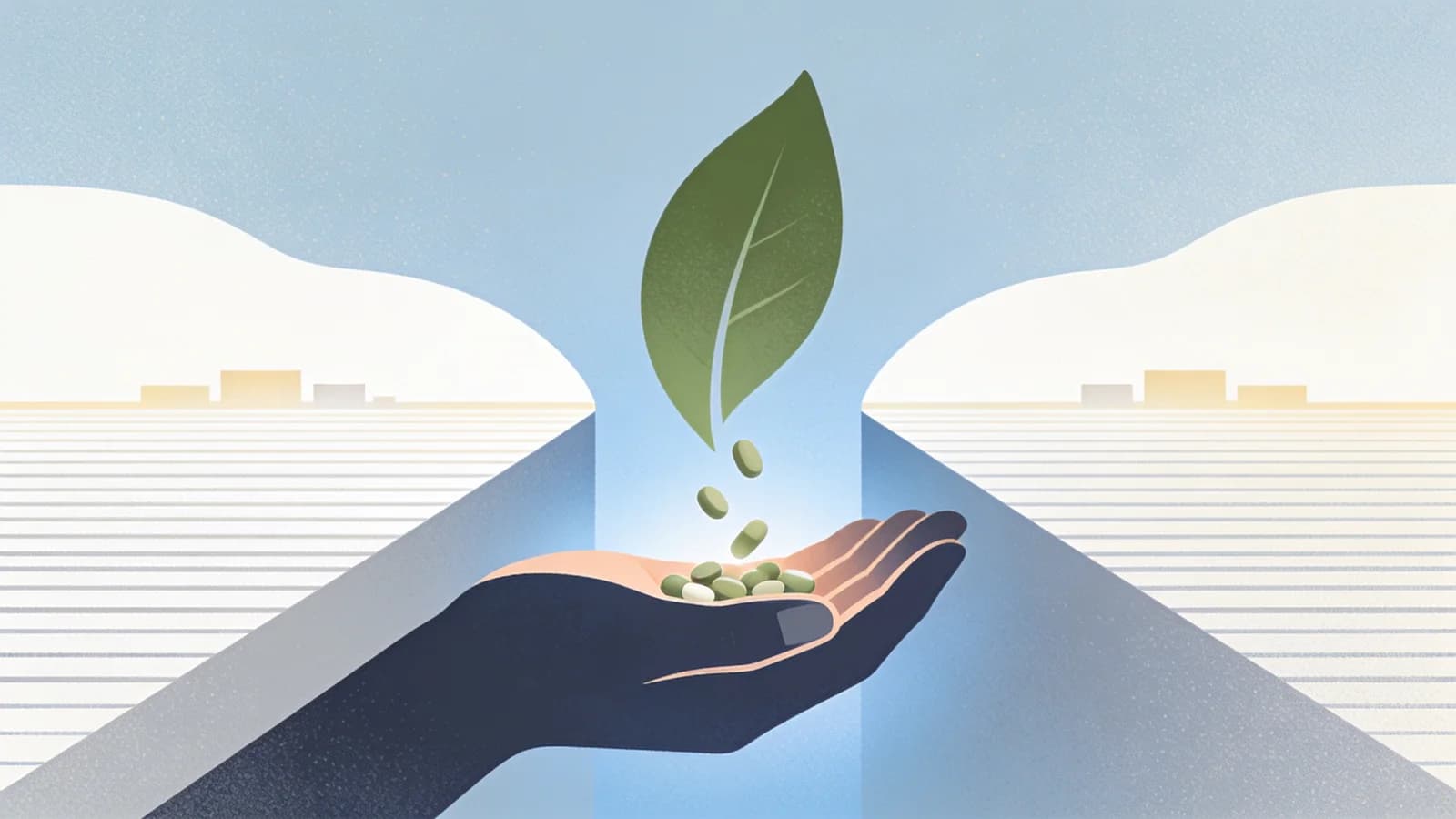
A Third of Cancer Patients in This Survey Reached for Cannabis Instead of Opioids
Cancer care has quietly absorbed a substance that clinical guidelines barely address. In a survey published October 9 in Supportive Care in Cancer, 26.1 percent of 186 adults treated at Penn State Cancer Institute reported using cannabis since their diagnosis, and 30.1 percent of those users said they used it instead of opioids for pain.
The study, funded in part by the National Institutes of Health, was built around an access question. Rural patients are chronically underrepresented in survey research, so the Penn State team — whose catchment includes 19 Appalachian counties — handed out paper questionnaires during oncology visits between June 2023 and June 2024 rather than surveying online. Just under half the respondents lived in rural areas, 41.4 percent in suburbs and 5.4 percent in cities.
Where they lived turned out not to predict much. Rural patients reported cannabis use at roughly 30 percent versus 23 percent for urban and suburban patients, a gap that did not reach statistical significance, and age was the only significant predictor in a multivariable regression.
What Users Reported
The reasons patients reach for cannabis do not match the clinical trial literature. Sleep, mood, cancer pain and joint pain topped the list — not the chemotherapy-induced nausea and vomiting that dominates formal research.
Among users answering follow-up questions, reported improvement clustered high: insomnia 89.7 percent, appetite 85.7 percent, mood 83.7 percent, joint pain or stiffness 83.3 percent, stress, anxiety or depression 81.6 percent, cancer-related pain 80.7 percent. The weakest responses were sweating and hot flashes at 27.8 percent, sexual interest at 41.7 percent and fatigue at 48.5 percent — and fatigue was also the symptom users most often said had worsened.
Close to 45 percent of users consumed cannabis almost daily. Smoking was the most common route at 52.2 percent, delta-9 THC the most common primary component at 45.6 percent, and 28.3 percent did not know what their product contained. Just over 71 percent bought from state-regulated dispensaries, but rural patients were significantly less likely to — a sourcing gap the authors attribute to travel distance rather than attitude. Fully 92.9 percent of all respondents believed cannabis has benefits; 33.6 percent considered it addictive and 34.6 percent did not.
Why the Evidence Has Not Caught Up
The survey's central limitation shapes the whole field: it measures what patients say they experienced, not what happened. It was cross-sectional, relied on self-report, and did not differentiate cannabinoid content, dose or route across respondents. The authors also note that most randomized evidence rests on pharmaceutical cannabinoids such as dronabinol and nabiximols, while more than half the users in this sample smoked whole plant product.
The opioid-substitution figure deserves the same caution. A further 32 percent of users said cannabis helped them reduce or stop other medications — a pattern oncology has eyed for years without resolving whether it reflects genuine opioid-sparing or a preference driven by side-effect profiles. Given how much of the national conversation about opioid painkilling now runs through prescribing decisions in cancer care, the signal is worth watching but not yet actionable.
Nearly half of users wanted information from their physicians, yet the most common reason for not using cannabis was that no provider had recommended it. Meanwhile roughly a third of respondents landed on each side of the addictiveness question — a split mirroring the broader public confusion around cannabis dependence that the survey could document but not resolve. The authors' ask is narrow and practical: counsel patients on products, sourcing, interactions and risks, and run trials on the formulations patients actually use.
Sources
- Ireland J, Holben L, Thompson CL, Zhu J, Polimera HV, Truica CI. Cannabis use and perceptions among rural and urban cancer patients and survivors from a Pennsylvania cancer center. Supportive Care in Cancer 34(11) (2026)
- Bioengineer.org, Rural and Urban Cancer Patients Use Cannabis at Similar Rates, Pennsylvania Survey Finds (Oct 9, 2026)
- Marijuana Moment, Medical Marijuana Improves Cancer-Related Symptoms And Helps Reduce Use Of Opioids, Federally Funded Study Shows (Oct 12, 2026)
Editorial Board
LADC, LCPC, CASAC
The Rainier Rehab editorial team consists of licensed addiction counselors, healthcare journalists, and recovery advocates dedicated to providing accurate, evidence-based information about substance abuse treatment and rehabilitation.
Related Articles

One in Nine Older Adults Who Use Cannabis Meet Criteria for a Disorder. Nobody Is Screening Them.
A UC San Diego study of 21,189 adults over 65 finds 11.4% of past-year cannabis users meet criteria for cannabis use disorder. Clinicians rarely ask.
Major Lancet Study Finds Cannabis Legalization Increases Addiction When Commercialized
Landmark global analysis reveals decriminalization doesn't raise use, but for-profit markets drive higher addiction rates and more potent products.

UCLA Study Reveals Alarming Link Between Teen Substance Use and Suicide Risk
New UCLA research finds that California adolescents using drugs or alcohol face triple the suicide risk, with nearly half experiencing serious psychological distress.