
Most Americans Who Need Addiction Treatment Get None — and Their Own Doctors Are Part of the Problem
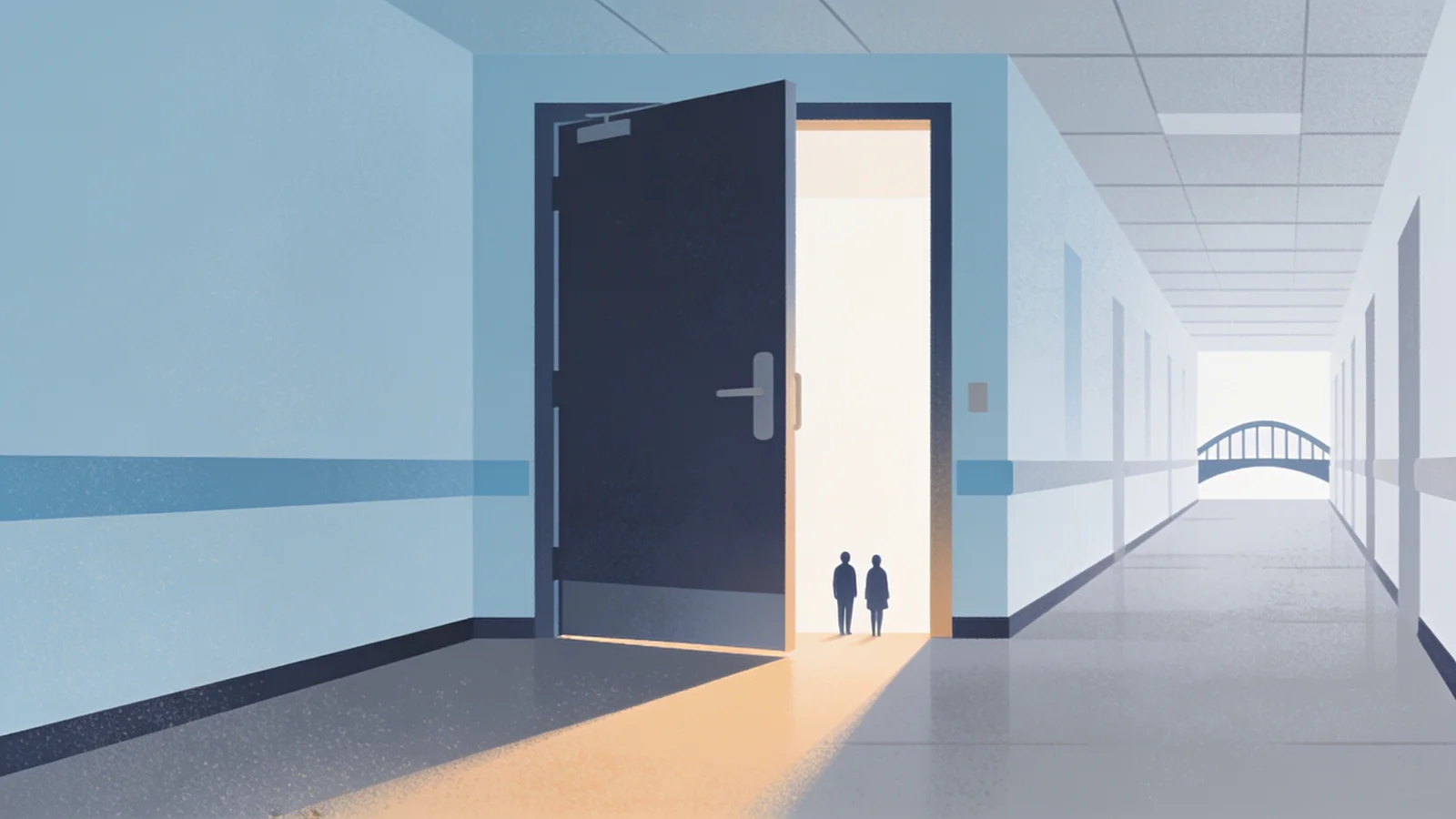
On a cold December night in 2023, staff at Providence Milwaukie Hospital outside Portland, Oregon, called the police — not to save a patient's life, but to remove him from the emergency room. Jean Descamps, 26, had arrived by ambulance emaciated, covered in feces, and drifting in and out of consciousness. Nurses cleaned him up and gave him naloxone. Then they decided he was faking it.
Body camera footage released by the Milwaukie Police Department and obtained by NPR shows what happened next. A staff member told officers there was "no medical reason" for Descamps to stay. When police objected that they had nowhere to take a man who could barely hold his head up, a hospital worker suggested a bus station. Officers wheeled his limp body into the dark parking lot, covered him with a blanket, and eventually drove him toward a behavioral health center in Portland. He died before they could get him help — from drugs already in his system. A local prosecutor's investigation later found the hospital had discharged him without ever running a toxicology test.
The case is extreme, and it is rarely captured on video. But a months-long NPR review of federal data, research, and interviews with more than a dozen doctors, scientists, and federal officials concludes that what happened in that Oregon ER reflects a national pattern: the American medical system, by and large, still refuses to treat addiction.
The Treatment Gap in Black and White
Two weeks before the NPR investigation aired, SAMHSA released the 2025 National Survey on Drug Use and Health — the earliest release in the survey's history. Its central finding deserves to be read twice. Of the estimated 47.2 million Americans aged 12 and older who needed substance use treatment last year, only 7.6 million received any. That leaves 39.6 million people — 84 percent of everyone who needed care — who got nothing at all.
The numbers get worse the closer you look at the deadliest conditions. Among the 4 million people with an opioid use disorder in 2025, just 15.7 percent received medications proven to keep them alive. Among the 25.7 million with alcohol use disorder, the figure for medication treatment falls to 2.6 percent — roughly one person in forty.
Overall, 44.6 million people met the criteria for a substance use disorder last year. That total has actually improved slightly since 2021, and overdose deaths have been declining since 2023. Yet alcohol- and drug-related disorders still kill more than 250,000 Americans a year, and CDC data on fatal overdoses shows that more than two-thirds of the people who died in 2024 had at least one documented opportunity for intervention — an ER visit, a doctor's appointment, an encounter with the system — that ended without help.
Dr. Judy Chertok, who treats addiction patients and teaches at the University of Pennsylvania, put it bluntly in her interview with NPR: "We would not allow, as a society, people with heart attacks to come to a hospital and not get appropriate treatment. This is as serious as that."
Stigma Inside the White Coat
Why does a patient with a treatable, life-threatening illness get wheeled into a parking lot? Researchers who study clinician behavior keep returning to the same answer: stigma, deeply embedded in medical culture.
A 2020 study in the Annals of Internal Medicine found that only one in five American physicians expressed interest in treating a patient with opioid use disorder. A 2024 survey of clinician attitudes by the nonprofit Shatterproof found that 43 percent of healthcare professionals believe medications for opioid use disorder merely "substitute one drug for another" — a claim contradicted by decades of evidence and by federal audits showing buprenorphine misuse is rare. Earlier this year, the American Medical Association itself identified stigma among health workers as a significant barrier to care.
Chertok told NPR she still hears colleagues talk about addicted patients "in a way that is not tolerated for any other group." Robert DeForde of Shatterproof, whose organization runs training seminars for clinicians, was harsher: "They don't want these people around them. They don't think that the drugs that we have that are FDA-approved medications are really going to actually help the patient. That is what I would say is a fatal flaw in our system."
The AMA's Defense
Dr. Bobby Mukkamala, who led the AMA until June 2026 and now chairs its substance use task force, argues the trend lines are moving the right way — primary care prescribing, he notes, contributed to the decline in overdose deaths since 2023. But he concedes the pace is too slow, and offers an explanation that is part apology, part diagnosis: physicians facing crushing workloads are wary of a patient population they were never trained to treat. "There's the emotional response from within that basically makes us say, 'Yeah, but you know, it's not something I'm comfortable with,'" he said. "That's the stigma."
The Tools Exist — and Sit Unused
What makes the treatment gap so galling to addiction specialists is that the pharmacology was solved decades ago. Methadone has been in use since the 1960s. Buprenorphine, which suppresses opioid cravings and is nearly impossible to overdose on when taken as directed, has been available for more than twenty years. Beth Meyerson, an addiction care expert at the University of Arizona's College of Nursing, told NPR that access to these medications reduces opioid overdose deaths by 60 percent — and in some studies, 80 percent.
Congress even removed the last major regulatory excuse in 2022, when the Mainstreaming Addiction Treatment Act eliminated the special "X-waiver" that had restricted which clinicians could prescribe buprenorphine. Any doctor with a standard DEA registration can now prescribe it. Most still don't. Naltrexone, which reduces alcohol cravings, is prescribed even more rarely — consistent with that 2.6 percent treatment figure for alcohol use disorder.
Meyerson describes the result as a quiet form of medical abandonment. A patient who discloses an opioid problem to their family doctor, she said, will "likely be sent somewhere else" rather than hear what a patient with diabetes would hear: I can treat that here.
A Workforce That Was Never Built
Behind the stigma sits a structural failure. Most American medical and nursing schools still do not teach addiction care as a core competency, decades after the opioid crisis was declared a national public health emergency. Dr. Nora Volkow, director of the National Institute on Drug Abuse, frames the question as one of culture change: "How do you embed the education and the training and the support systems in healthcare that will make clinicians feel more comfortable treating patients with substance use disorder?"
Even where willing clinicians exist, communities often lack the counselors, peer specialists, and recovery staff to absorb patients. That shortage is now drawing attention in an unlikely place — a Senate split between parties on nearly everything else.
Congress Responds With a Bipartisan Workforce Bill
On August 4, Senators Dave McCormick, a Pennsylvania Republican, and John Fetterman, his Democratic colleague, introduced the Workforce Recovery and Resilience Act. The bill would modernize the Workforce Innovation and Opportunity Act to treat substance use disorder as a workforce problem as well as a health one: it expands National Dislocated Worker Grants to fund training and employment in addiction prevention, treatment, mental health care, and pain management, and it directs the Department of Labor to identify and share evidence-based workforce strategies annually. Eligibility would extend to people who lost work because of substance use in their communities and to those entering behavioral health professions.
The Pennsylvania senators have a particular stake. Fentanyl killed roughly 4,000 Pennsylvanians a year from 2020 through 2023; preliminary data suggests that number fell to about 1,500 in 2025, the lowest in a decade. Sustaining that decline, both senators argue, requires a treatment workforce that currently does not exist at scale. Companion legislation in the House is sponsored by Representatives Ryan Mackenzie, a Pennsylvania Republican, and Raja Krishnamoorthi, an Illinois Democrat.
The bill does nothing to mandate that individual physicians treat addiction — the AMA has long resisted mandates, and nothing in the current political landscape suggests that will change. But it is the first serious federal attempt this session to attack the workforce side of the gap.
What This Means for People Seeking Help
Until the culture of American medicine shifts, the practical burden falls on patients and families to find the minority of providers who will treat addiction as the chronic, treatable condition it is. That means asking directly whether a provider prescribes medication-assisted treatment rather than assuming any doctor will, and seeking out clinics and programs that specialize in opioid addiction treatment rather than relying on a generalist's referral.
Jean Descamps should have been a straightforward case: a young man in withdrawal, in a hospital, surrounded by people with the training and the medication to stabilize him. The system that instead labeled him a malingerer and sent him to a parking lot is the same system that left 39.6 million Americans without treatment last year. The data now exists to prove it. The question NPR's investigation leaves hanging is whether the medical establishment — and Congress — will treat that as the emergency it is.
Sources
Editorial Board
LADC, LCPC, CASAC
The Rainier Rehab editorial team consists of licensed addiction counselors, healthcare journalists, and recovery advocates dedicated to providing accurate, evidence-based information about substance abuse treatment and rehabilitation.
Related Articles

Youth Substance Use Declines for Fourth Consecutive Year, Federal Survey Finds
SAMHSA's 2025 National Survey on Drug Use and Health shows fewer adolescents and young adults using alcohol, tobacco, marijuana, and other drugs.
FDA Approves New Buprenorphine Dosing Options, Expanding Access to Opioid Addiction Treatment
Weekly and monthly extended-release injections now available in lower doses, offering more flexible treatment options for patients with moderate to severe opioid use disorder.
SAMHSA Urges States to Let Pharmacists Prescribe Buprenorphine, Expanding Access to Opioid Treatment
Federal agencies issue landmark guidance encouraging states to authorize pharmacist prescribing of buprenorphine for opioid use disorder.