
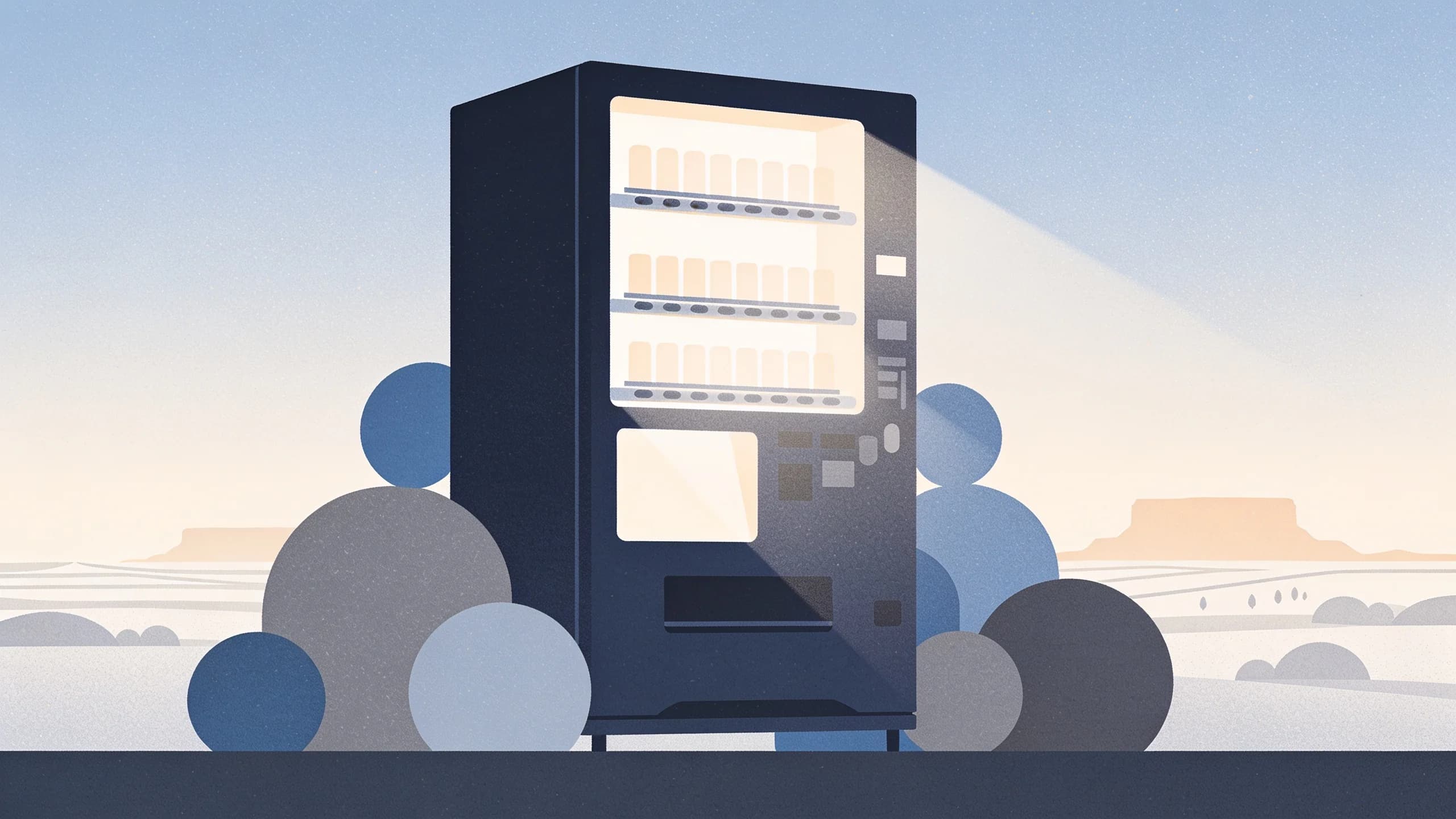
Oklahoma Dismantles Nation's Largest Naloxone Vending Machine Program, Leaving Communities Scrambling
When Shelby Salazar's 22-year-old brother Ty Hughes died from fentanyl poisoning in 2020, the tragedy transformed her grief into action. She founded Talk About Ty, a nonprofit dedicated to overdose prevention education, and became a key volunteer in what was then the nation's most ambitious harm reduction initiative: Oklahoma's statewide naloxone vending machine program.
For more than a year, Salazar restocked machines multiple times weekly in communities east of Interstate 35, watching as free naloxone and fentanyl test strips disappeared from dispensers at an encouraging pace. The McDonald's location along the highway to Lawton required restocking several times per week—a clear signal, she said, of both demand and need.
That program is now gone. And the communities that came to depend on it are scrambling to fill a widening gap.
From National Model to Uncertain Future
Launched in May 2023, Oklahoma's naloxone vending machine program represented a bold experiment in making overdose prevention resources as accessible as snacks or beverages. The Oklahoma Department of Mental Health and Substance Abuse Services (ODMHSAS) purchased more than 40 vending machines, though only 25 were ever operational. Even at partial capacity, the program distributed thousands of naloxone kits and fentanyl test strips across a state where illicit fentanyl deaths had surged from 127 in 2020 to 730 in 2023.
The state canceled the program in late 2024, citing cost overruns. Operating just 25 machines consumed more than $14 million—double the original estimate. In 2024, the remaining machines were redistributed to community partners, with state officials framing the transition as a shift toward "sustainable, community-owned overdose prevention."
But sustainability has proven elusive.
Communities Left to Shoulder the Burden
The East Central Oklahoma Family Health Center, serving rural communities in Wetumka, Henryetta, and Wewoka, received three machines through the Oklahoma Primary Care Association. CEO Donna Dyer said her organization will now pay out of pocket to keep them stocked.
"They did give us the first set of stock," Dyer explained. "We'll pay for those supplies to be put back in. We're going to keep it going, and as long as it's being used, that's the important thing."
Since installation in May, the three locations have distributed 49 naloxone kits and 50 fentanyl test strips—modest numbers that nonetheless represent potential lives saved in communities where fentanyl overdose death rates reach 15 per 100,000 residents.
The uncertainty extends beyond individual organizations. House Bill 2012, which would have extended legal authorization for state-registered harm reduction programs through July 2027, passed the Oklahoma House but never received a Senate hearing. With the legislative session ended, harm reduction programs now operate in a legal gray zone.
"There are several things changing," said Ryane Draper, assistant director of campus wellness at Oklahoma State University. "There's some laws that were voted on. There's some guidelines on recommended verbiage and things you can and cannot say and ways that you can and cannot afford to ensure that those things are still able to be done."
Federal Policy Shifts Compound State Challenges
The dismantling of Oklahoma's program coincides with dramatic shifts in federal harm reduction policy. In April 2026, the Substance Abuse and Mental Health Services Administration (SAMHSA) issued guidance clarifying that federal funds can no longer support fentanyl test strips or "any other substance test kits"—a direct consequence of an executive order declaring that such resources facilitate illicit drug use.
For organizations that took over Oklahoma's vending machines, this federal shift eliminates a potential funding stream precisely when state support has evaporated. While Oklahoma's 2023 law decriminalizing fentanyl test strips remains in effect, organizations must now fund supplies entirely through their own budgets or private grants.
The Human Cost of Policy Decisions
Salazar's brother Ty Hughes died alone in his bed after taking a pill he believed was oxycodone. It was fentanyl. The scenario Salazar describes—deaths occurring not in clubs or party settings but in private spaces, often among people without long drug use histories—illustrates why accessible naloxone matters.
"People aren't dying in their bed or at the club snorting a line of coke," Salazar said. "A vast majority of deaths are happening there by themselves. They don't have this long history of drug use, so it's not like parents or whomever they're living with have naloxone lying around."
Education, she emphasizes, can only go so far without accompanying access to life-saving medication. In rural communities already stretched thin for healthcare resources, the vending machines represented a rare point of intervention that didn't require navigating appointments, insurance, or stigma.
What Remains Available
Oklahoma has not eliminated all overdose prevention resources. The OK I'm Ready program continues to mail naloxone to requesters statewide, and institutional partnerships with some police departments, healthcare centers, and schools remain active. Free naloxone is available at many pharmacies for insured patients, and community organizations continue distribution through various funding mechanisms.
But the vending machines offered something distinct: anonymity, immediacy, and 24/7 availability. Their disappearance removes a safety net that had become woven into the fabric of daily life in communities across the state.
Looking Forward
For people struggling with opioid addiction, the dismantling of Oklahoma's program illustrates the fragility of harm reduction infrastructure even in states that have embraced such approaches. The transition from state-operated to community-owned programs—while theoretically sound—faces the reality that many rural healthcare providers operate on razor-thin margins with little capacity to absorb new costs.
Dyer remains determined to maintain her organization's three machines, viewing the expense as part of providing comprehensive patient care. Other communities may not be so fortunate. As federal policy continues to shift and state funding remains uncertain, the patchwork of overdose prevention across Oklahoma—and potentially other states watching this experiment—grows more tenuous.
The Oklahoma experience offers lessons for policymakers nationwide. Even well-funded, innovative harm reduction programs can falter when cost overruns collide with shifting political winds. And when they do, the communities left holding the pieces must decide whether—and how—to carry on.
For individuals seeking help, resources remain available through the SAMHSA National Helpline at 1-800-662-4357, which provides free, confidential treatment referrals 24 hours daily. Naloxone can be obtained without prescription at most major pharmacy chains, and many community health centers continue to offer overdose prevention resources regardless of ability to pay.
Sources
Editorial Board
LADC, LCPC, CASAC
The Rainier Rehab editorial team consists of licensed addiction counselors, healthcare journalists, and recovery advocates dedicated to providing accurate, evidence-based information about substance abuse treatment and rehabilitation.
Related Articles
Delaware Senate Passes Harm Reduction Bill Amid Partisan Debate
Senate Bill 249 decriminalizes drug paraphernalia possession and expands sterile supply distribution, sparking disagreement over public safety and addiction treatment approaches.
Massachusetts Panel Urges Action on Xylazine and Emerging Drug Threats
State commission recommends expanding low-barrier treatment and harm reduction as xylazine gives way to medetomidine in the illicit drug supply.

Trump Administration Terminates Hundreds of SAMHSA Grants, Threatening Addiction Services Nationwide
Nonprofit organizations across the US received termination letters canceling SAMHSA grants that fund overdose prevention, naloxone distribution, and recovery support services.