
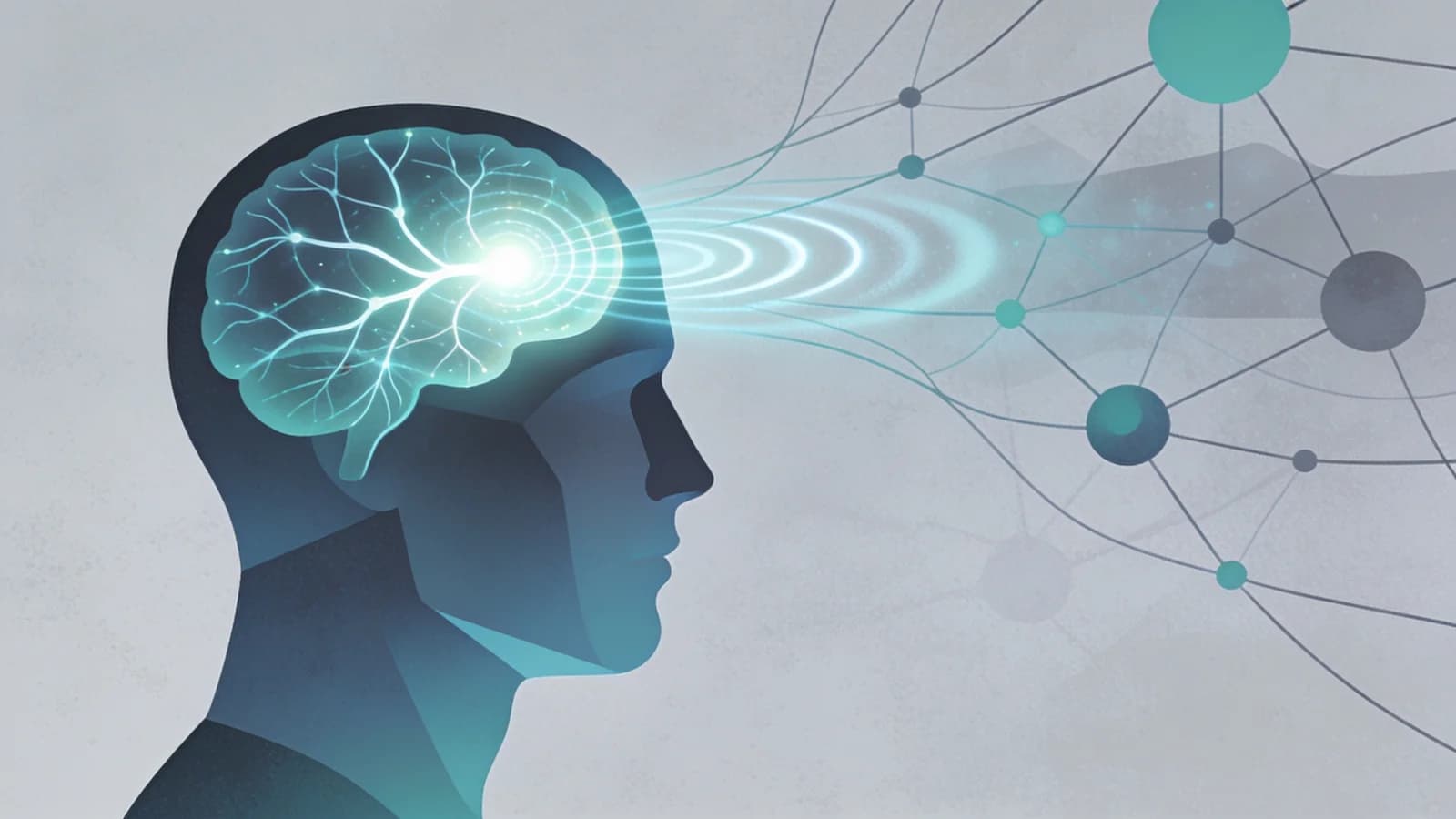
Brain Stimulation More Than Halved Alcohol Relapse Risk in Trial
A brief course of non-invasive brain stimulation more than halved the risk of relapse over a year for people treated for alcohol use disorder, according to a randomized controlled trial published July 15 in Molecular Psychiatry. Patients who received the active treatment were less than half as likely to return to drinking as those who got a sham version, a difference the researchers traced to measurable changes in the brain circuits that govern craving and self-control.
The finding is early and comes from a single, small study, but it adds rigorous evidence to a long-standing question in addiction medicine: whether directly retuning prefrontal control networks can shift the odds against relapse, the problem that defeats most alcohol treatment.
Why relapse is the hardest number in alcohol treatment
Alcohol use disorder is defined less by getting sober than by staying that way. The researchers, working with patients at the First Special Hospital of Harbin, note that relapse rates reach roughly 60 percent within six months of a withdrawal intervention and approach 90 percent within a year. Detox is achievable; durable abstinence is where treatment repeatedly fails.
That gap has pushed researchers to look past medication and counseling toward the neural machinery underneath. Much of the interest centers on the prefrontal cortex, the region that exerts top-down control over the deeper, reward-driven structures that fire during craving. In people with alcohol use disorder, that control tends to weaken, tilting the balance toward the impulse to drink. The idea behind the trial was to strengthen it from the outside.
What the trial tested
The study used continuous theta-burst stimulation, or cTBS, a rapid form of transcranial magnetic stimulation that delivers patterned magnetic pulses through the scalp to quiet activity in a targeted brain region. Here the target was the right dorsolateral prefrontal cortex, a hub in the network that regulates self-control and craving.
Fifty patients between 18 and 60 were randomly assigned to receive either active cTBS or a sham procedure that mimicked the sensation without delivering effective stimulation. Neither the patients nor the assessors knew who got which — the double-blind design that guards against expectation effects. Treatment ran over two weeks, ten sessions in all, with two applications a day. The team measured symptom severity with the Alcohol Use Disorders Identification Test, the standard AUDIT questionnaire, before and after the course, then tracked whether each patient relapsed across a full year of follow-up.
More than a halving of relapse risk
Over that year, patients who received active stimulation relapsed at a markedly lower rate than the sham group. The hazard ratio was 0.426 — meaning the treated group faced roughly 57 percent lower relapse risk at any given point — with a 95 percent confidence interval running from 0.189 to 0.964 and a p-value of 0.041. The upper bound sitting just under 1.0 marks the result as statistically significant but not far from the threshold, a reminder of how much a study this size hinges on a handful of cases.
The stimulation also moved the brain measures the researchers had predicted it would. Using resting-state functional MRI, they identified an "abstinence-associated" pattern of activity across prefrontal and subcortical regions that was strengthened in the patients who received active treatment.
A mechanism, not just an outcome
What sets the study apart from earlier stimulation research is its attempt to explain why the intervention worked rather than simply report that it did. Drawing on network control theory — a framework that quantifies how much "control energy" the brain must expend to shift from one activity state to another — the team found that active cTBS reduced the energy required to move from the frontoparietal control network to subcortical regions. That reduction statistically mediated the improvement in AUDIT-measured severity, linking the circuit change directly to the clinical one.
The researchers went a step further, mapping the affected circuits onto gene-expression data. The regions where control energy changed were enriched for genes tied to neuroplasticity — the brain's capacity to rewire itself — and corresponded to prefrontal areas conserved across species, down to specific regions in the mouse brain. The through-line is a plausible biological story: stimulation eases the neural cost of exerting self-control, and it does so in circuits built for exactly that job.
Real promise, real limits
The caveats are substantial, and the authors do not hide them. Fifty patients at one hospital is a small, single-site sample, and the confidence interval's brush with the null value means the effect, while real in this trial, needs replication before anyone treats it as settled. The study cannot say whether the same protocol would hold up across different populations, longer treatment courses, or clinics without the specialized imaging used here. Nor does it establish how cTBS would perform alongside the medications and behavioral therapy that anchor standard care.
Still, the combination of a hard clinical endpoint — relapse tracked over a year — with a mechanistic account is unusual for the field, and it strengthens the case for larger trials of network-informed neuromodulation. For the many people for whom alcohol use disorder returns despite their best efforts, and for clinicians managing the co-occurring mental health conditions that so often accompany it, a treatment that targets the biology of relapse itself would fill a conspicuous gap. This trial does not prove that treatment has arrived, but it maps a credible route toward one.
Editorial Board
LADC, LCPC, CASAC
The Rainier Rehab editorial team consists of licensed addiction counselors, healthcare journalists, and recovery advocates dedicated to providing accurate, evidence-based information about substance abuse treatment and rehabilitation.
Related Articles

VA Launches First Federal MDMA-Assisted Therapy Trial for Veterans with PTSD and Alcohol Use Disorder
The Department of Veterans Affairs begins enrolling 80 veterans in a groundbreaking study combining MDMA with psychotherapy to treat co-occurring PTSD and alcohol use disorder.
Psilocybin Shows Promise for Chronic Suicidal Ideation in Landmark Sheppard Pratt Study
Single dose of psilocybin with therapy support produced rapid, sustained reductions in suicidal thoughts among treatment-resistant patients
Semaglutide Plus Therapy Cuts Heavy Drinking by 41%, Landmark Lancet Study Finds
NIH-funded trial shows GLP-1 drug combined with cognitive behavioral therapy significantly reduces heavy drinking days in patients with alcohol use disorder and obesity.