
Cytisinicline Nears FDA Nod as First New Smoking Cessation Drug
The U.S. Food and Drug Administration is approaching a decision that could reshape the landscape of tobacco addiction treatment. With a Prescription Drug User Fee Act (PDUFA) date of June 20, 2026, cytisinicline—a plant-derived alkaloid with a mechanism of action distinct from existing pharmacotherapies—stands poised to potentially become the first novel smoking cessation medication approved by the agency in nearly twenty years.
The significance extends beyond the drug itself. Despite decades of public health investment and the known lethality of tobacco use—responsible for nearly half a million American deaths annually—pharmaceutical innovation in smoking cessation has stagnated since varenicline's approval in 2006. Cytisinicline's progression through Phase 3 trials and into FDA review represents a rare example of renewed commercial interest in addressing what remains the leading cause of preventable mortality.
The Clinical Evidence Base
Achieve Life Sciences, the Seattle-based company developing cytisinicline, submitted its New Drug Application based on two Phase 3 trials—ORCA-2 and ORCA-3—enrolling more than 2,000 participants combined. The results, published in JAMA Internal Medicine, demonstrate statistically significant improvements in continuous abstinence rates compared to placebo across multiple treatment durations.
In the ORCA-3 trial, participants receiving 12 weeks of cytisinicline achieved a 30.3% abstinence rate for weeks 9 through 12, compared to 9.4% in the placebo group. The 6-week treatment arm showed a 14.8% abstinence rate versus 6% for placebo during the corresponding period. These effect sizes, while modest in absolute terms, represent substantial relative improvements that could translate into meaningful population-level health benefits given the scale of tobacco use.
Perhaps more importantly for real-world applicability, cytisinicline demonstrated these efficacy signals without the treatment-related serious adverse events that have complicated adherence to existing pharmacotherapies. The safety profile appears particularly favorable regarding nausea, a side effect that drives discontinuation of varenicline in a significant minority of patients.
Mechanism and Differentiation
Cytisinicline functions as a partial agonist at the α4β2 nicotinic acetylcholine receptor, the same molecular target as varenicline. However, recent research published in Nicotine & Tobacco Research suggests important pharmacological distinctions. Laboratory studies demonstrate that cytisinicline achieves strong binding at the nicotinic receptor—displacing 99% of comparison compounds—while showing minimal interaction with the 5-HT3 serotonin receptor implicated in nausea induction.
This selectivity profile may explain the tolerability advantages observed in clinical trials. For the millions of smokers who have attempted pharmacologically assisted cessation and abandoned treatment due to adverse effects, an effective alternative with fewer side effects could represent a meaningful expansion of options.
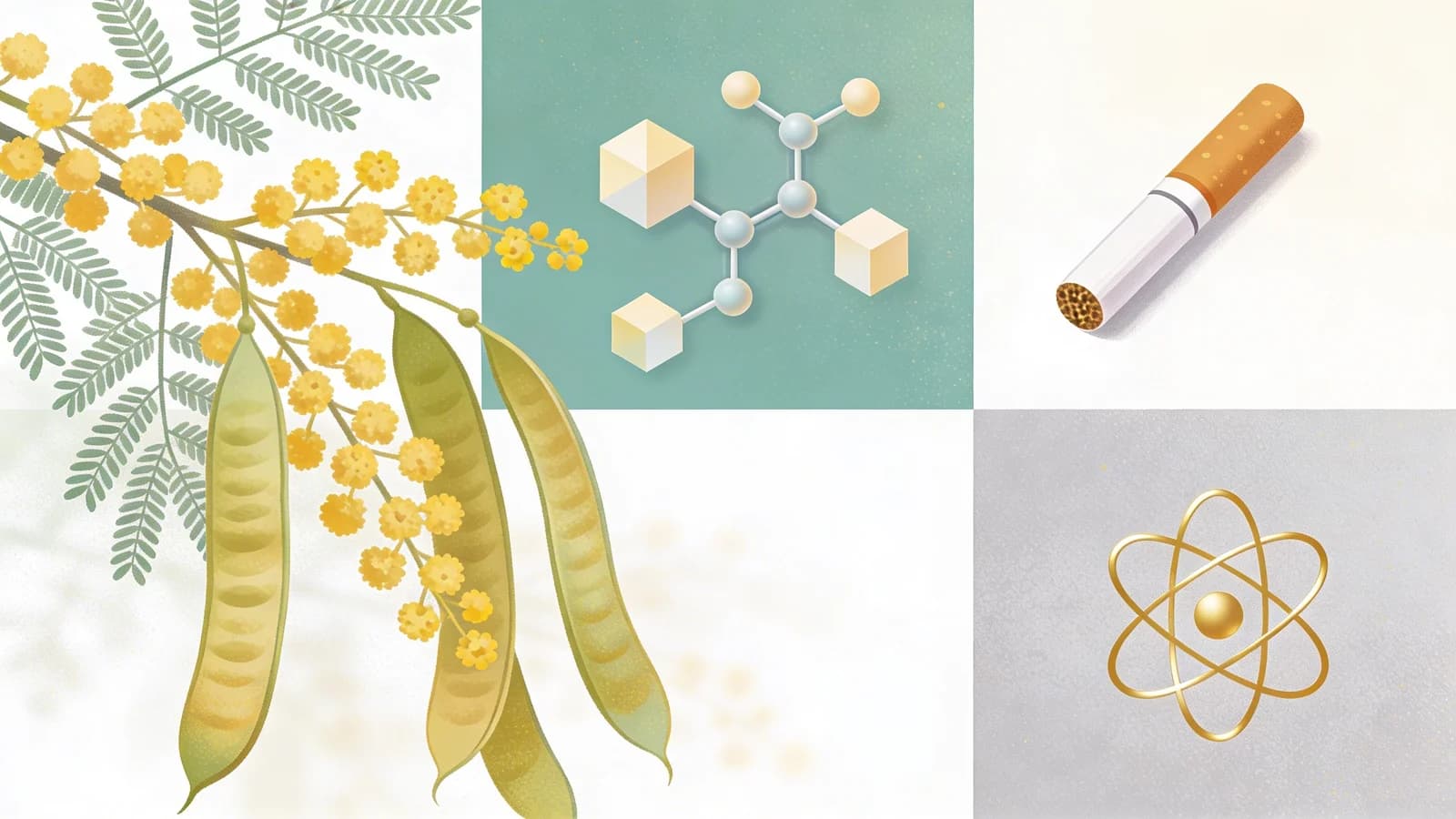
The plant-based origin of cytisinicline—derived from the seeds of Cytisus laborinum, the Golden Rain acacia—also distinguishes it from synthetic alternatives. While this botanical provenance has no direct clinical significance, it has generated interest among patients and providers seeking alternatives to purely synthetic pharmaceutical interventions.
Beyond Combustible Cigarettes
While the current FDA review focuses exclusively on smoking cessation, Achieve Life Sciences has already completed a Phase 2 trial examining cytisinicline's efficacy for vaping cessation. With nearly 18 million American adults using e-cigarettes and 1.6 million middle and high school students reporting vaping in 2024, this represents a significant unmet medical need. No FDA-approved treatments currently exist specifically for nicotine e-cigarette cessation.
The company has secured a Commissioner's National Priority Voucher for the vaping indication, a new FDA program designed to expedite review of treatments addressing critical public health gaps. This designation, combined with Breakthrough Therapy status previously granted for the same indication, suggests that cytisinicline could eventually offer a pharmacological option for the growing population of individuals seeking to discontinue e-cigarette use.
The Commercial Context
Achieve Life Sciences has begun preparing for potential commercial launch in the first half of 2027, selecting Adare Pharma Solutions for U.S.-based manufacturing. This domestic production capacity addresses supply chain risks and positions the company to meet demand if approval is granted.
The commercial opportunity, while substantial given the 25 million American adults who continue to smoke, is tempered by the reality that most quit attempts remain unassisted and that generic varenicline—now available following patent expiration—offers a lower-cost alternative with established efficacy. Cytisinicline's success will likely depend on its ability to capture the segment of the market that has struggled with existing options due to tolerability concerns or prior treatment failure.
Implications for Addiction Treatment
The potential approval of cytisinicline arrives at a moment of renewed interest in pharmacological interventions for substance use disorders. The same mechanisms underlying nicotine dependence—dopaminergic reward pathways, receptor adaptation, and withdrawal symptomatology—operate across addictive substances. Success in developing novel smoking cessation therapies could inform approaches to medication-assisted treatment for other substance use disorders.
More immediately, cytisinicline's review highlights the FDA's evolving posture toward addiction pharmacotherapies. The agency's willingness to grant priority review and breakthrough designations for smoking and vaping cessation products suggests recognition that these conditions warrant the same regulatory urgency traditionally reserved for life-threatening diseases with fewer existing treatment options.
As the June PDUFA date approaches, clinicians, public health officials, and the millions of Americans attempting to quit smoking will watch closely. Two decades of stagnation in smoking cessation pharmacotherapy may be nearing an end.
Editorial Board
LADC, LCPC, CASAC
The Rainier Rehab editorial team consists of licensed addiction counselors, healthcare journalists, and recovery advocates dedicated to providing accurate, evidence-based information about substance abuse treatment and rehabilitation.
Related Articles

First New Smoking Cessation Drug in 20 Years: Cytisinicline Nears Market as Company Builds Commercial Team
Achieve Life Sciences assembles veteran pharmaceutical leadership team from Verona Pharma ahead of FDA decision on cytisinicline, the first novel smoking cessation therapy since 2006.

FDA Fast-Tracks CS-1103: A New Weapon Against Fentanyl Overdoses
FDA grants Fast Track designation to CS-1103, a first-in-class molecule that binds and clears fentanyl from the body, potentially revolutionizing overdose treatment.

FDA Clears First US Ibogaine Trial for Alcohol Use Disorder
In a historic first, the FDA clears DemeRx's noribogaine hydrochloride for Phase I study, marking the first US clinical trial of an ibogaine-derived compound for addiction treatment.