
Wisconsin Allocates $31M in Opioid Settlement to Tribes, Care
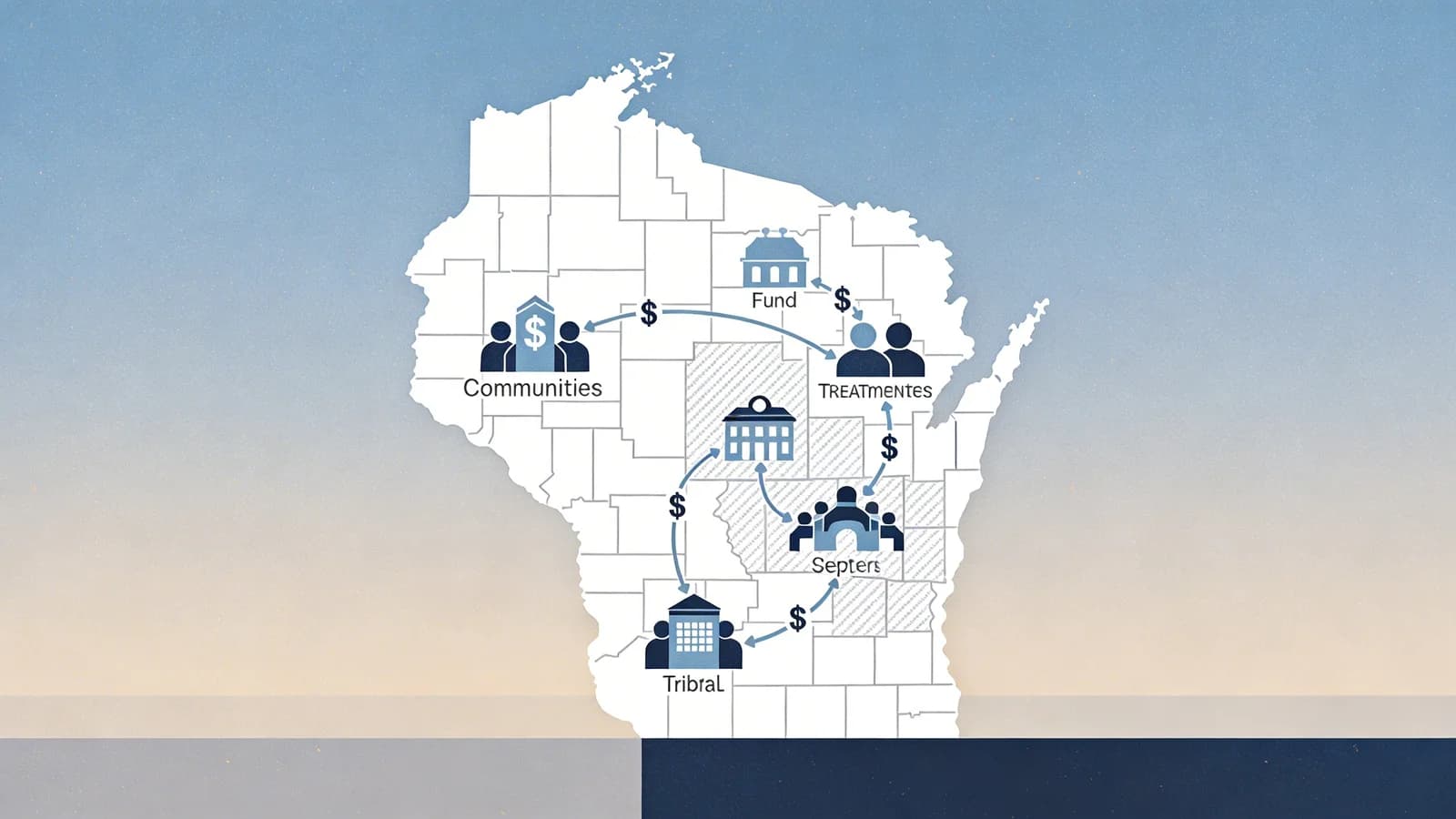
The Wisconsin Department of Health Services announced a two-year plan to deploy $31 million in opioid settlement funds across prevention, treatment, and recovery programs statewide, with nearly a third of the allocation directed to Tribal nations that continue to experience disproportionate harm from the opioid crisis.
The announcement, made April 9, details how Wisconsin will spend its share of a $794 million multi-year settlement with pharmaceutical manufacturers, distributors, and pharmacies found responsible for fueling the epidemic. The state received $14.5 million in 2025 and will receive approximately $16.5 million this year, part of a funding stream that runs through 2038 under settlements negotiated by the Wisconsin Department of Justice.
Secretary Kirsten Johnson of the Wisconsin Department of Health Services framed the investment as an extension of strategies that have already produced measurable results. "This funding has saved lives in Wisconsin," Johnson said in a statement. "We have made significant investments in every corner of the state to fill the gaps and connect communities with the resources people need, when and where they need them."
A 42.5% Drop in Overdose Deaths
Wisconsin's opioid mortality rate fell 42.5% between 2023 and 2024, a decline state officials attribute to expanded access to naloxone, increased availability of medication-assisted treatment, and targeted harm reduction initiatives. While the state has not released final 2024 overdose figures, preliminary data suggest the trajectory marks one of the sharpest year-over-year reductions recorded since the opioid crisis began escalating in the mid-2010s.
The settlement funding is structured to sustain and expand those interventions. Unlike one-time grants, the multi-year nature of the settlement allows Wisconsin to plan longer-term investments in workforce development, infrastructure, and prevention programs that require sustained funding to demonstrate impact.
Where the Money Goes: A $31 Million Breakdown
The Department of Health Services' allocation plan divides the $31 million across eleven priority areas, with funding earmarked for populations and geographies that state data show are most affected by opioid misuse.
Tribal Nations: $9 Million
The largest single allocation—$9 million—will go to Wisconsin's eleven federally recognized Tribal nations, whose members continue to experience opioid overdose rates significantly higher than state averages. Tribal communities face compounding barriers to treatment access, including geographic isolation, limited healthcare infrastructure, and historical underfunding of Indian Health Service facilities.
The settlement funds will support culturally tailored prevention and treatment programs designed and administered by Tribal governments. Wisconsin's settlement agreement specifically recognizes Tribal sovereignty in determining how funds are used, allowing each nation to direct resources toward the interventions most relevant to their community's needs—whether that's expanding residential treatment capacity, hiring peer recovery specialists, or integrating traditional healing practices into substance use disorder care.
Room and Board for Residential Treatment: $6.5 Million
The second-largest allocation—$6.5 million—addresses a structural barrier that has long constrained access to residential substance use disorder treatment for Medicaid enrollees. Wisconsin Medicaid covers clinical services at licensed residential facilities but does not cover room and board costs, leaving counties responsible for those expenses.
"The coverage of room and board cost falls on the counties across the state of Wisconsin to fund," explained Michelle Haese, DHS Director of Substance Use Initiatives, in remarks to local media. "That is a heavy lift for the counties, and for us to be able to provide them with the funds to cover their room and board costs is increasingly helpful."
Prior to the settlement funding, many counties operated waitlists for residential treatment beds due to budget constraints. The $6.5 million investment is expected to reduce those waitlists and allow more individuals to access intensive, 24/7 care when outpatient treatment alone is insufficient. Wisconsin DHS has already released $3 million in room and board funding from earlier settlement disbursements, and officials report that demand remains high.
Overdose and Infectious Disease Prevention: $3.5 Million
Wisconsin will invest $3.5 million in harm reduction programming, including expanded naloxone distribution, syringe services programs, and infectious disease screening and treatment for people who inject drugs. Naloxone—a medication that rapidly reverses opioid overdoses—has been credited with preventing thousands of deaths nationwide, and Wisconsin's distribution network has grown substantially in recent years.
The funding will support community-based naloxone distribution through public health departments, harm reduction organizations, libraries, and faith-based groups. It will also fund training for first responders, family members, and people who use drugs on how to recognize and respond to overdose emergencies.
Infectious disease prevention efforts—particularly hepatitis C and HIV screening—are critical components of comprehensive harm reduction. Injection drug use is a primary transmission route for both infections, and early detection and linkage to treatment can prevent serious complications and reduce community spread.
Prevention in Schools and Communities: $3 Million
Wisconsin will allocate $3 million for prevention programming in K-12 schools, post-secondary institutions, after-school programs, and community agencies. Prevention strategies include evidence-based curricula on substance use risks, mental health literacy, coping skills, and peer resistance training.
The investment reflects a growing recognition that prevention must extend beyond scare tactics and zero-tolerance messaging, which have proven ineffective. Modern prevention programming focuses on building resilience, addressing underlying risk factors like trauma and social isolation, and equipping young people with skills to navigate peer pressure and manage stress without turning to substances.
Pregnant and Parenting Women: $2 Million
Two million dollars will support specialized treatment programs for pregnant and parenting women with substance use disorders. Pregnancy is both a high-risk period for relapse and a critical window for intervention, as many women are highly motivated to achieve stability for their children.
Wisconsin's approach emphasizes keeping families together during treatment rather than separating mothers from their children—a practice that research shows improves treatment retention and outcomes for both parent and child. Programs funded under this allocation typically offer prenatal care, parenting education, childcare, and trauma-informed therapy alongside medication-assisted treatment.
Birth to 3 Program Families: $2 Million
An additional $2 million will go to families enrolled in Wisconsin's Birth to 3 Program, a state-federal initiative providing early intervention services to infants and toddlers with developmental delays or disabilities. Families enrolled in the program often face complex stressors, including poverty, housing instability, and caregiver mental health challenges, all of which increase the risk of substance use.
The funding will support screening, brief intervention, and referral to treatment for parents and caregivers, as well as recovery coaching and family support services designed to address the holistic needs of families navigating both developmental challenges and substance use.
Law Enforcement Grants: $2 Million
Wisconsin will allocate $2 million for law enforcement grants focused on diversion programs, co-responder models, and officer training on substance use disorder and crisis intervention. Diversion programs offer individuals arrested for low-level, drug-related offenses an alternative to incarceration, connecting them with treatment and social services instead.
Co-responder programs pair law enforcement officers with mental health or substance use professionals during crisis calls, allowing for more clinically appropriate responses and reducing unnecessary arrests and emergency department visits. Officer training on addiction as a chronic medical condition rather than a moral failing helps shift the law enforcement response from punitive to supportive.
Provider Training on Medications for Opioid Use Disorder: $1 Million
One million dollars will fund training for healthcare providers on evidence-based medications for opioid use disorder, including buprenorphine, methadone, and naltrexone. Despite strong evidence supporting medication-assisted treatment, many providers remain hesitant to prescribe these medications due to lack of training, stigma, or misconceptions about substituting one drug for another.
The funding will support educational programs through the Wisconsin Department of Health Services and academic partners, targeting primary care physicians, emergency medicine providers, and psychiatrists who are well-positioned to initiate treatment but may not have received formal addiction medicine training during their education.
Recovery Coalitions and Family Supports: $1 Million
Wisconsin will invest $1 million in recovery coalitions—community-based organizations that provide peer support, recovery coaching, employment assistance, housing navigation, and other services to people in recovery and their families. Recovery is a long-term process that extends far beyond the completion of formal treatment, and recovery coalitions play a critical role in sustaining engagement and preventing relapse.
The funding will prioritize coalitions that incorporate family-centered supports, recognizing that addiction affects entire family systems and that sustainable recovery often depends on repairing relationships and building healthy family dynamics.
Additional Allocations
The remaining allocations include:
- $500,000 for pharmacy training and support to improve safe prescribing practices, medication disposal programs, and pharmacist-led naloxone distribution.
- $500,000 for family-centered treatment to expand programs that treat multiple family members simultaneously and address intergenerational patterns of substance use.
Settlement Context: $780 Million Over 18 Years
Wisconsin's $31 million allocation represents one year's disbursement from a much larger settlement structure. The state is due to receive more than $780 million in total funding from 2022 through 2038 as a result of litigation against pharmaceutical companies including Purdue Pharma, Johnson & Johnson, and the "Big Three" drug distributors—McKesson, Cardinal Health, and AmerisourceBergen.
Under Wisconsin Act 57, signed in 2021, 70% of settlement funds go to the 87 local governments that participated in the litigation, with the state retaining 30%. Local jurisdictions have autonomy in determining how to spend their allocations, subject to restrictions outlined in the settlement agreements that require funds be used for opioid abatement activities.
The settlements do not represent an admission of wrongdoing by the companies involved, but they do reflect a legal reckoning with the role pharmaceutical marketing, distribution practices, and prescribing patterns played in driving widespread opioid dependence and overdose deaths. Wisconsin, like most states, saw opioid prescribing rates surge in the late 1990s and early 2000s following aggressive promotion of extended-release oxycodone and other formulations as safe and effective for chronic pain.
Accountability and Transparency
Wisconsin is among a growing number of states that have established public-facing dashboards to track opioid settlement spending. The state's transparency framework allows residents, researchers, and policymakers to see how funds are allocated, which programs are funded, and what outcomes are being measured.
That transparency is critical for ensuring that settlement dollars are used effectively and equitably. Previous analyses of public health settlement funds—most notably from tobacco litigation in the 1990s—found that many states diverted funds to fill budget gaps rather than investing in prevention and treatment. Wisconsin's legislative framework, combined with advocacy from public health organizations and people with lived experience of addiction, has helped insulate opioid settlement funds from that outcome.
The Road Ahead
Wisconsin's 42.5% reduction in opioid deaths is significant, but state officials emphasize that the work is far from over. Stimulant-involved overdoses—particularly those involving methamphetamine and cocaine—continue to rise, and polysubstance use complicates both prevention and treatment efforts. The illegal drug supply remains unpredictable, with fentanyl contamination appearing in substances users believe to be other drugs.
For individuals struggling with opioid use disorder, Wisconsin's investment in treatment access, harm reduction, and recovery supports represents a meaningful expansion of resources. But the effectiveness of those investments will ultimately be measured not in dollars allocated, but in lives saved, families restored, and communities given the tools to address addiction as a public health challenge rather than a criminal justice problem.
Settlement funding offers a rare opportunity to build infrastructure that outlasts the crisis that generated it. Whether Wisconsin succeeds in doing so will depend on sustained political will, ongoing community engagement, and a commitment to following the evidence wherever it leads.
Sources
Editorial Board
LADC, LCPC, CASAC
The Rainier Rehab editorial team consists of licensed addiction counselors, healthcare journalists, and recovery advocates dedicated to providing accurate, evidence-based information about substance abuse treatment and rehabilitation.
Related Articles

Trump Administration Terminates Hundreds of SAMHSA Grants, Threatening Addiction Services Nationwide
Nonprofit organizations across the US received termination letters canceling SAMHSA grants that fund overdose prevention, naloxone distribution, and recovery support services.

Virginia Awards Record $35.2 Million in Opioid Settlement Grants to 150 Community Projects
Virginia Opioid Abatement Authority announces largest funding round to date, supporting prevention, treatment, recovery and harm reduction initiatives across the Commonwealth.

Baltimore County Launches Public Dashboard to Track $90 Million in Opioid Settlement Spending
Baltimore County unveils a transparent online dashboard allowing residents to monitor how opioid settlement funds are being used to combat the addiction crisis.