
Three Patients, No Electrodes: Sunnybrook Aims Ultrasound at Treatment-Resistant Addiction
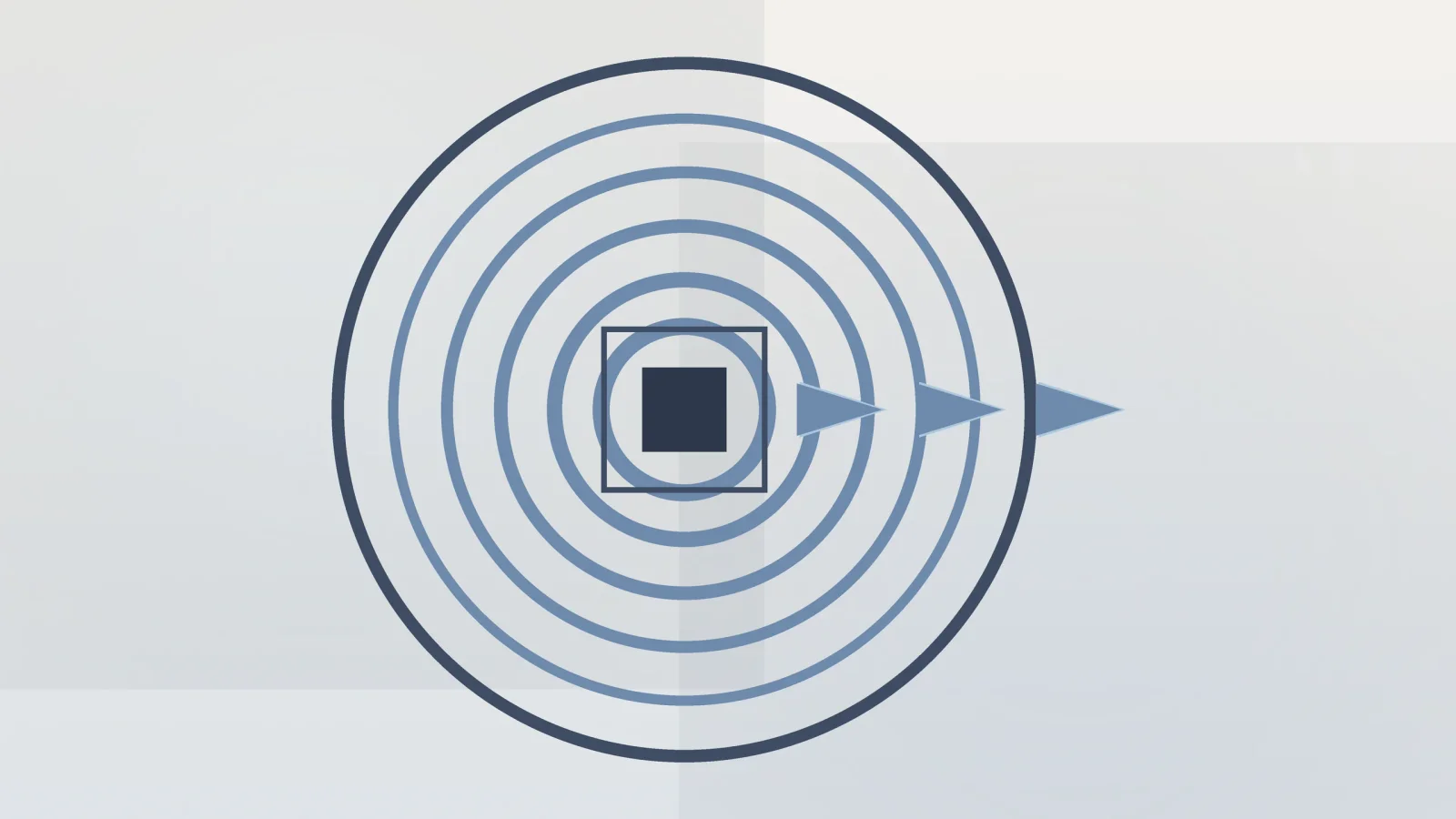
At Sunnybrook Health Sciences Centre in Toronto, three people with severe, treatment-resistant substance use disorder have now had a procedure that aims ultrasound waves at deep brain structures through an intact skull. No incision, no implant, no electrodes. As of Nov. 20, that was the entire treated cohort.
The trial, run out of Sunnybrook's Harquail Centre for Neuromodulation, is measuring safety and feasibility first. Whether the intervention reduces cravings and substance use is a secondary question, which is the standard ordering for a first-in-human study and also the reason the headline number here is three and not an effect size.
For a field that has spent two decades trying to intervene directly in the brain's reward circuitry — with surgery, with implanted wires, with magnets held against the scalp — the appeal is obvious. Focused ultrasound is the first technology that can reach a structure several centimetres deep without opening anything.
What the procedure actually does
Using MRI for guidance, the team directs ultrasound waves at specific areas deep in the brain to stimulate circuits associated with the disorder. The MRI matters because ultrasound alone cannot tell you where it landed; the imaging both steers the beam and, in the ablative version of the technique, confirms the target after the fact.
"Substance use disorder is a complex condition that impacts individuals, families and communities," said Dr. Nir Lipsman, chief of Sunnybrook's Hurvitz Brain Sciences Program and a co-principal investigator. "Through non-invasive technologies like focused ultrasound, our hope is to expand the range of evidence-based treatment options available to people living with this disorder."
Dr. Ben Davidson, a Sunnybrook neurosurgeon and the trial's other co-principal investigator, framed the work as complementary rather than substitutive — a procedure delivered through a specialist neuromodulation program that would sit alongside medication, therapy and community supports in a patient's longer course of care. That framing is worth holding onto, because it is the opposite of how brain surgery for addiction has sometimes been marketed.
The trial it is built on used electrodes
The direct predecessor is a Sunnybrook phase I pilot of deep brain stimulation of the nucleus accumbens, published in Molecular Psychiatry in July 2022. That study implanted electrodes in six patients — two women and four men, mean age 49, with six to more than 25 years of heavy drinking and daily consumption ranging from six to 18 drinks. Enrollment and surgery ran from December 2018 to October 2020, with follow-up over 12 months.
The results were reported as follows: all six patients experienced a reduction in craving, and there were significant reductions in alcohol consumption, alcohol-related compulsivity and anxiety at 12 months. Depression did not change significantly. The trial's registration number is NCT03660124.
The imaging findings are the more interesting half. At six months, PET scanning showed reduced glucose metabolism in the nucleus accumbens, and the size of that reduction correlated with improvement in compulsive drinking. Functional MRI showed that clinical improvement tracked with reduced connectivity between the nucleus accumbens and the visual association cortex — the part of the brain that processes what a bottle looks like — and that active stimulation reduced activation of the dorsal striatum while patients looked at pictures of alcohol.
Read together, those three findings describe a specific mechanism: the intervention appears to blunt the pull of the cue, not the general misery of the disorder. Which is consistent with the depression result sitting flat while craving and compulsivity moved.
"The preliminary findings demonstrate that this direct-to-brain intervention was safe and well-tolerated by patients," Lipsman said at the time. "While far from a cure for alcohol use disorder, the results are promising."
The number the 2022 paper did not produce
Six patients, open-label, no control arm, no blinding. What the pilot established is that you can put electrodes in the nucleus accumbens of people with severe alcohol use disorder and not injure them, and that something in the craving circuitry moves. It did not establish an effect size, and the trial's own authors did not claim one. Any reading of it as evidence that brain stimulation treats addiction is a reading past the data.
Why ultrasound instead of wires
Deep brain stimulation requires burr holes, implanted hardware, postoperative programming visits, battery replacements every few years, and the small but real risks of intracranial surgery — bleeding, infection, hardware failure. It is also irreversible in the sense that the tracts are made.
Focused ultrasound trades all of that for a beam. The trade-offs are different rather than absent: ultrasound transmission depends on skull thickness and density, which vary enough between people that the field has spent years building aberration-correction hardware to compensate; a treatment session is long and still, sometimes hours; and the mapping between "we sonicated this spot" and "we changed this circuit" is less direct than with an electrode you can switch on and off.
There is also a distinction inside focused ultrasound that the addiction trial sits on one side of. Sunnybrook's psychiatric program separately lists MRI-guided focused ultrasound bilateral capsulotomy for refractory obsessive-compulsive disorder and for refractory major depression — capsulotomy being an ablation, a permanent lesion made with high-intensity energy. The addiction trial is described as stimulating circuits rather than destroying tissue. Reversible neuromodulation and permanent ablation are very different propositions to offer a patient, and the field has not settled which one addiction belongs to.
Three patients is a number, not a result
The honest state of the evidence is this: as of Nov. 20, 2026, three people had undergone the procedure, in an open-label safety and feasibility study with no control group and no published outcomes. Safety trials are designed to surface harms at a rate low enough that a handful of patients can reveal them; they are not designed to detect whether a treatment works, and a cohort of three cannot distinguish a real reduction in drinking from the ordinary fluctuation of a relapsing condition.
The selection question is the one that will decide how the eventual results read. "Severe, treatment-resistant" means everyone enrolled has already failed medication and psychotherapy — the population in which a 75 percent relapse rate is the reference point Sunnybrook itself cites for conventional care. That is precisely the group for whom a new option matters most, and also the group in which a placebo response and regression to the mean are largest, because people enter trials at their worst.
The modality is spreading faster than the evidence
Sunnybrook is not alone in testing this. On Nov. 20 — the same week the Toronto cohort reached three — the Focused Ultrasound Foundation described a new trial at the Fralin Biomedical Research Institute at Virginia Tech: the VITAL study, registered as NCT07404878 and led by Wynn Legon, using low-intensity focused ultrasound to target the anterior insula in generalized anxiety disorder, with multiple ultrasound applications in a single session and custom 3D-printed acoustic lenses shaped to each participant's skull.
Same modality, different target, different intensity, different condition. That is what a technology in its exploratory phase looks like, and it is worth noticing that anxiety and addiction are being approached through different nodes of the same circuitry — the insula for interoceptive dread, the accumbens for incentive salience. Whether either target holds up is a question that will be answered by trials with control arms, not by first-in-human series.
What this means for anyone weighing it
For people with alcohol use disorder who have cycled through treatment, a headline about ultrasound in the brain can read as an escape hatch from a system that has not worked. The accurate version is narrower: a Toronto hospital is testing whether a non-invasive technique can be delivered safely to a small number of people with the most refractory forms of the disorder, and has treated three of them.
The questions to ask of any such program are unglamorous. Is the trial registered and are the primary outcomes stated in advance? Is there a comparison group, and if not, when will there be? What happens to patients after the study year ends — do they return to standard care, which for many means medication-assisted treatment and continuing counseling, or does the program discharge them? And is the procedure being offered as an addition to treatment or as a replacement for it, a distinction Sunnybrook's investigators have been careful to make and which the next wave of entrants into this field may not.
Correction, for the record: no outcomes from the Sunnybrook trial have been published. Everything reported here about the procedure's effect on cravings comes from its 2022 electrode predecessor, in six patients, with no control arm.
Sources
- Hospital News, Sunnybrook tests focused ultrasound for severe substance use disorder, 26 November 2026
- Davidson B, Giacobbe P, George TP, Nestor SM, Rabin JS, Goubran M, et al. Deep brain stimulation of the nucleus accumbens in the treatment of severe alcohol use disorder: a phase I pilot trial. Molecular Psychiatry, 2022;27(10) (DOI 10.1038/s41380-022-01677-6; PMID 35858989; NCT03660124)
- Focused Ultrasound Foundation, Focused ultrasound for anxiety: new neuromodulation trial at Virginia Tech, 20 November 2026 (VITAL trial, NCT07404878)
Editorial Board
LADC, LCPC, CASAC
The Rainier Rehab editorial team consists of licensed addiction counselors, healthcare journalists, and recovery advocates dedicated to providing accurate, evidence-based information about substance abuse treatment and rehabilitation.
Related Articles
Hunger Switches On a Second Alcohol-Reward Circuit. It Doesn't Run on Dopamine.
Brown researchers silenced one octopamine neuron in fruit flies and alcohol stopped being rewarding — but only in flies that had been starved. The finding points at norepinephrine, not dopamine.
Alcohol's Brain Damage Is Carried Out by Immune Cells, Real-Time Imaging Shows
Cleveland Clinic researchers watched microglia strip away the brain's structural scaffolding within an hour of heavy drinking, before sedation even set in. Blocking one immune switch prevented the damage.
Men and Women with Addiction Show Distinct Psychiatric Comorbidities
In a national sample of 58,000 adults with opioid, alcohol or cannabis dependence, men had lower odds of depression and anxiety but higher odds of psychosis.