
A Bronx Algorithm Flagged 9,140 Patients for Buprenorphine. Twenty-Three Started It.
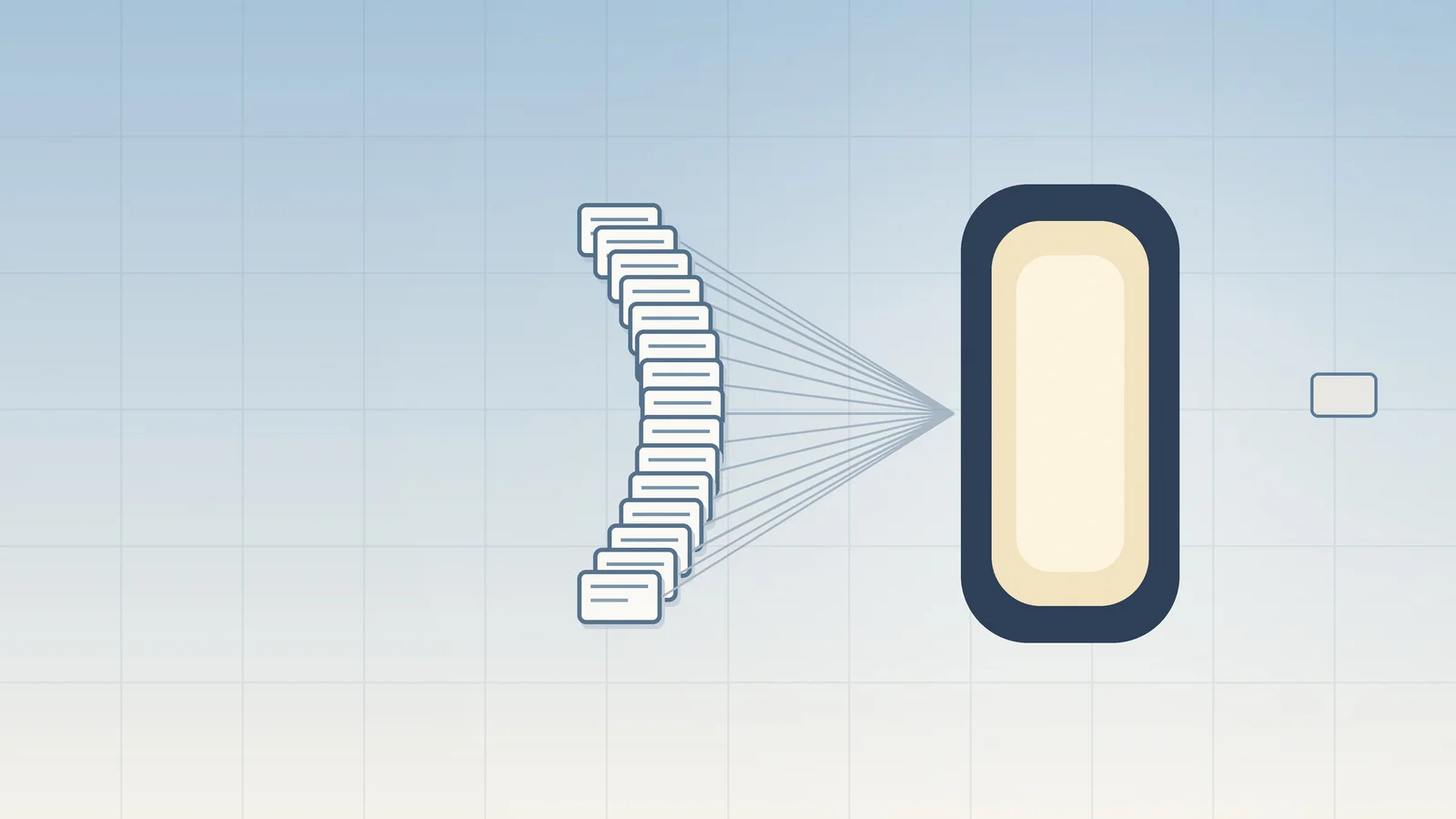
Every morning for two years, an automated list appeared in the electronic health records of two Bronx teaching hospitals. It named patients who looked, by their chart data, like they might have opioid use disorder — a laboratory result here, a medication on the reconcile list there, a history buried in a nursing note. The list kept running from October 2022 until October 2024, and by the time recruitment closed it had produced 9,140 records.
Twenty-three people started buprenorphine.
That figure is not a verdict on the software. It is a measurement of something the addiction field has largely described in adjectives — the sense that hospitals are where treatment goes to be missed. A brief report published October 8 in Addiction Science & Clinical Practice by Abigail Haber, Aaron D. Fox and colleagues at Albert Einstein College of Medicine and Montefiore Medical Center lays out the full screening ledger from their randomized trial, stage by stage, including the parts most papers leave in a methods appendix. Read end to end, it is less a study of an algorithm than an anatomy of attrition.
The door hospitals keep walking past
The premise behind in-hospital buprenorphine is straightforward. Buprenorphine, a partial opioid agonist, is among the most effective medications for opioid use disorder. Clinical guidelines increasingly urge hospitals to start it before discharge rather than hand a patient a referral list and a bus schedule. Patients who leave a hospitalization untreated face elevated odds of overdose and of coming back through the same emergency department weeks later.
A hospital admission, in other words, is a rare moment when someone with opioid use disorder is already inside the system, already medically supervised, already sober enough to be assessed. It is a door that is already open.
The Bronx team wanted to know why so few people walk through it. Rather than rely on busy clinicians to notice which inpatients might be candidates, they built an electronic health record algorithm that generated a daily list of patients with likely opioid misuse or opioid use disorder. The design belonged to a broader turn in implementation science: if health systems already sit on vast stores of clinical data, why not use that infrastructure to close the gap between evidence and practice automatically?
The answer, it turns out, is that finding people is not the same as treating them.
An algorithm, then a mountain of chart review
The first number is the one that stops you. Of the 9,140 records the algorithm surfaced, 8,534 — 93 percent — were excluded during preliminary manual review of the chart. For every record that survived the first pass, more than thirteen were set aside.
That is a precision problem, and the authors say so plainly. Staff members had to comb through thousands of charts by hand to confirm whether each algorithmic flag was real, because a flag is a hypothesis about a patient, not a diagnosis. The labor required to separate true candidates from false positives is a central limitation of the approach, and the researchers do not disguise it. An algorithm that is right often enough to be useful at scale is a different object from one that is right often enough to be interesting.
What emerged on the other side of that review was a pool of 434 patients deemed potentially eligible for buprenorphine. Four hundred and thirty-four, out of nine thousand.
Then the funnel narrowed again — and this time the constraint was not computational.
The funnel, stage by stage
The trial's screening data, laid out in sequence, describes a cascade in which each stage removes most of what the previous stage produced.
| Stage | Patients remaining |
|---|---|
| Records flagged by the EHR algorithm | 9,140 |
| Excluded at preliminary manual chart review | 8,534 excluded (434 remained) |
| Potentially eligible after review | 434 |
| Agreed to be assessed for the trial | 43 |
| Found eligible at assessment | 29 |
| Enrolled and started on buprenorphine | 23 |
The steepest drop is not at the algorithm, and it is not at eligibility. It is at consent. Of 434 potentially eligible patients, 43 agreed to be assessed — fewer than one in ten. The rest declined or could not be evaluated. The team documented the reasons for non-assessment using pre-specified categories, which is the kind of rigor that turns a list of losses into evidence.
Twenty-three initiations across two years of screening works out to roughly a 5 percent initiation rate among the pool of potentially eligible patients. Even inside a well-resourced clinical trial with dedicated research staff and a steady supply of candidates, nineteen of every twenty people the system identified as treatable did not end up on medication.
Where the funnel actually broke
It would be easy to read this as a story about weak software and stop there, and the authors do hold out that hope: better artificial intelligence, machine learning models trained on richer clinical data, might cut down the 93 percent exclusion rate and free staff to focus outreach where it counts. Their own keyword list includes artificial intelligence, and they clearly see computational refinement as one promising path.
But the sharper finding sits on the other side of the ledger. When the system did work — when it surfaced someone genuinely eligible — fewer than one in ten agreed to be assessed. That is not a plumbing problem. It is a human one, and the researchers are direct about it: patient concerns and the stigma attached to buprenorphine suppress uptake even after a patient has been correctly identified.
The pattern is familiar to anyone who works in hospital-based addiction care. Misconceptions about medication-assisted treatment run deep — the idea that buprenorphine is "swapping one drug for another," that it should be a short bridge rather than ongoing treatment, that needing it signals a failure of will. Add the fear of being labeled in a permanent medical record, and the ambivalence of being asked to start a medication during an acute hospitalization for something else entirely, and the consent stage becomes predictable terrain for loss.
The Bronx numbers put a coefficient on that ambivalence. Consent, not identification, is where the door closes.
What the authors want next
A bedside problem wearing a coding problem's clothes
The report ends with a dual prescription, and the two halves sit awkwardly together in a way that feels honest. Refine the algorithm, yes — but also redesign the clinical encounter so that it can answer the fears that arrive with the patient. Peer specialists, better scripts for the bedside conversation, and a treatment culture that treats buprenorphine as ordinary medicine rather than a confession all fall on that side of the ledger. For people weighing whether to accept medication-assisted treatment, the study is a reminder that the medication works far more reliably than the system delivering it.
There is a structural echo here of a different problem documented elsewhere in this publication's coverage: the machinery of identification and the machinery of treatment are not the same machinery, and building one does nothing for the other unless someone builds the bridge. For patients with opioid use disorder, a hospital stay remains one of the most reliable chances to change the trajectory of the disease. The study shows how often that chance is spent on screening rather than on care.
What this means for patients and hospitals
For hospitals, the practical lesson is that an automated surveillance tool is not an intervention. Deploying it without a plan for the human work downstream mostly generates a longer list. The Bronx experience, with dedicated staff and a randomized design, produced 23 initiations from 9,140 flags; a system that installs the algorithm and nothing else should expect less.
For families, the number worth holding onto is the consent rate. If a relative is hospitalized and an addiction medicine consult is offered, the strongest predictor of whether they get treated is whether they say yes — which means the conversation matters as much as the chemistry. Withholding judgment, explaining what buprenorphine actually does, and making clear that starting it during a hospital stay is a normal medical decision rather than an admission of defeat are all things a prepared clinician can do.
For the field, the report is a gift of unusually candid accounting. Most publications report the 23 enrollments and bury the 9,140. Publishing the screening data makes the attrition visible, and visible attrition is the only kind anyone can fix.
The limits of one trial's ledger
A few cautions belong here, because the study is narrower than any single number suggests. The brief report describes screening data from one randomized trial at two urban teaching hospitals in the Bronx — a densely resourced academic setting with a patient population shaped by a specific epidemic geography. The consent-stage losses were documented with pre-specified reason codes, but the underlying motives are self-reported or inferred, and 43 patients is a small base from which to generalize about why people decline.
The trial's own design also constrained who reached the consent conversation at all; a research protocol imposes eligibility rules and assessment schedules that ordinary clinical practice does not. And the algorithmic flag, whatever its precision, was never meant to diagnose — it was a pointer, and some of the 93 percent exclusion rate is simply the cost of casting a wide net on purpose.
None of that changes the central picture. The Bronx team set out to test how to start buprenorphine during a hospital stay and ended up documenting, in granular detail, how hard it is to move a patient from flagged to treated. The gap between 9,140 and 23 is where the next generation of hospital-based addiction care will be won or lost — and the report hands the field the map.
Sources
- Haber A, Sanchez-Fat G, Buonora M, Sabado A, Ghiroli M, Deng Y, Khalid L, Torres-Lockhart KE, Reyes M, Ramsey KS, Starrels JL, Fox AD. Brief report on screening data from a randomized controlled trial of in-hospital buprenorphine initiation strategies. Addiction Science & Clinical Practice (Oct 8, 2026)
- ClinicalTrials.gov — Strategies to Improve Delivery of Buprenorphine for Opioid Use Disorder in Hospitalized Patients (NCT05118204)
- Albert Einstein College of Medicine / Montefiore Medical Center — study summary via Bioengineer.org (Oct 8, 2026)
Editorial Board
LADC, LCPC, CASAC
The Rainier Rehab editorial team consists of licensed addiction counselors, healthcare journalists, and recovery advocates dedicated to providing accurate, evidence-based information about substance abuse treatment and rehabilitation.
Related Articles

Addiction Redefined as Cardiometabolic Disease Opens New Treatment Frontier
European Heart Journal Open proposes neurocardiometabolic framework linking addiction treatment with cardiovascular care through GLP-1 receptor therapies

Monthly Injectable Buprenorphine Cuts Relapse Risk by 3.5x, Studies Find
New real-world evidence shows extended-release buprenorphine significantly outperforms other medication-assisted treatments in preventing relapse and reducing healthcare costs.

Weekly Injectable Buprenorphine Proves Superior for Pregnant Women With Opioid Use Disorder
NIH-funded JAMA study shows extended-release buprenorphine outperforms daily pills in pregnancy, offering new hope for maternal and infant outcomes.