
ASU Study Finds Opioid Withdrawal Suppresses Brain's Myelin-Building Genes
Long-term opioid use damages the brain in ways scientists are still charting, and new research from Arizona State University adds a piece that had been largely overlooked: the injury reaches past neurons themselves and into the support cells that keep those neurons talking to one another. In a study published in Pharmacology Biochemistry and Behavior, researchers from ASU's Department of Psychology and Biodesign Institute report that opioid withdrawal suppressed two genes governing myelin, the fatty insulation that wraps nerve fibers and lets them fire quickly and cleanly.
The finding matters because most addiction neuroscience has concentrated on neurons and the reward circuitry they form. By showing that withdrawal disrupts the cells that build and repair white matter, the ASU team points toward a category of biology that could eventually be targeted with treatment.
What the researchers measured
Working with a mouse model, the team looked at the first 48 hours of withdrawal following repeated opioid exposure, a window when the brain is under acute stress. During that period they tracked both behavior and gene expression in the prefrontal cortex, the region responsible for higher-order thinking such as planning, decision-making and self-control.
Two changes appeared together. The animals engaged in fewer social interactions, and the expression of two genes that regulate oligodendrocytes — the specialized cells that manufacture myelin — dropped. One gene, Tcf7l2, helps guide oligodendrocytes to begin producing myelin in the first place. The other, Klk6, is involved in the later stages of myelination, including repairing existing damage. With both genes turned down, the brain's capacity to build and maintain its insulation would be compromised precisely when it is already coping with the shock of withdrawal.
"Repeated exposure to opioids followed by withdrawal resulted in changes to two genes involved in the process of myelination in the prefrontal cortex, a part of the brain that is responsible for higher-order thinking," said Olivia Law, a psychology graduate student and first author on the paper. "These findings suggest that opioid use and withdrawal might affect white matter in this region, potentially impacting functions such as decision-making and self-control."
Why myelin belongs in the addiction conversation
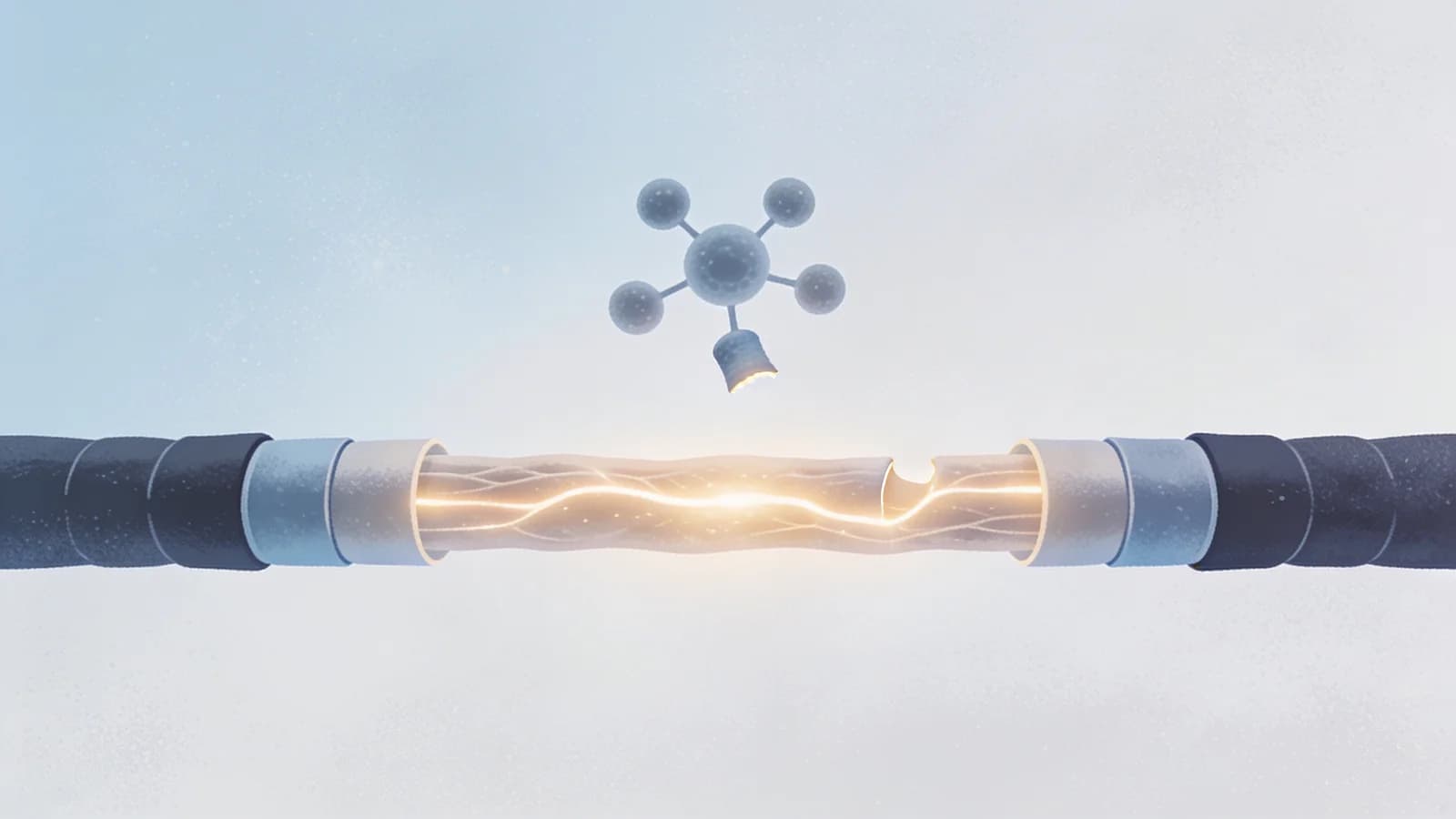
Myelin is nicknamed white matter for its bright, fatty appearance, and its job is closely analogous to the rubber coating on household wiring: it insulates nerve fibers so signals travel fast and stay on course. When myelin is damaged, the consequences range from tingling sensations in the body to genuine cognitive deficits. In the context of addiction, degraded insulation in the prefrontal cortex could help explain why sustained opioid use and repeated withdrawal so often erode judgment and impulse control — the very faculties a person needs to stay in recovery.
The researchers argue that these white-matter changes are not merely a side effect but may feed the disorder itself. According to Jessica Verpeut, an assistant professor of psychology and the study's senior author, "changes in myelin contribute to addiction by altering the sensitivity of reward brain pathways to drugs of abuse." Understanding the gene-expression shifts underneath that process, she said, "is critically important."
The tie between reduced myelin genes and fewer social interactions is notable on its own, because social environment is a well-established driver of both drug use and relapse. A brain less able to maintain its wiring during withdrawal, at the same moment the animal withdraws socially, sketches a biological version of the isolation many people describe during early recovery.
A possible therapeutic target
The practical hope in the paper is that myelin could be acted upon. Because oligodendrocyte function is sensitive to opioid exposure, restoring that function — and with it the controlled growth and restructuring of myelin — could become a therapeutic target for treating opioid addiction and easing withdrawal. That would represent a different angle from most existing medications for opioid use disorder, which act primarily on opioid receptors rather than on the brain's structural repair systems.
The idea also reframes what effective treatment might need to address. "This work highlights that to better understand and treat opioid addiction — and other neuropsychiatric disorders — requires studying not just neurons but also several other cell types that support neuronal function," said Jonathan Gewirtz, a professor of psychology on the team. The same logic applies to conditions well beyond addiction, since myelin damage figures into a range of neuropsychiatric and neurodegenerative disorders.
Limits and what comes next
The study was conducted in mice, and its authors are careful to frame the results as suggestive rather than settled. Gene-expression changes over a 48-hour window in an animal model do not translate directly into a human therapy, and considerable work would be needed to establish whether restoring oligodendrocyte function changes the course of addiction or recovery in people. Standard medications and behavioral care remain the foundation of treatment today.
Still, the direction is meaningful. The work was funded in part by the National Institute on Drug Abuse along with several Arizona research institutes, and it fits a broader shift in neuroscience toward taking the brain's support cells seriously. For a field that has spent decades focused on neurons and dopamine, the message from ASU is that the wiring's insulation — and the cells that maintain it — may be just as central to understanding why opioids are so difficult to leave behind.
Editorial Board
LADC, LCPC, CASAC
The Rainier Rehab editorial team consists of licensed addiction counselors, healthcare journalists, and recovery advocates dedicated to providing accurate, evidence-based information about substance abuse treatment and rehabilitation.
Related Articles

Most People Who Hit "Rock Bottom" Say It Didn't Move Them to Recover
A Johns Hopkins study of 20 people in recovery from opioid use disorder found 70% described hitting rock bottom — but only two said it motivated them. The authors argue the trope delays care and deepens stigma.
NIDA Funds $5 Million Study on How Social Isolation During Adolescence Shapes Addiction Risk
University of Chicago researchers investigate why isolation during teenage years may permanently alter brain development and increase vulnerability to substance use disorders.

Prenatal Opioid Exposure Linked to Vision and Attention Problems in Children
A Glasgow review pooling 27 studies and 31,000 opioid-exposed children found consistent links to vision defects, ADHD-like attention problems and weaker learning.