
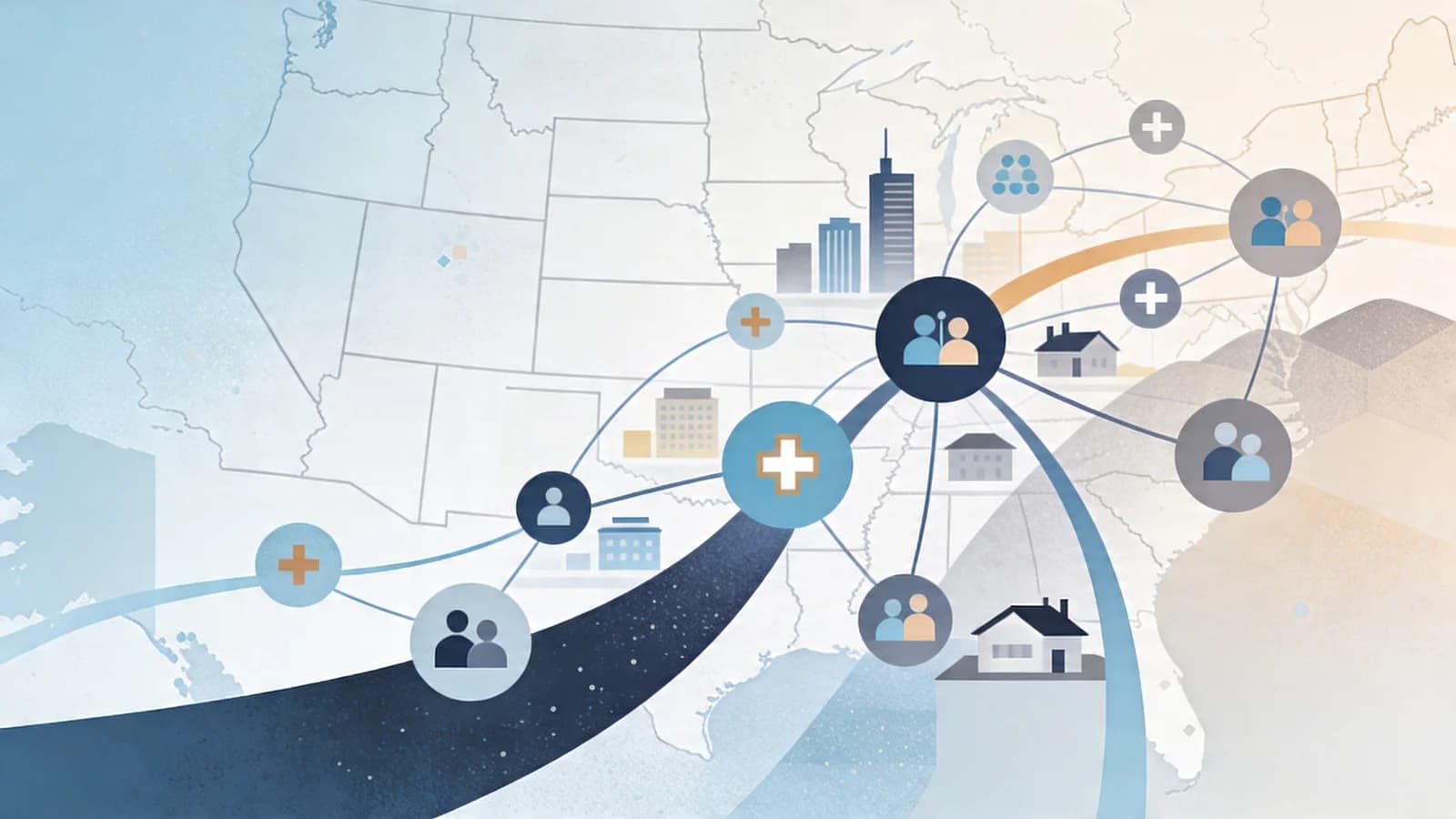
Medicaid Expansion Drives 21% Buprenorphine Access Surge
When Oklahoma voters approved Medicaid expansion in 2020, they were primarily thinking about emergency room visits and preventive care. What they couldn't have predicted was the dramatic transformation in how the state would confront its opioid crisis.
New research published in JAMA Network Open reveals that Oklahoma and seven other states that expanded Medicaid after 2018 saw buprenorphine prescriptions jump by more than 21% between 2019 and 2023. The medication, widely considered the gold standard for treating opioid use disorder, has been proven to reduce opioid-related deaths when combined with ongoing medical care and recovery support.
The study's timing couldn't be more critical. As Congress debates potential Medicaid cuts that could affect millions of Americans, the research offers compelling evidence that health coverage expansion directly translates to lives saved.
The Oklahoma Success Story
Nicole Siegal, a postdoctoral researcher at Indiana University and the study's principal author, analyzed pharmacy claims data from more than 4.5 million unique patients across the country. Her findings tell a striking story about what happens when financial barriers to treatment disappear.
In Oklahoma specifically, the impact has been measurable in the most important metric possible: lives lost. Last year, drug overdose deaths in the state plummeted by 43%, according to CDC data. It was among the steepest declines recorded nationwide.
"It's not just a shift of patients going from one source to another," Siegal explained. Instead, the expanded coverage allowed entirely new populations to access medication-assisted treatment that had previously been financially out of reach.
The research team estimates that increased buprenorphine access in the eight recent-expansion states averted up to 140 overdose deaths annually. These aren't abstract statistics—they represent parents, children, neighbors, and colleagues who are still alive because treatment became accessible.
Beyond Medicaid Recipients
Perhaps most surprisingly, the benefits extended beyond those who gained Medicaid coverage. Siegal's team found that buprenorphine prescriptions increased across all payment types, including patients with private insurance.
This suggests a network effect: when states invest in treatment infrastructure and reduce stigma through broader coverage, the entire treatment ecosystem strengthens. More providers enter the field. More pharmacies stock the medication. The normalization of treatment creates ripple effects that touch every corner of the healthcare system.
Stephen Crystal, director of the Center for Health Services Research at Rutgers University and a co-author on the study, calls Oklahoma a "success story" that demonstrates what's possible when policy aligns with public health evidence.
The Threat on the Horizon
But Crystal and other researchers warn that these gains are fragile. Congressional Republicans are currently pursuing Medicaid reductions that could force states to scale back or eliminate their expansion programs. At least nine states have enacted trigger laws requiring them to end expansion if federal funding drops below current levels.
"I don't know how you would maintain the current level of buprenorphine treatment if you eliminated Medicaid expansion," Crystal said, "because the expansion population is where you find a lot of the people with opioid use disorder."
The arithmetic is stark. Medicaid currently covers medication for nearly half of all non-elderly American adults with opioid use disorder. In Oklahoma alone, expansion provides coverage for 228,000 residents. Without it, the state's 43% reduction in overdose deaths could quickly reverse.
The National Context
Oklahoma wasn't alone in its post-2018 expansion. Missouri, Nebraska, North Carolina, South Dakota, Utah, and Virginia also opened their Medicaid programs during this period, giving researchers a natural experiment to study what happens when coverage expands in diverse political and geographic environments.
The results were remarkably consistent. Regardless of whether expansion happened through ballot initiative, legislative compromise, or gubernatorial executive action, buprenorphine access increased significantly.
This consistency matters because it suggests the effect isn't driven by any single state's unique circumstances. It's the coverage itself—the removal of financial barriers—that produces the outcome.
States that expanded earlier, before 2018, also saw increases in buprenorphine prescriptions, but these were generally smaller. The researchers attribute this to a separate phenomenon: federal policy changes during the COVID-19 pandemic that made buprenorphine easier to prescribe, including relaxed telehealth rules and the elimination of the X-waiver requirement for physicians.
Looking Forward
The study arrives at a pivotal moment. After years of devastating increases, U.S. overdose deaths are finally declining nationwide. Multiple factors contribute to this trend: changing attitudes about seeking help, the expansion of harm reduction programs, wider naloxone distribution, and yes, improved access to medications like buprenorphine.
But the research also serves as a warning. The infrastructure that supports this progress—particularly Medicaid expansion—faces political headwinds that could unwind years of gains in a single legislative session.
For Oklahoma, the stakes are especially high. The state enshrined Medicaid expansion in its constitution, making it harder to reverse than in states where expansion exists by statute alone. Two bills currently moving through the legislature would add work requirements and other restrictions, but both require voter approval if they advance.
What This Means for Treatment
The implications extend far beyond the eight states studied. As policymakers in the dozen remaining non-expansion states debate whether to open their Medicaid programs, this research provides concrete evidence about what they can expect.
It also reframes the cost debate. Critics of expansion often focus on state budget impacts while overlooking the downstream savings from reduced emergency department visits, fewer overdose deaths, and lower criminal justice costs. When buprenorphine access prevents 140 deaths per year across just eight states, the economic calculus shifts dramatically.
More importantly, the study demonstrates that policy choices have immediate, measurable impacts on who gets to live and who dies. The 21% increase in buprenorphine prescriptions isn't just a healthcare statistic—it's hundreds of families that remain intact, hundreds of parents who are still raising their children, hundreds of people who got a second chance.
As the nation grapples with how to sustain its first meaningful progress against the opioid crisis in years, Oklahoma's experience offers both inspiration and caution. The tools for saving lives exist. The question is whether we'll continue using them.
Editorial Board
LADC, LCPC, CASAC
The Rainier Rehab editorial team consists of licensed addiction counselors, healthcare journalists, and recovery advocates dedicated to providing accurate, evidence-based information about substance abuse treatment and rehabilitation.
Related Articles

Bipartisan Bill Would Let Doctors Prescribe Methadone at Pharmacies
Senators Markey and Paul reintroduce legislation to expand methadone access by allowing board-certified addiction specialists to prescribe the medication for pharmacy pickup.

Buprenorphine Access Surges in Rural America, but Cities Lag Behind on Emergency Department Treatment
New CDC data reveals surprising trends in addiction medication access: rural pharmacies now dispense more buprenorphine per capita than urban ones, while ED-based treatment remains an urban privilege.

Wildfire Smoke Is Quietly Disrupting Opioid Treatment Access for Millions
Air quality emergencies create life-threatening barriers for patients on medication-assisted treatment, yet public health warnings rarely mention this hidden risk