

Carfentanil Resurges: Weapons-Grade Opioid Spreads in US
A decade after China banned carfentanil—closing a regulatory loophole that had allowed the weapons-grade opioid to flood American streets—the substance is experiencing a terrifying resurgence. The synthetic drug, estimated to be 100 times more potent than fentanyl and 10,000 times stronger than morphine, has seen a tenfold increase in U.S. drug seizures over the past three years, according to Drug Enforcement Administration records.
The surge comes as an unintended consequence of successful international pressure on China to restrict fentanyl precursor chemicals. Rather than curbing the synthetic opioid trade, the regulatory crackdown appears to be pushing Mexican drug cartels toward an even deadlier alternative: carfentanil, a substance originally developed as a chemical weapon and used by Russian forces against Chechen separatists in 2002.
The Numbers Tell a Terrifying Story
DEA laboratory testing identified carfentanil in 1,400 drug seizures across the United States in 2025, compared with just 145 in 2023 and 54 in 2022. This exponential growth represents one of the most alarming developments in the ongoing opioid crisis, even as overall overdose deaths have declined for more than two years—the longest sustained drop in decades.
The disconnect between falling overdose rates and rising carfentanil prevalence creates a dangerous false sense of security. Public health experts warn that the current decline in deaths could reverse rapidly if carfentanil achieves the same market penetration fentanyl did between 2013 and 2017.
"You're talking about not even a grain of salt that could be potentially lethal," said Frank Tarentino, the DEA's chief of operations for its northeast region, which stretches from Maine to Virginia. "This presents an extremely frightening proposition for substance abuse dependent people who seek opioids on the street today."
From Veterinary Medicine to Chemical Warfare
Carfentanil's legitimate use is extraordinarily limited. The DEA's annual quota for lawfully manufactured carfentanil—used by veterinarians to tranquilize elephants and other large animals—is just 20 grams, an amount that can fit in the palm of a hand. A single grain of the substance, smaller than a poppy seed, can kill a human being.
The drug's potency made it attractive to military and intelligence agencies. Russian special forces deployed an aerosolized form of carfentanil during the 2002 Moscow theater hostage crisis, killing more than 100 hostages along with the Chechen separatists who had taken them captive. The incident demonstrated both the compound's lethality and the difficulty of controlling its effects in real-world conditions.
For people struggling with opioid addiction, the emergence of carfentanil in the illegal drug supply represents an existential threat to harm reduction strategies that have saved hundreds of thousands of lives during the fentanyl era.
Why Now? The China Connection
The carfentanil resurgence appears directly linked to international efforts to combat fentanyl production. Under sustained pressure from the United States, China implemented strict regulations on the export of precursor chemicals used to manufacture fentanyl. While these measures contributed to a 50% drop in fentanyl seizures at the U.S. border—falling to approximately 12,000 pounds in 2025 from over 24,000 pounds in 2023—they also disrupted the supply chain that Mexican cartels had relied upon.
Rather than exit the synthetic opioid market, traffickers appear to be adapting. DEA intelligence bulletins suggest that cartels are now experimenting with producing carfentanil themselves or procuring it from Chinese vendors who skirt regulations by advertising on online forums in third countries. The extreme potency of carfentanil means that smaller volumes can generate equivalent profits, potentially offsetting increased production costs and logistical challenges.
"You can't just dabble in this," Tarentino warned. "This is not some mad scientist on Reddit you're going to get to go out to a rudimentary laboratory in Mexico to make carfentanil." The manufacturing process requires sophisticated chemical expertise and equipment, suggesting that well-resourced criminal organizations—not independent operators—are driving the surge.
The Naloxone Problem
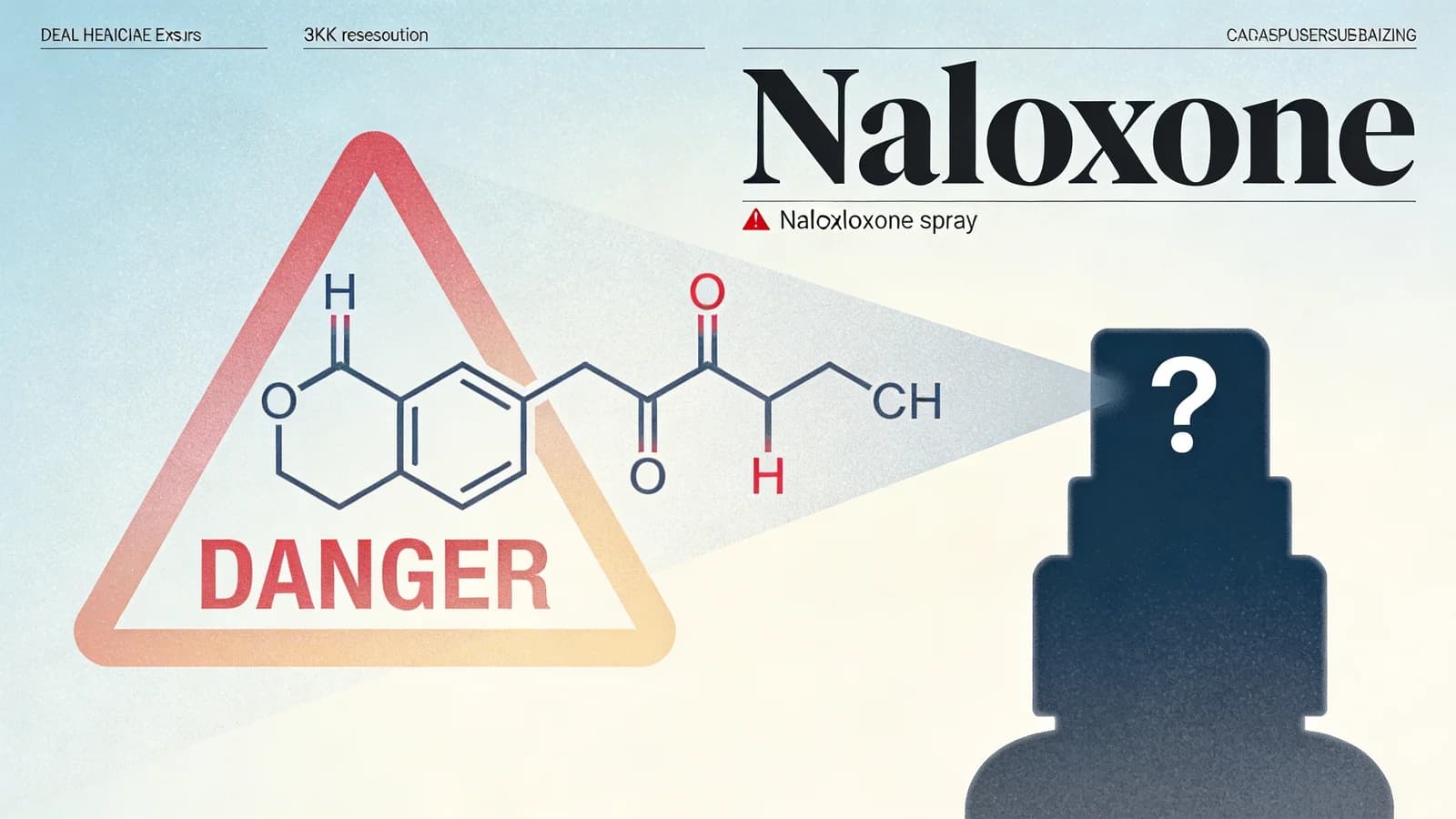
Perhaps the most alarming aspect of the carfentanil resurgence is its implications for overdose reversal. Naloxone, the medication that has become the cornerstone of harm reduction efforts, works by displacing opioids from receptors in the brain. But carfentanil binds to these receptors with such extraordinary affinity that standard naloxone doses may be insufficient.
Medical experts say that reversing a carfentanil overdose may require multiple high-dose administrations of naloxone—far more than the single 4-milligram nasal spray that has become standard issue for first responders and community distribution programs. Many people who use drugs and their families do not have access to multiple doses, and even well-equipped emergency medical services may struggle to administer sufficient medication in time.
The carfentanil threat comes on the heels of similar concerns about other ultra-potent synthetic opioids, including medetomidine and various nitazenes, that have begun appearing in the U.S. drug supply. Together, these substances represent what some public health officials have termed a "synthetic soup"—an increasingly unpredictable mixture of powerful compounds that defies traditional harm reduction approaches.
Real-World Impact
The human cost of the carfentanil resurgence is measured in individual tragedies. Michael Nalewaja, a 36-year-old electrician living in Alaska, died in November 2025 after unknowingly consuming a mixture of fentanyl and carfentanil that he may have mistaken for cocaine. His mother, Kelley Nalewaja, received the news days before Thanksgiving.
"I heard the word 'autopsy' and I literally just collapsed to the floor," she recalled. "Even if somebody had been there prepared with Narcan—even if somebody had called 911 in time—he was not going to survive."
Nalewaja's death illustrates a particularly dangerous aspect of the carfentanil surge: the drug is not only being sold as a substitute for heroin or fentanyl but is also being mixed into stimulants like cocaine and methamphetamine, catching users who have no opioid tolerance and may not recognize the signs of overdose.
In 2024, carfentanil was linked to 413 overdose deaths across 42 states and Washington, D.C.—nearly triple the previous year's total. The true number is likely higher, as standard toxicology panels do not always test for carfentanil and specialized testing is required for confirmation.
Law Enforcement Response
The DEA has responded to the carfentanil surge with high-profile enforcement actions. In October 2025, the agency's Los Angeles Field Division seized 628,000 pills containing carfentanil—the largest single confiscation in U.S. history. A month earlier, officials in Washington state intercepted more than 50,000 counterfeit M30 pills laced with carfentanil and acetaminophen at a gas station.
These seizures represent just a fraction of the carfentanil entering the country. The drug's extreme potency means that traffickers can move massive numbers of doses in small, easily concealed packages. A quantity of carfentanil weighing less than a few grams can contain thousands of lethal doses.
The Biden administration has requested a $362 million increase in DEA funding focused specifically on cartel-driven fentanyl and carfentanil trafficking. But enforcement officials acknowledge that interdiction alone cannot solve the problem. As long as demand for opioids persists and treatment access remains inadequate, profit motives will drive innovation in synthetic drug production.
A Mother's Crusade
Following her son's death, Kelley Nalewaja declined to hold a traditional funeral. Instead, she organized a town hall in her hometown of El Dorado Hills, California, bringing together local officials and other mothers who had lost children to synthetic opioids.
Her message is stark: carfentanil is not merely a drug but a weapon. "It's not an OD; it's not an overdose," she insisted. "It's a murder weapon."
Nalewaja is pushing for legislative and judicial changes to hold drug dealers accountable for deaths caused by the substances they distribute. She argues that anyone selling drugs laced with carfentanil knows—or should know—that they are dealing in poison, not recreational substances.
Her advocacy reflects a growing movement among families affected by the synthetic opioid crisis. As the drugs have grown more dangerous and the dealers more anonymous, the line between accidental overdose and homicide has blurred. Some prosecutors have begun pursuing murder charges in cases involving fentanyl and carfentanil distribution, though legal experts caution that such charges can be difficult to prove and may not deter traffickers who already face severe penalties.
Looking Forward
The carfentanil resurgence poses fundamental questions about the future of the overdose crisis. For years, public health strategies have focused on expanding naloxone access, promoting medication-assisted treatment, and reducing the stigma that prevents people from seeking help. These efforts have contributed to the recent decline in deaths.
But carfentanil threatens to undermine this progress. If the drug achieves widespread distribution, the margin for error in using illegal opioids will shrink from small to microscopic. Harm reduction strategies that relied on timely naloxone administration may prove insufficient against a substance that can kill before help arrives.
For policymakers, the challenge is twofold: preventing carfentanil from achieving the market dominance that fentanyl did, while simultaneously expanding access to treatment for the millions of Americans already dependent on opioids. The former requires international cooperation, sophisticated intelligence operations, and continued pressure on precursor chemical suppliers. The latter demands investment in healthcare infrastructure, workforce development, and the destigmatization of addiction as a medical condition rather than a moral failing.
The coming months will reveal whether the carfentanil surge represents a temporary adaptation by drug traffickers to disrupted supply chains or the beginning of a new, even deadlier phase of the synthetic opioid crisis. For families like the Nalewajas, the answer will determine how many more mothers receive the call that Kelley did—learning that a grain of white powder, smaller than a poppy seed, has ended their child's life.
Sources
Editorial Board
LADC, LCPC, CASAC
The Rainier Rehab editorial team consists of licensed addiction counselors, healthcare journalists, and recovery advocates dedicated to providing accurate, evidence-based information about substance abuse treatment and rehabilitation.
Related Articles
Synthetic Opioid Cychlorphine Spreads, Resists Naloxone
Drug 5-10 times more potent than fentanyl detected in Georgia and Missouri, as new study reveals standard naloxone doses may be insufficient for reversing synthetic opioid overdoses.

Where Orange County Packs the Most Rehabs, Out-of-State Visitors Overdose Most
California emergency data show out-of-state visitors overdosed 159% more than expected where rehab centers cluster. The researchers suspect predatory operators.

A Patch That Senses Fentanyl Through the Skin and Releases Its Own Antidote
Virginia Tech researchers built a battery-free microneedle patch that senses fentanyl under the skin and releases naloxone on its own — human use is four years out.