
US Sanctions Target Fentanyl Network in India, Mexico
The United States has deployed targeted economic sanctions against a sophisticated transnational criminal network that spans three continents and supplies precursor chemicals to Mexico's Sinaloa Cartel, marking a significant escalation in the Trump administration's efforts to disrupt the global supply chain fueling America's fentanyl crisis.
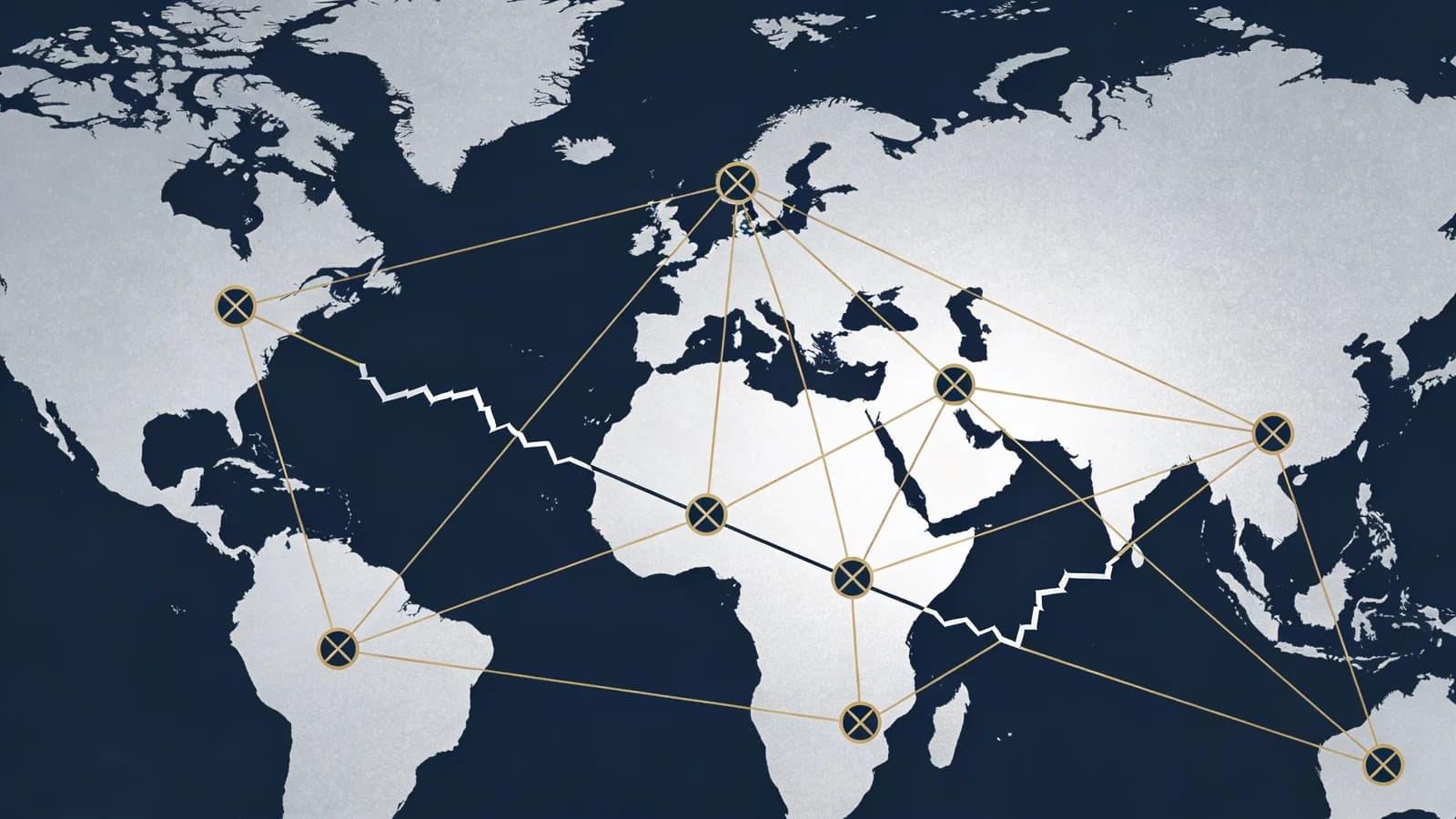
The State Department action, announced April 23, 2026, targets a network operating across India, Guatemala, and Mexico—representing the full spectrum of the illicit fentanyl production pipeline from chemical suppliers in Asia to logistics brokers in Central America to cartel-affiliated manufacturing operations.
A Three-Continent Supply Chain
The sanctioned network illustrates the truly global nature of the synthetic opioid trade. Precursor chemicals originate in India, a major hub for pharmaceutical and chemical manufacturing where regulatory oversight of certain compounds has historically been limited. These chemicals are then routed through Guatemala, where logistics brokers facilitate their transport across Central America. Finally, they reach the Sinaloa Cartel in Mexico, which operates clandestine laboratories producing fentanyl for distribution throughout the United States.
This supply chain model has proven remarkably resilient to enforcement efforts. When authorities disrupt one segment—seizing a chemical shipment, arresting a broker, or dismantling a laboratory—the network adapts by rerouting through alternative channels. The transnational nature of the operation complicates prosecution, as evidence and suspects are scattered across multiple jurisdictions with varying levels of cooperation and legal frameworks.
Executive Orders as Weapons
The sanctions are being implemented through a combination of executive orders that reflect the evolving U.S. approach to the fentanyl crisis. Executive Order 14059, issued during the Biden administration, targets the international proliferation of illicit drugs and their means of production. Executive Order 13224, originally developed for counterterrorism purposes, allows for sanctions against terrorists and their supporters—a designation now applied to cartel operations.
Most significantly, the action implements Executive Order 14367, which designated illicit fentanyl and its core precursor chemicals as Weapons of Mass Destruction. This classification represents a fundamental shift in how the U.S. government views synthetic opioids—not merely as illegal drugs but as existential threats comparable to nuclear, biological, or chemical weapons.
For people struggling with opioid addiction, these policy developments occur against a backdrop of continued danger from the drugs themselves. While supply chain disruptions may eventually reduce availability, the immediate impact on street-level access remains limited.
The Sinaloa Cartel Threat
The State Department's statement explicitly identifies the Sinaloa Cartel as a Foreign Terrorist Organization posing "an extraordinary threat not only to the United States, but to the stability and security of the entire region." This designation elevates the cartel from a criminal organization to a national security threat, enabling broader authorities for military, intelligence, and law enforcement agencies.
The Sinaloa Cartel has dominated the U.S. fentanyl market since the synthetic opioid began displacing heroin around 2017. Unlike heroin, which requires cultivation of poppy fields and labor-intensive processing, fentanyl can be manufactured in small laboratories using readily available precursor chemicals. This production efficiency has allowed the cartel to flood American markets with cheap, potent opioids that are exponentially more dangerous than the substances they replaced.
Treasury Department Coordination
The State Department action was coordinated with the Treasury Department, which simultaneously announced sanctions targeting the global illicit drug supply chain supporting the Sinaloa Cartel. Treasury's press release emphasized how these networks "exploit international supply chains and clandestine production facilities" to manufacture synthetic opioids "more efficiently than ever before."
The Treasury sanctions freeze any assets the targeted individuals and entities hold within U.S. jurisdiction and prohibit American citizens and businesses from transacting with them. While the direct financial impact may be limited—criminal networks typically hold few legitimate assets in the United States—the sanctions create ripple effects by cutting off access to the international banking system and making it difficult to conduct business with legitimate companies worldwide.
Historical Context: From Settlement to Sanctions
The sanctions action comes as the United States continues implementing the more than $55 billion in settlements reached with pharmaceutical manufacturers and distributors over their role in the opioid epidemic. An article published in the American Journal of Managed Care this week examines the challenges and opportunities of local implementation of these national settlements, noting that the funds are intended to address "the role of manufacturers and distributors in the ongoing opioid epidemic."
The juxtaposition of these two approaches—domestic settlement funds addressing the historical roots of the crisis through treatment and prevention, and international sanctions targeting the current supply of illicit fentanyl—illustrates the multifaceted nature of the U.S. response. The opioid crisis evolved from prescription pill mills to heroin trafficking to synthetic fentanyl production, and policy responses have had to adapt accordingly.
Regional Security Implications
The State Department's emphasis on regional stability reflects growing concern that fentanyl trafficking is undermining governance throughout the Western Hemisphere. Mexican cartels have become de facto authorities in territories they control, corrupting local officials, intimidating law enforcement, and creating parallel power structures that challenge state sovereignty.
The spillover effects extend beyond drug trafficking. Cartel revenues fund other criminal enterprises, including human trafficking, weapons smuggling, and extortion. The violence associated with cartel competition has created refugee flows and humanitarian crises that strain regional relationships and create political instability.
By targeting the supply chain at its international nodes—particularly in India and Guatemala—the sanctions aim to reduce cartel revenues and operational capacity without direct military intervention in Mexico, which would raise significant sovereignty concerns and potentially trigger broader conflict.
Effectiveness Questions
Sanctions have a mixed record in disrupting illicit drug networks. While they can create friction in financial transactions and complicate logistics, criminal organizations have historically adapted by developing alternative banking channels, using cryptocurrency, and shifting operations to unsanctioned jurisdictions.
The designation of fentanyl as a Weapon of Mass Destruction may prove more significant than the sanctions themselves. This classification opens possibilities for military and intelligence operations that would be legally and politically impossible for ordinary drug enforcement. It also signals to international partners that the United States views the fentanyl crisis as an existential threat requiring extraordinary measures.
Looking Forward
The Trump administration's statement emphasized its commitment to "making America safe again" and its willingness to "use all tools necessary to protect American lives." This suggests that the sanctions represent not an endpoint but the beginning of a more aggressive international campaign against fentanyl trafficking.
Future actions could include expanded sanctions targeting Chinese chemical manufacturers—who remain the primary source of fentanyl precursors despite recent regulatory cooperation—pressure on Central American governments to strengthen enforcement, and potential military or intelligence operations against cartel infrastructure.
For the millions of Americans with opioid use disorder, these developments offer little immediate relief. The fentanyl supply remains abundant, cheap, and deadly. Long-term disruption of the supply chain could eventually reduce availability and increase prices, potentially reducing initiation into opioid use. But for those already dependent, the path forward remains what it has been: access to evidence-based treatment, harm reduction services, and the hope that recovery is possible even in the face of the most dangerous drug supply in American history.
The coming months will reveal whether these sanctions represent a genuine turning point in international cooperation against fentanyl trafficking or merely another tactical response to a strategic crisis that continues to evolve faster than policy can adapt.
Sources
Editorial Board
LADC, LCPC, CASAC
The Rainier Rehab editorial team consists of licensed addiction counselors, healthcare journalists, and recovery advocates dedicated to providing accurate, evidence-based information about substance abuse treatment and rehabilitation.
Related Articles

A Swedish Powder Wants to End the Second Naloxone Dose
Orexo resubmitted its application for IZIPRY, a high-dose naloxone nasal powder aimed at fentanyl-era overdoses that need more than one rescue dose.

OSHA Issues First-Ever Workplace Opioid Overdose Guidance
New federal fact sheet covers naloxone placement, symptom recognition, and employee training for workplace overdose response.

White House Marks National Recovery Month, Citing 23 Million Americans in Recovery
A presidential message for National Recovery Month puts the number of Americans in addiction recovery at over 23 million, alongside 48.4 million still struggling.