
Penn State Unveils Smart Naloxone Vending in Rural PA
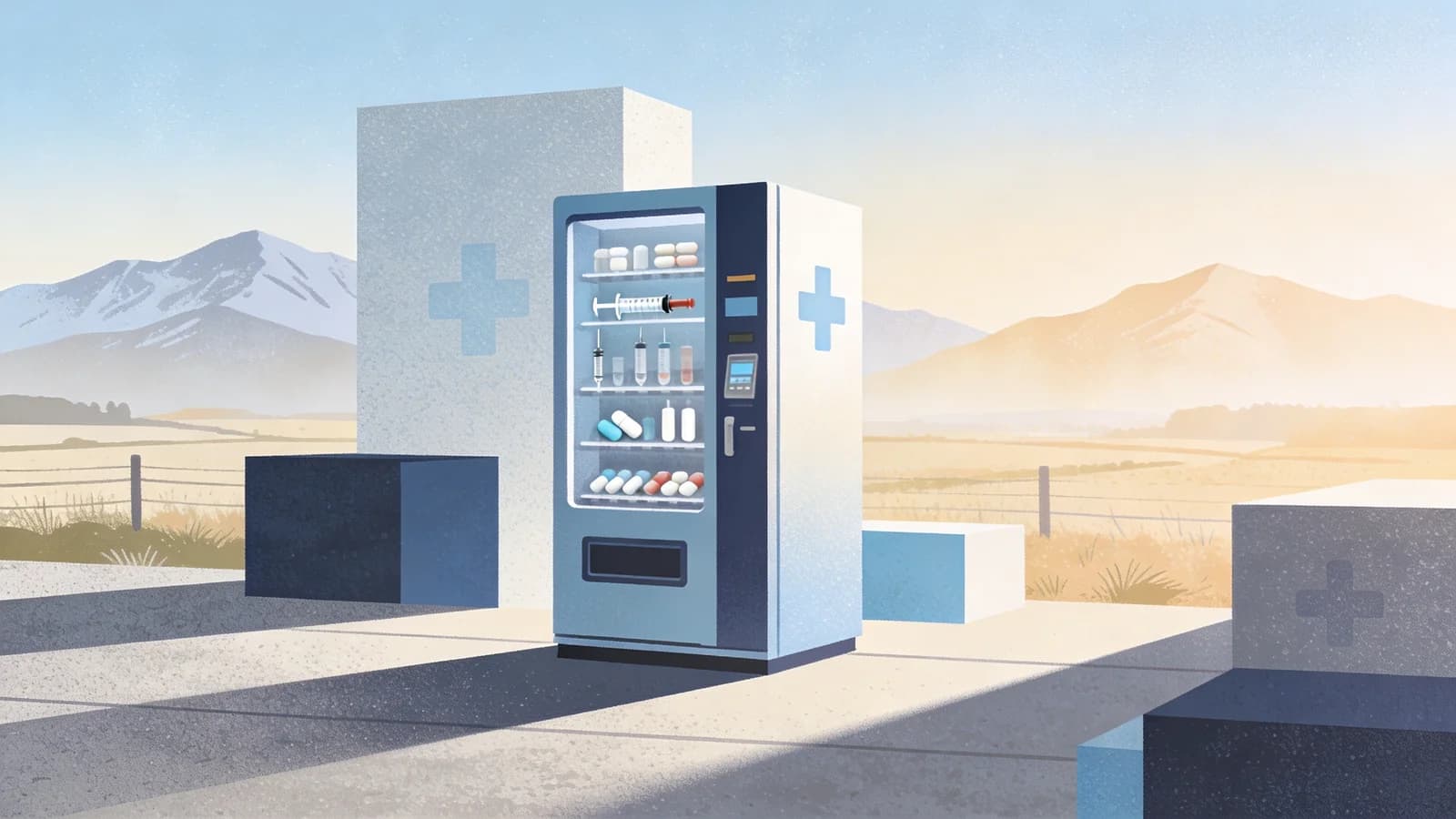
In the rural borough of Millersburg, Pennsylvania, a new kind of vending machine is changing how communities access life-saving health resources. Unveiled on April 23 by Penn State College of Medicine, this interactive "smart" public health vending machine represents a significant evolution in harm reduction technology—one that combines free supply distribution with direct connections to community services.
The machine, installed at Hamilton Health Center in northern Dauphin County, arrives at a critical moment for rural Pennsylvania. Like many communities across Appalachia, the region has faced disproportionate impacts from the opioid crisis while simultaneously grappling with limited access to healthcare infrastructure. Traditional harm reduction approaches—needle exchanges, naloxone distribution programs, outreach workers—often struggle to reach populations spread across vast rural distances.
Beyond Traditional Vending Machines
What distinguishes this installation from conventional public health vending machines is its interactive touchscreen interface. Users don't simply retrieve items; they engage with a system designed to educate, connect, and support.
The machine dispenses free naloxone—the opioid overdose reversal medication that has saved countless lives—alongside drug checking strips that can detect fentanyl and other substances. But the supply list extends further: HIV self-test kits, condoms, hygiene kits, and cold and flu supplies address a spectrum of health needs that often go unmet in underserved areas.
The bilingual interface, currently offering English and Spanish with Haitian Creole planned, reflects the region's evolving demographics and ensures accessibility across language barriers. Educational videos play on the touchscreen, delivering public health messaging in an engaging format that reaches people where they are.
Perhaps most significantly, the machine connects users directly to local support organizations. For someone seeking help with substance use, mental health challenges, or other needs, the vending machine serves as a gateway to services they might not otherwise know exist.
Data-Driven Community Health
The Millersburg installation incorporates anonymous longitudinal data collection, enabling researchers to evaluate health outcomes over time. This evidence-gathering capacity addresses a persistent challenge in harm reduction work: demonstrating impact.
"This technology makes essential supplies and health information more accessible, more engaging and more connected to the community," said Alice Zhang, assistant professor of family and community medicine at Penn State College of Medicine and principal investigator on the project. "It's a model designed with—and for—the communities it serves."
That community-centered approach shaped the project from its inception. Local voices guided decisions about location, content, and services, ensuring the machine meets actual community needs rather than assumed ones.
Rural Innovation
While similar machines have appeared in urban settings, the Millersburg site marks Pennsylvania's first rural installation. This geographic expansion matters. Rural communities often face the steepest barriers to opioid addiction treatment, with fewer providers, longer travel distances, and persistent stigma limiting access to care.
The project emerged from Penn State College of Medicine's Comprehensive Health Studies Collaborative Pilot Award in October 2022, with matching funds from the Department of Family and Community Medicine. Additional support comes from the National Institute on Drug Abuse (NIDA) K23 Career Development Award and the CTSI KL2 Program, reflecting federal investment in innovative harm reduction approaches.
Dauphin County Commissioners provided grant funding for the Millersburg installation, while the Borough of Millersburg has offered enthusiastic support for the initiative.
A Growing Network
The Millersburg machine joins three existing installations in southeastern Pennsylvania: one at 111 South Front Street in Harrisburg, another at 631 Washington Street in Reading, and a third at 605 South George Street in York. Together, these machines form a network of accessible health resources reaching diverse communities.
Each installation represents a partnership between academic medicine, local government, and community organizations—a model that could be replicated elsewhere. The Hamilton Health Center, a Federally Qualified Health Center, provides an ideal host site with existing infrastructure and community trust.
Implications for Harm Reduction
The Penn State smart vending machine initiative arrives as harm reduction approaches gain broader acceptance in American drug policy. Once controversial, strategies like naloxone distribution and drug checking have increasingly been recognized as essential components of overdose prevention.
The technology also reflects growing recognition that effective public health interventions must meet people where they are—literally and figuratively. A vending machine operates 24 hours a day, requires no appointment, involves no paperwork, and carries none of the stigma that might deter someone from walking into a clinic or treatment center.
For individuals struggling with substance use disorders, this low-barrier access can mean the difference between life and death. Someone who might hesitate to seek help through traditional channels can obtain naloxone anonymously, learn about treatment options, and make contact with support services on their own terms.
Looking Forward
As the Millersburg installation begins operations, researchers will track usage patterns, health outcomes, and community impact. The data collected could inform future expansions and adaptations of the model.
The initiative also raises possibilities for integrating additional services. Could similar machines eventually provide telehealth connections? Offer medication adherence support for people in treatment? Connect users to peer recovery coaches? The touchscreen interface creates opportunities for ongoing innovation.
For now, the smart vending machine in Millersburg stands as a testament to what becomes possible when technology, community input, and public health expertise converge. In a region where the opioid crisis has taken a devastating toll, this unassuming machine offers something simple but profound: help, available anytime, no questions asked.
Editorial Board
LADC, LCPC, CASAC
The Rainier Rehab editorial team consists of licensed addiction counselors, healthcare journalists, and recovery advocates dedicated to providing accurate, evidence-based information about substance abuse treatment and rehabilitation.
Related Articles

Inside Trump's 2026 National Drug Control Strategy: Wastewater Testing, AI Surveillance, and Faith-Based Recovery
The White House releases its 2026 National Drug Control Strategy, introducing controversial new surveillance tools and emphasizing faith-based approaches to addiction treatment.
OSHA Issues First-Ever Workplace Opioid Overdose Guidance
New federal fact sheet covers naloxone placement, symptom recognition, and employee training for workplace overdose response.

National Fentanyl Prevention and Awareness Day: Expert Insights on Combating the Crisis
On National Fentanyl Prevention and Awareness Day, experts emphasize education, harm reduction, and real-time detection tools as essential strategies.